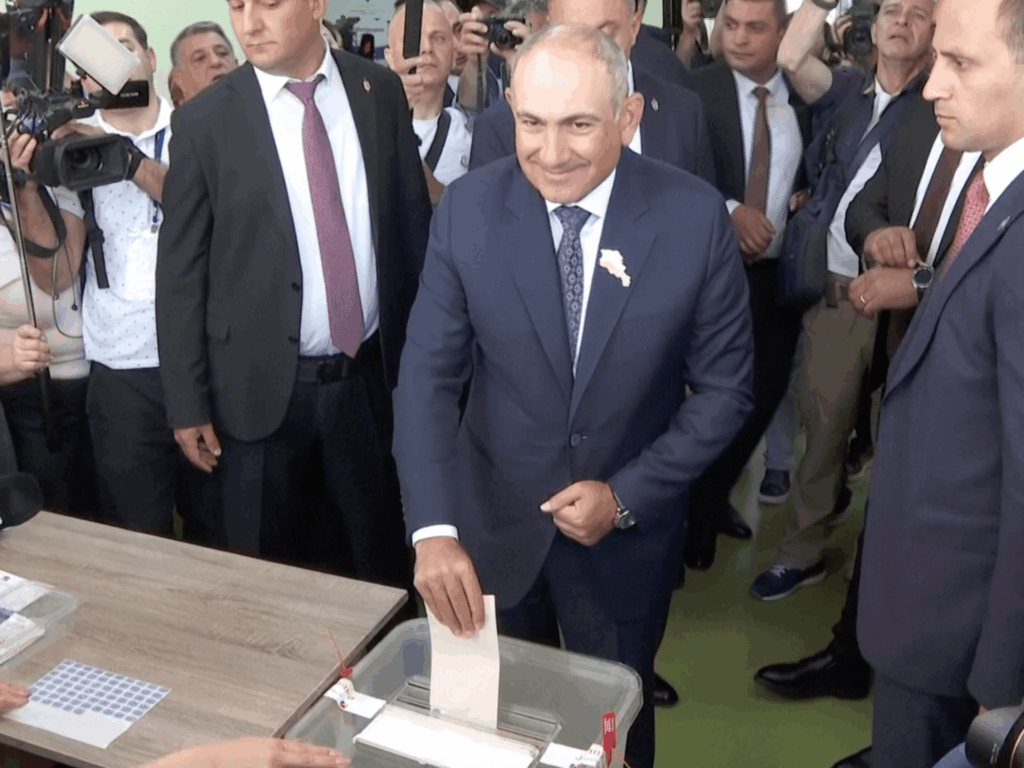
In a significant political event, Armenian Prime Minister Nikol Pashinyan has declared victory in the recent parliamentary elections. This announcement marks a pivotal moment for Armenia, as the elections are seen as a referendum on Pashinyan’s leadership and his government’s direction.
The elections were characterized by intense campaigning and a high voter turnout, reflecting the populace’s keen interest in shaping the country’s future. Pashinyan’s party reportedly secured a substantial majority, ensuring a strong mandate to continue implementing their policy agenda.
Since coming to power, Pashinyan has been a controversial yet transformative figure in Armenian politics, known for his reformist stance and efforts to tackle corruption. His victory in these elections is perceived as an endorsement of his policies and leadership style by a significant portion of the electorate.
Political analysts suggest that this win will enable Pashinyan to pursue further reforms and address ongoing challenges facing Armenia, including economic development, regional security, and relations with neighboring countries.
Opposition parties have acknowledged the results, though some have expressed concerns over the electoral process and called for continued vigilance to ensure transparency and fairness in future elections.
International observers have noted the elections as generally free and fair, contributing to Armenia’s democratic credentials. The outcome is expected to impact Armenia’s domestic policy and international relations, particularly in engagement with key partners in the region and beyond.
As Armenia moves forward under Pashinyan’s leadership, the eyes of the world remain on how the government will capitalize on this victory to bring about meaningful progress and stability in the country. The political landscape in Armenia is poised for further evolution, with the recent elections serving as a critical juncture.