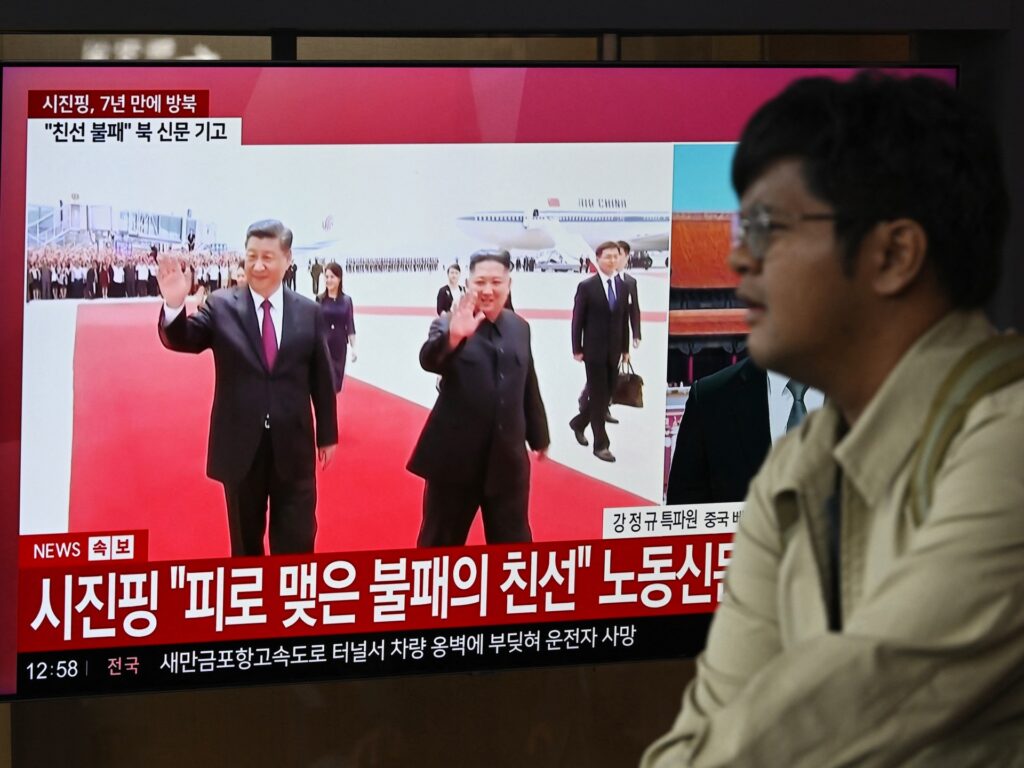
In a significant diplomatic event, Chinese President Xi Jinping arrived in North Korea, marking a rare state visit that has captured the world’s attention. The Chinese leader was warmly welcomed by a cheering crowd dressed in festive attire at Pyongyang’s main square, highlighting the importance of this visit in fostering the relationship between the two neighboring countries.
This visit is especially notable given the complex geopolitical landscape of the Korean Peninsula and the evolving dynamics between China, North Korea, and other global powers. It symbolizes a strengthening of ties and a potential shift in regional alliances.
The welcoming ceremony at Pyongyang’s main square was vibrant and filled with patriotic displays, showcasing the longstanding bond between China and North Korea. Citizens lined the streets, waving flags and expressing their support for the visit, which many see as a gesture of solidarity and cooperation.
During the visit, President Xi Jinping is expected to meet with North Korean leader Kim Jong-un to discuss a range of issues including economic cooperation, security concerns, and regional stability. These talks are anticipated to pave the way for enhanced collaboration, particularly in trade and infrastructure development, areas crucial for North Korea’s growth and China’s regional ambitions.
Analysts suggest that this visit may also serve as a platform for addressing international sanctions and seeking ways to reduce tensions on the peninsula. It could lead to joint initiatives aimed at peaceful development and mutual prosperity, reinforcing the strategic partnership between the two countries.
The timing of Xi Jinping’s visit is critical as the global community watches closely, recognizing the influence China holds over North Korea. This state visit could potentially alter the diplomatic equations in East Asia and contribute to broader efforts aimed at peace and stability in the region.
Overall, President Xi Jinping’s rare visit to North Korea underscores China’s commitment to maintaining and deepening its relationship with Pyongyang. It is a clear message of support and a move towards closer ties that could have significant implications for regional and global diplomacy.