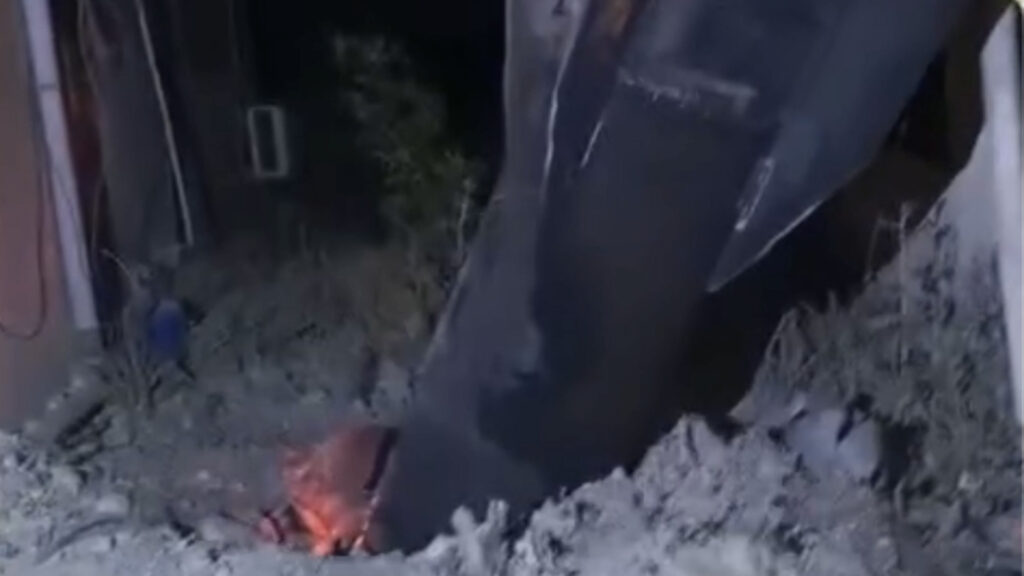
In a significant development amid ongoing regional tensions, debris has been discovered in Jordan following the interception of missiles believed to have been fired from Iran targeting Israel. These missiles were detected flying over Jordanian airspace before one was reportedly intercepted, highlighting the escalating missile threats in the Middle East.
The incident underscores the volatile security situation in the region, where Iran has been known to support proxy groups hostile to Israel. The missiles, reportedly launched by Iranian forces or their allies, aimed to strike Israeli territory, but were thwarted by defensive systems, possibly involving Israel’s advanced missile interception technology.
Jordan’s discovery of missile debris within its borders raises concerns about the spillover effects of the conflict on neighboring countries. Jordan has maintained a relatively stable stance amid the broader Israel-Iran conflict, but this incident puts the country in the spotlight as it becomes directly involved, even if indirectly, in these hostilities.
Israeli officials have not commented extensively on the specifics of this missile launch but have previously warned of increasing threats from Iranian ballistic missile capabilities. The interception success reflects ongoing efforts to protect Israel from aerial attacks and to maintain regional security.
Experts suggest that these missile firings may be part of a broader strategic posture by Iran to project power and exert pressure on Israel amid ongoing geopolitical disputes. The use of Jordanian airspace by the missiles signals potential risks to countries that are geographically close but not directly engaged in the conflict.
The international community is closely monitoring the situation, advising all parties to exercise restraint to prevent further escalation. Diplomatic channels remain active, aiming to de-escalate tensions and avoid a wider regional conflict that could have severe humanitarian and security consequences.
Jordan continues to assess the implications of the missile debris found on its territory. Authorities are collaborating with regional partners to ensure airspace security and to prevent similar incidents in the future. The discovery also stresses the importance of robust missile defense and early warning systems in a region fraught with complex threats.
The incident serves as a stark reminder of the fragile nature of peace in the Middle East and the continuous challenges posed by military confrontations. As investigations proceed, all eyes remain on how this event may influence the already heightened dynamics between Iran, Israel, and their respective allies.
In summary, the finding of missile debris in Jordan following an interception of missiles fired from Iran towards Israel highlights the precarious security landscape of the Middle East. It emphasizes the need for vigilance, diplomatic engagement, and regional cooperation to manage and mitigate conflict risks.