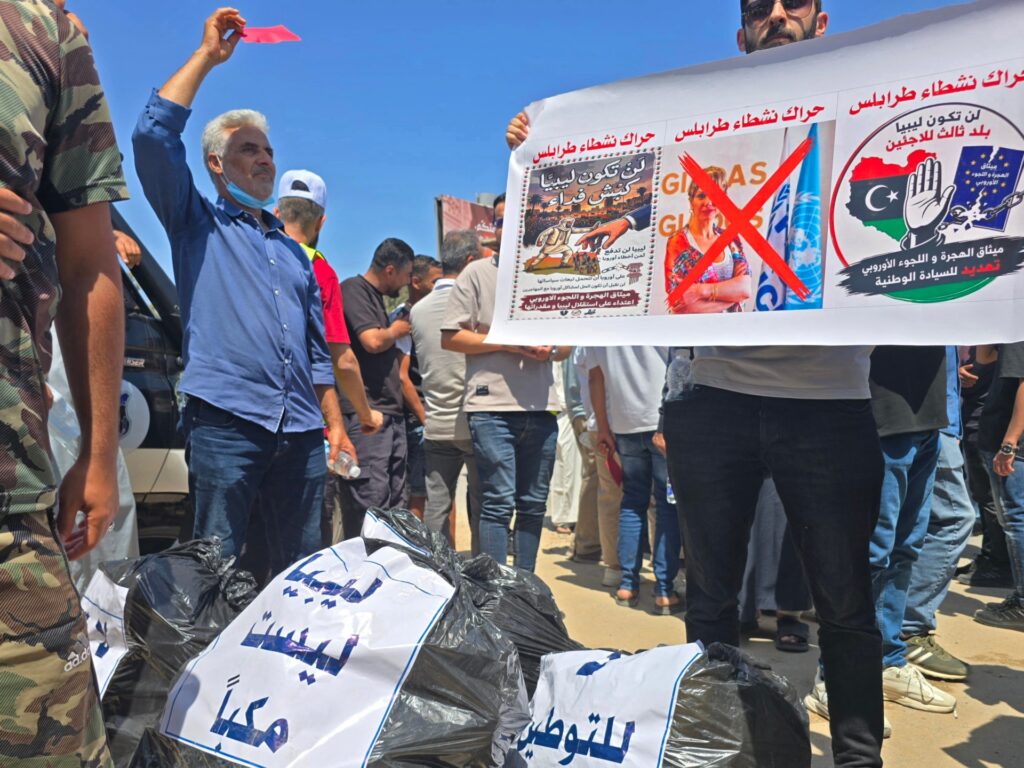
In recent developments in Libya, hundreds of protesters gathered outside the United Nations agency office to voice their concerns and opposition against the presence of undocumented migrants in the country. The demonstrators accused the UN of facilitating the settlement of these undocumented migrants within Libya, a claim the United Nations has categorically rejected.
The protest reflects growing tensions and discontent among segments of the Libyan population regarding the undocumented migrant population. Libya has been a key transit and destination country for migrants attempting to reach Europe, and the issue of undocumented migrants has presented significant challenges, including humanitarian concerns and security issues.
During the protest, demonstrators carried banners and chanted slogans expressing their dissatisfaction with what they described as the UN’s role in supporting undocumented migration. They argued that the presence of these migrants puts additional strain on local resources and exacerbates social tensions. Some protesters called for stricter measures to prevent undocumented migration and for better control over the country’s borders.
However, the United Nations agency involved responded swiftly to the allegations, stating that their mission is focused primarily on providing humanitarian aid and supporting migrants’ rights, not facilitating their unauthorized settlement. The agency emphasized its commitment to working with the Libyan government and other stakeholders to manage migration flow humanely and effectively.
Libya’s complex political and security situation has contributed to the challenges posed by migration. Since the 2011 civil war and the toppling of the Gaddafi regime, Libya has experienced instability and conflict, creating an environment in which migrant smuggling networks have flourished. Migrants often face dangerous conditions crossing the Sahara Desert and the Mediterranean Sea in search of better opportunities.
United Nations and various international organizations have been involved in efforts to enhance border management and provide assistance to migrants caught in Libya. While the agency denies settling undocumented migrants, their operations include offering shelter, medical care, and legal aid to vulnerable populations.
The protest underscores the delicate balance between addressing humanitarian needs and responding to local concerns about migration. As Libya continues to navigate its path toward stability, the management of migration and the treatment of migrants remain central issues for policymakers, civil society, and international actors.
Efforts to find comprehensive solutions include strengthening cooperation between Libya and European countries, improving migration governance, and tackling the root causes of migration such as conflict, poverty, and human rights abuses in migrants’ countries of origin.
The situation remains fluid, with ongoing debates and negotiations involving Libyan authorities, the United Nations, and other international stakeholders aimed at ensuring that migration is managed safely, orderly, and with respect for human dignity.
The protests outside the UN agency serve as a reminder of the complex dynamics surrounding migration in Libya, highlighting the urgent need for dialogue, understanding, and coordinated actions to address the challenges faced by all parties involved.