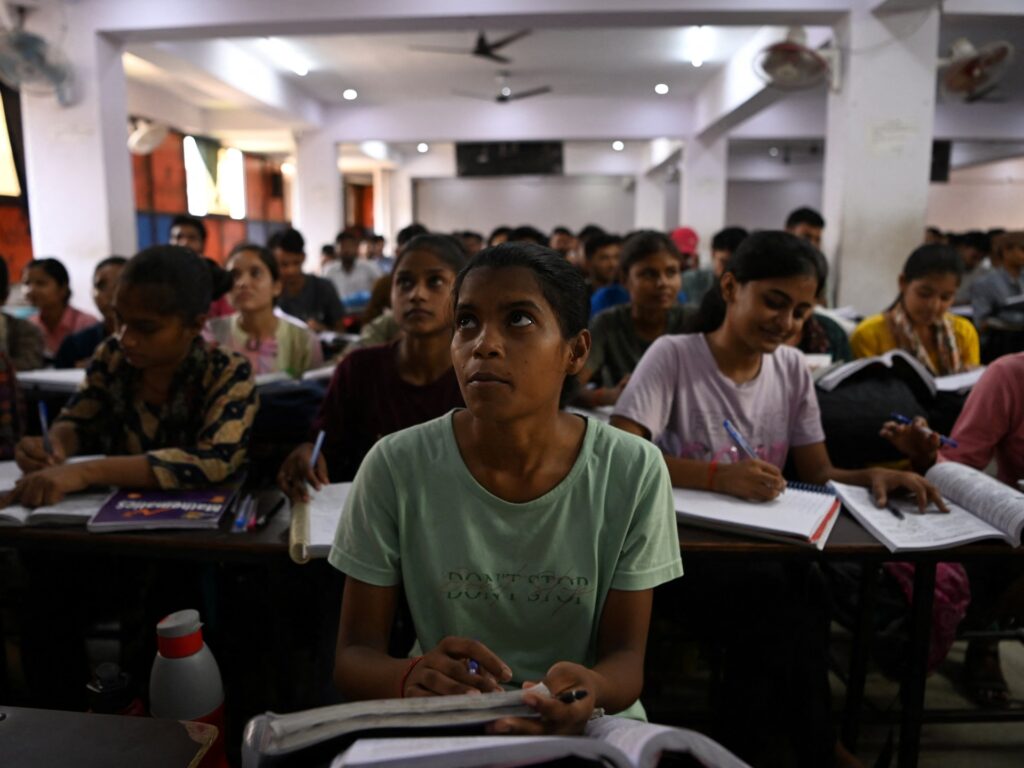
India’s Central Board of Secondary Education (CBSE), the country’s largest school board, has recently been engulfed in a series of controversies surrounding exam irregularities and alleged malpractice. This scandal has not only shaken the confidence of students and parents but has also ignited widespread protests and vocal criticism directed towards Prime Minister Narendra Modi’s government, particularly demanding accountability from the Ministry of Education.
The CBSE scandal began when multiple reports emerged about leaked examination papers and discrepancies in marking that unfairly affected thousands of students preparing for critical board exams. Students claimed that several questions were shared in advance with certain coaching centers, giving an undue advantage and compromising the fairness of the evaluation process. This has raised serious concerns about the integrity of one of India’s most crucial academic assessments.
As the news spread, students across India took to social media and street demonstrations to express their frustration and demand justice. The movement quickly gained traction, highlighting the broader issues within the Indian education system such as transparency, corruption, and governance failures.
The student outrage specifically targeted Prime Minister Narendra Modi’s administration, criticizing the government’s perceived neglect in ensuring strict oversight and reforms within the educational framework. Protesters have called for the resignation of the Education Minister, accusing the leadership of either complicity or incompetence in preventing such a scandal.
Parents, teachers, and educational experts have also voiced their concerns, emphasizing that scandals like these erode public trust in educational institutions and diminish the value of academic credentials obtained under corrupt conditions. The credibility of CBSE exams is crucial as it affects university admissions, job opportunities, and the future prospects of millions of students nationwide.
In response to the escalating crisis, the government announced an internal investigation and promised corrective actions including the implementation of stricter security measures for examination and evaluation processes. However, many activists and student groups remain skeptical and continue to demand more transparent, systemic changes rather than temporary fixes.
The scandal has revealed the vulnerabilities of India’s examination system in an era where information leakage and digital tampering are increasingly sophisticated. It also underscores the pressing need for comprehensive education reforms that prioritize fairness, accountability, and quality assurance.
Observers note that the political ramifications for PM Modi’s government could be significant, especially as education is a critical priority for the electorate. The controversy may impact public perception ahead of upcoming elections, posing challenges for the ruling party in maintaining its support among young voters and their families.
Ultimately, the CBSE exam scandal serves as a clarion call for India’s education authorities to rebuild trust and uphold the standards of academic integrity. Students demand a system that rewards merit and ensures equal opportunities, signaling a broader movement toward accountability and reforms in Indian education under the scrutiny of the nation’s youth and civil society.