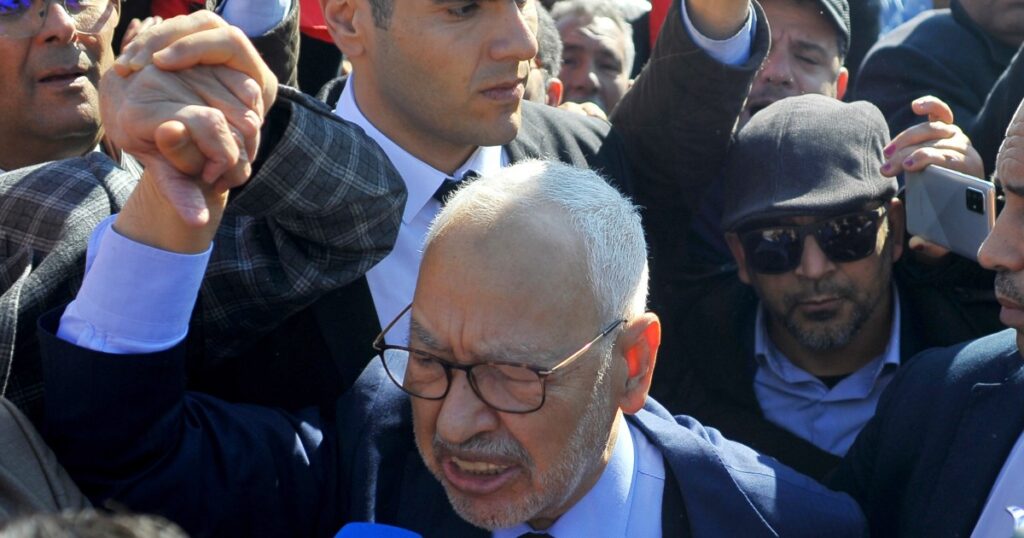
In a landmark ruling that has sent shockwaves through the political landscape of Tunisia, the court has sentenced Ennahdha leader Rached Ghannouchi to life imprisonment. The decision comes amidst accusations of the opposition leader being involved in forming a ‘terrorist alliance’, a charge that has led to lengthy prison terms for Ghannouchi and dozens of other defendants.
Rached Ghannouchi, a prominent figure in Tunisian politics and head of the influential Ennahdha party, has long been a polarizing figure. His party, which played a key role in Tunisia’s post-revolution political transition, has faced criticism and suspicion from various quarters over alleged extremist ties.
The court’s ruling marks a significant and controversial moment in Tunisia’s ongoing political evolution. Authorities accused Ghannouchi and his associates of conspiring to destabilize the country through the formation of a terrorist alliance. According to prosecutors, this alliance aimed to undermine national security and threaten the democratic fabric of the nation.
The trial reportedly examined extensive evidence and testimony presented by the prosecution, asserting that Ennahdha’s leadership conspired with extremist groups to foment unrest and violence. This resulted in severe legal repercussions for Ghannouchi and numerous other defendants associated with the case.
The sentences handed down are among the harshest in recent Tunisian history, underscoring the government’s tough stance on what it deems as threats to its stability and sovereignty. The court sentenced Ghannouchi to life imprisonment, alongside lengthy prison terms for dozens of other opposition figures and alleged conspirators.
Supporters of Ghannouchi and the Ennahdha party have condemned the verdict, labeling it politically motivated and a setback for Tunisia’s democratic process. They argue that the charges were exaggerated or fabricated to silence political dissent and suppress opposition voices.
International observers and human rights organizations have voiced concern over the trial’s fairness, calling for transparency and urging the Tunisian government to respect due process and judicial independence. Many have warned that such judicial measures could lead to increased political polarization and undermine efforts toward national reconciliation.
This case highlights the fragile nature of Tunisia’s democracy, which emerged from the Arab Spring as a beacon of hope for the region but continues to face numerous challenges. The political rivalry between the ruling authorities and opposition parties reflects broader struggles over the direction of the country’s governance and its socio-political future.
As the news of Ghannouchi’s life sentence reverberates across Tunisia and beyond, political analysts predict heightened tensions and potential unrest. The government has called for calm and pledged to uphold law and order during this delicate period.
The international community remains attentive to Tunisia’s developments, emphasizing the importance of fostering dialogue among political factions and promoting inclusive governance. The situation underscores the complex interplay between security concerns and political freedoms in transitional democracies.
Rached Ghannouchi’s fate now serves as a critical juncture in Tunisia’s political saga, reflecting deeper questions about justice, leadership, and the balance between national security and democratic rights. The coming months will be pivotal for Tunisia as it navigates these turbulent waters and seeks to chart a stable path forward.