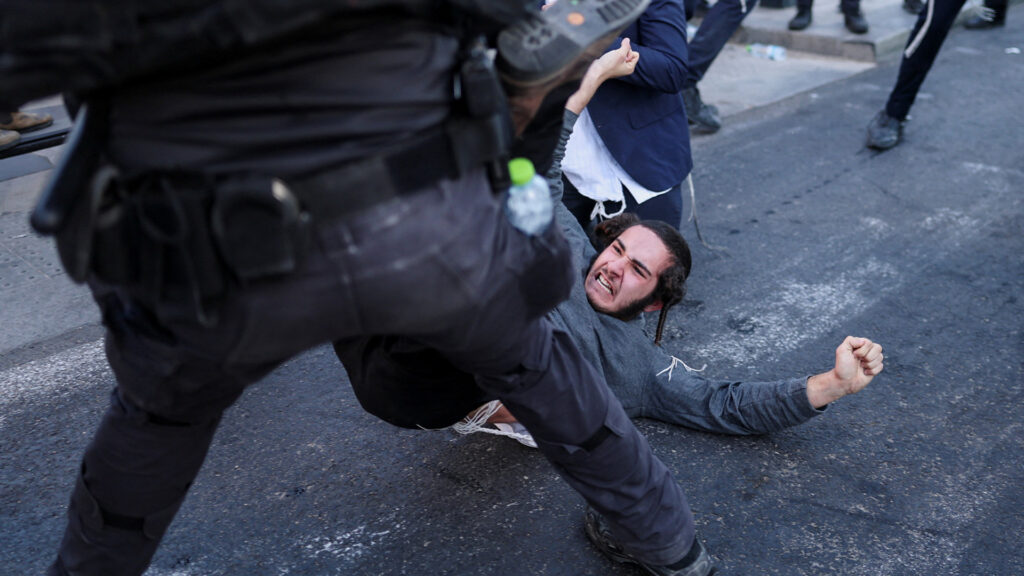
In Jerusalem, significant clashes have erupted between ultra-Orthodox Jewish protesters and Israeli police amid rising tensions over the conscription of ultra-Orthodox men into the Israeli Defense Forces (IDF). The protesters blocked key roads in the city, expressing their vehement opposition to mandatory military service, which they argue threatens their religious way of life.
The confrontation escalated when police were seen forcibly removing demonstrators, including dragging some from beneath buses, as the crowd attempted to obstruct traffic routes. The blocking of roads not only disrupted daily commutes but also heightened the sense of conflict between the ultra-Orthodox community and state authorities.
The issue of conscription has long been a point of contention in Israel, with many in the ultra-Orthodox sector exempted for decades due to their intensive religious studies. However, recent government initiatives have sought to reduce exemptions and increase enlistment from this community, stirring strong reactions.
Protest organizers argue that compulsory military service would undermine their religious commitments and way of life. They view their study of sacred texts as a national contribution equal in value to military service and demand the government respect their traditions.
On the other hand, Israeli authorities maintain that universal conscription is vital for the nation’s security and social cohesion. They emphasize the need for shared responsibility among all sectors of society, warning that continued exemptions could lead to societal divisions and challenges in military readiness.
The police, tasked with maintaining public order, deployed forces to manage the protests, which have been marked by sporadic violence and confrontations. Reports from the scene indicated that some officers used physical means to clear road blockades, leading to moments of heightened tension.
Residents and commuters expressed frustration over the disruptions, which affected traffic flow and daily routines. Some have called for dialogue to address the underlying issues, aiming to find a peaceful resolution that respects both national obligations and religious freedoms.
Political leaders from various parties have weighed in on the situation, with some supporting tougher enforcement of the draft and others advocating for increased exemptions or alternative service options for the ultra-Orthodox community.
The clashes in Jerusalem highlight a broader societal challenge facing Israel—balancing the need for national unity and security with the preservation of diverse cultural and religious identities. As negotiations continue, the situation remains volatile, with both sides firmly entrenched in their positions.
Security analysts suggest that finding common ground will require nuanced policies that acknowledge the religious significance of the ultra-Orthodox lifestyle while promoting a fair and equitable approach to national service.
Meanwhile, the immediate priority for authorities is to restore order in Jerusalem and ensure safe passage for all citizens while respecting the rights of protesters to express their views.
The dynamic between the state and the ultra-Orthodox community over military conscription remains a pivotal issue in Israeli politics, reflecting broader questions about inclusion, citizenship, and the definition of national service in a diverse society.
Observers are closely watching developments, aware that the resolution—or escalation—of this conflict could have lasting implications for Israel’s social fabric and security apparatus.
As protests continue, both sides face pressure to engage in constructive dialogue, seeking compromises that uphold Israel’s democratic principles and the rich religious traditions of its people.
The recent events serve as a vivid reminder of the complexities inherent in governance within a multifaceted society, where religious freedoms intersect with civic duties in often contentious ways.