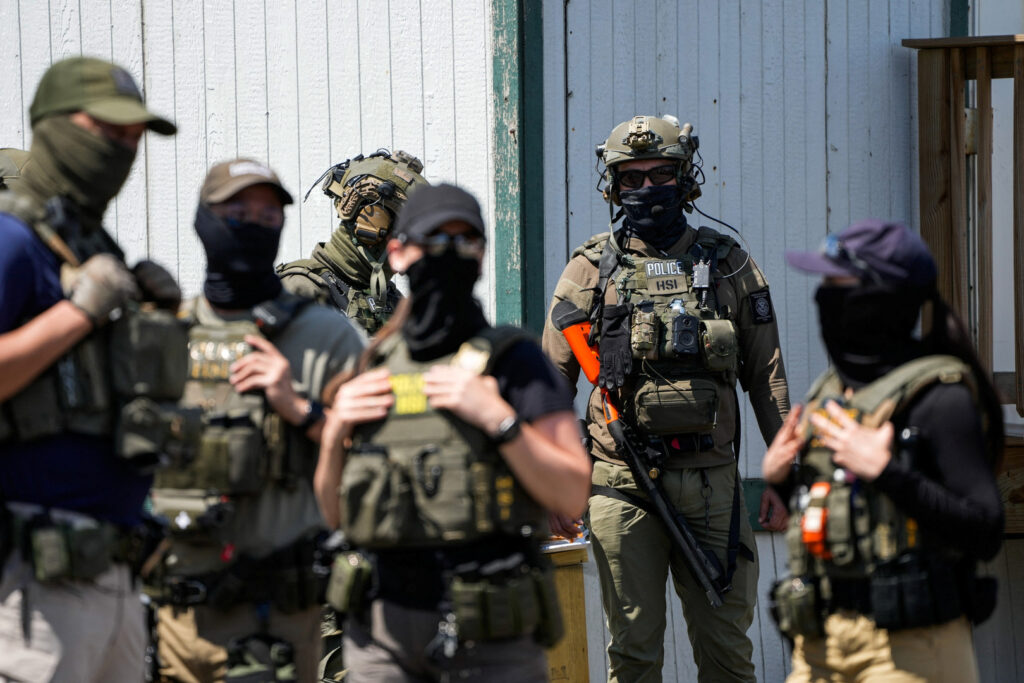
U.S. Immigration and Customs Enforcement (ICE) agents and federal agents secure the entrance to the Delaney Hall detention center, as demonstrators remain gathered outside, in Newark, New Jersey, U.S., May 29, 2026. REUTERS/Eduardo Munoz
In a tense confrontation outside the Delaney Hall immigration detention center in New Jersey, police officers fired tear gas and deployed mounted units to disperse a crowd of protesters. The demonstration, aimed at protesting immigration enforcement policies and conditions within the facility, escalated to a point where law enforcement intervened to maintain control.
The Delaney Hall facility, operated under the direction of U.S. Immigration and Customs Enforcement (ICE), has been a focal point for activists demanding changes to detention practices and advocating for immigrant rights. The protest drew a sizable crowd of activists, community members, and advocates who gathered to voice their concerns.
According to eyewitnesses, tensions rose as protesters attempted to block entrances to the facility and challenge the presence of ICE officers. In response, police used tear gas canisters to clear the area. Additionally, mounted officers on horses maneuvered through the crowd to push back demonstrators and reestablish order.
Local authorities stated that the measures taken were necessary to prevent property damage and ensure the safety of everyone involved, including officers and protesters. No serious injuries have been reported, although some individuals experienced irritation from the tear gas exposure.
The protest highlighted ongoing debates surrounding immigration detention practices in the United States. Advocates argue that facilities like Delaney Hall represent systemic issues in immigration enforcement, citing concerns over detainee treatment, legal rights, and family separations. Critics of the aggressive police response argue that such tactics suppress free speech and the right to assembly.
Community leaders called for dialogue between ICE officials, law enforcement, and advocacy groups to address the root causes of the unrest and to develop more humane policies. The event at Delaney Hall reflects broader national tensions about immigration law enforcement and the human impact of detention policies.
The incident also raised questions about the use of force by police during protests, with civil rights organizations monitoring the situation closely. Legal observers are examining the actions taken to ensure they comply with constitutional protections for peaceful protesters.
As the situation remains fluid, discussions continue on how best to balance security concerns with the rights of demonstrators. The Delaney Hall protest serves as a microcosm of the larger struggles over immigration reform and civil liberties in America.
Authorities have promised a thorough review of the events and pledged to engage with community stakeholders in the aftermath. Meanwhile, activists plan additional demonstrations to keep attention on immigration detention and enforcement practices.
This incident underscores the deep divisions and passionate advocacy surrounding immigration issues, highlighting the ongoing challenges faced by communities, law enforcement, and policymakers alike.