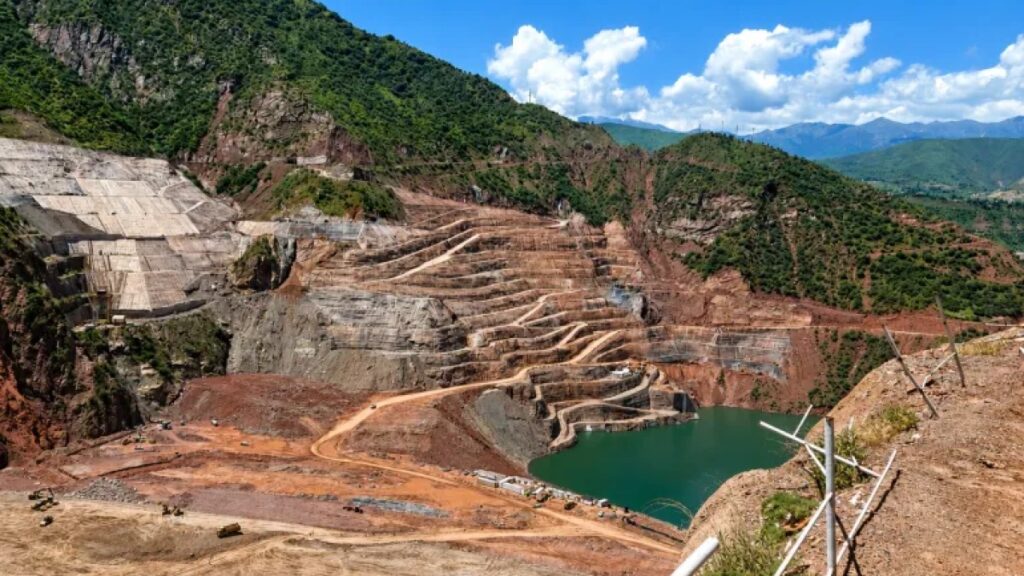
The Rogun Dam project, often hailed as Tajikistan’s “project of the century,” symbolizes the nation’s ambitions for economic self-reliance and energy independence. Located on the Vakhsh River, the dam site has become a focal point of national pride and a beacon of hope for sustainable development.
The construction of the Rogun Dam started during the Soviet era in the 1970s but was halted due to the collapse of the Soviet Union and subsequent conflicts. In recent years, Tajikistan has revived the project with renewed vigor, seeing it as key to harnessing the country’s vast hydropower potential.
With a planned height of over 330 meters, the Rogun Dam is expected to be the tallest dam in the world upon completion. Its estimated installed capacity of 3,600 megawatts is expected to address Tajikistan’s chronic power shortages and enable the country to export electricity to neighboring regions, thereby boosting the national economy.
The project represents not only an engineering challenge but also a diplomatic one, as it involves negotiations with downstream countries like Uzbekistan, which depend on the water flow of the Amu Darya river system, of which the Vakhsh is a part.
Al Jazeera’s visit to the Rogun Dam site reveals a massive construction effort under challenging geographic and climatic conditions. Workers and engineers from various parts of Tajikistan and neighboring countries are collaborating to achieve milestones despite frequent setbacks related to infrastructure and financing.
Local communities near the dam site have expressed mixed feelings; while many see the dam as a symbol of progress and future prosperity, others worry about environmental impacts and resettlement issues. The government has pledged to implement measures to mitigate adverse effects and foster regional cooperation.
The Rogun Dam, once completed, is expected to not only transform Tajikistan’s energy landscape but also to serve as a testament to the country’s resolve and vision. It stands as a monumental effort to secure a sustainable future, exemplifying how infrastructure projects can shape national identity and development.
As Tajikistan continues on this ambitious road, the Rogun Dam remains a powerful symbol of hope, ingenuity, and the pursuit of a stronger, more self-sufficient nation.