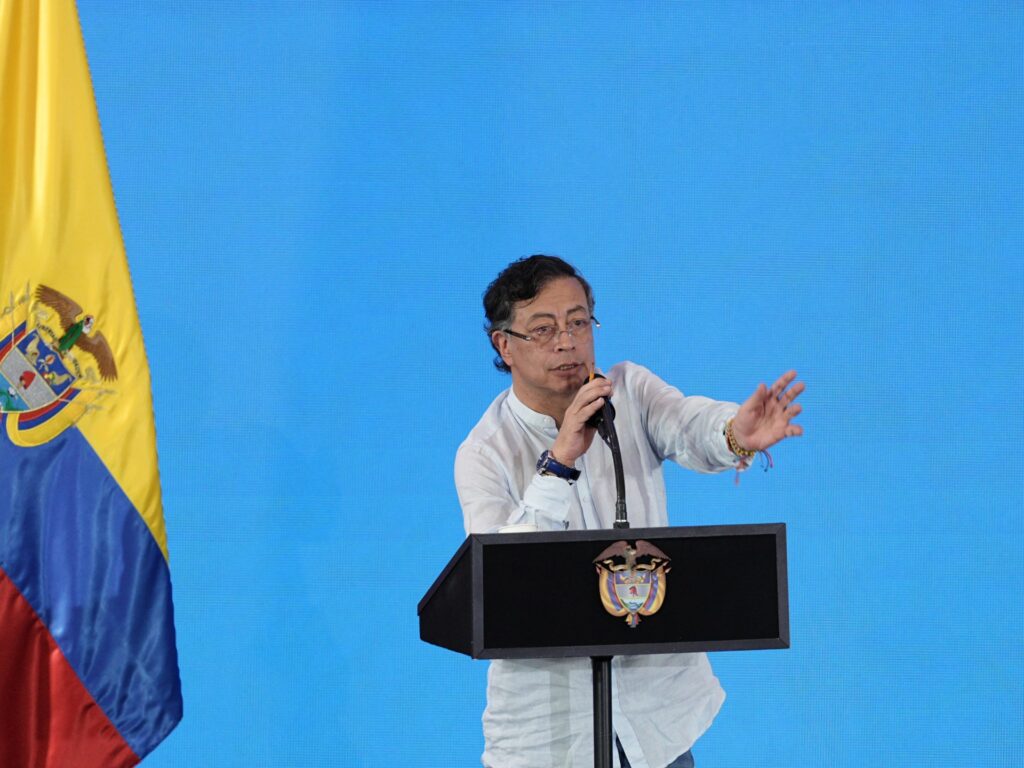
Colombia stands at a political crossroads as it prepares to elect a new president, with the nation deeply divided over the success and future of Gustavo Petro’s landmark policy, the ‘Total Peace’ plan. Introduced with ambitious goals to end decades of conflict, the plan has sparked polarized opinions about its effectiveness and sustainability, making it a central theme in the current electoral debates.
The ‘Total Peace’ initiative was launched with the aim of addressing the root causes of violence in Colombia by promoting comprehensive peace with all armed groups, including guerrillas, criminals, and paramilitaries. Petro envisioned a country free from conflict through inclusive dialogue, negotiation, and social reform.
Supporters argue that the plan reflects a historic and necessary shift from militarized responses toward political solutions and reconciliation. They highlight efforts made to negotiate peace with dissident groups and to address socio-economic inequalities that have fueled unrest for decades.
Critics, however, contend that the initiative has fallen short of its promises. They point to ongoing violence, failed negotiations with some armed factions, and a perceived lack of security in various regions as evidence of the plan’s shortcomings. Some view the policy as overly idealistic and argue that it may have compromised Colombia’s security by offering concessions without ensuring compliance.
Amidst these differing views, the debate has invigorated Colombia’s presidential race, forcing candidates to clarify their positions on peace and security. Some propose to build upon and refine Petro’s approach, advocating for a balanced blend of dialogue and robust law enforcement. Others call for a complete overhaul, prioritizing military strength and dismantling armed groups through force.
Experts note that Colombia’s struggle with peace is complex and multifaceted, and any path forward must contend with historical grievances, economic disparities, and the influence of illegal armed actors. The ‘Total Peace’ plan, while controversial, has undeniably brought attention to the need for a comprehensive strategy that combines security, justice, and development.
As the nation votes, the fate of the ‘Total Peace’ legacy remains uncertain. Will the next leader view it as unfinished business demanding further commitment and adaptation? Or will it be labeled a failure, prompting a return to more traditional and possibly harder-line policies?
What is clear is that Colombia’s quest for lasting peace is far from over. The coming months will be critical in determining whether Petro’s vision can evolve and endure or whether new approaches will take center stage in the ongoing effort to secure peace for all Colombians.