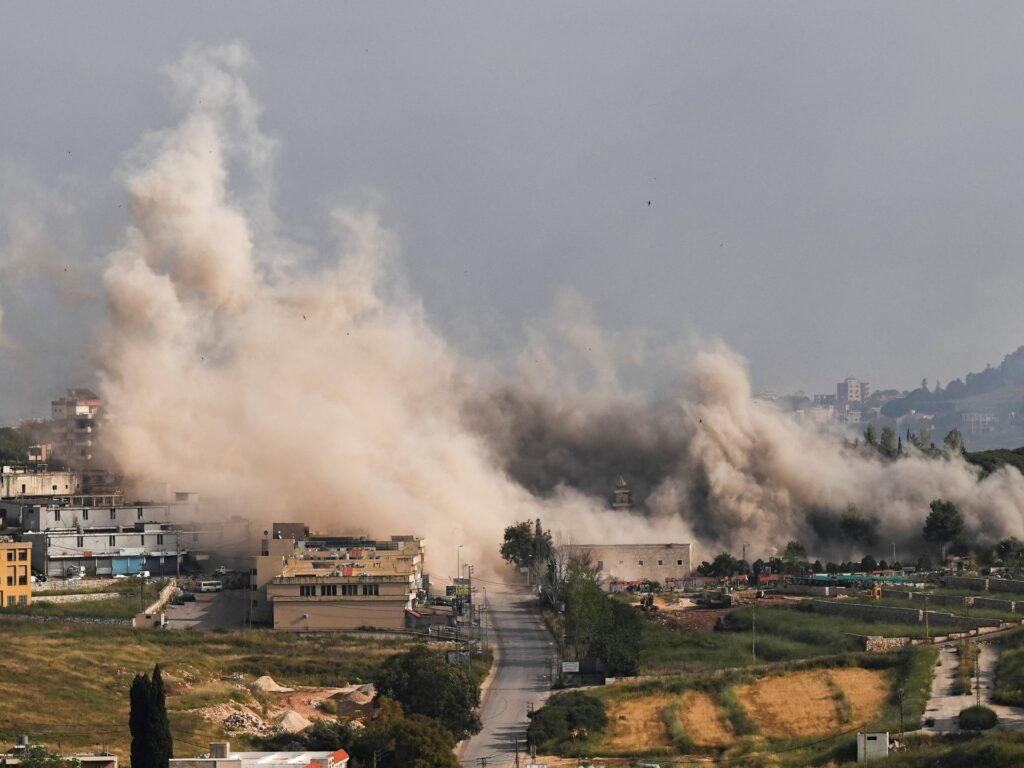
Israel’s recent military actions against Nabatieh, a major city in southern Lebanon, and the issuance of a forced displacement order have drawn international scrutiny and raised questions about the motives behind this focus. Nabatieh holds strategic and symbolic significance in the ongoing Israel-Lebanon conflict, particularly due to its geographical location and its historical ties to political and militant groups.
Nabatieh is located in southern Lebanon, a region that has frequently been a flashpoint in the Israel-Lebanon conflict. The city has been known as a stronghold of Hezbollah, a Shiite Islamist political party and militant group that Israel regards as a terrorist organization. Hezbollah’s presence in the area, including its strong support base, has made Nabatieh a critical location from Israel’s security perspective.
Israel’s military strategy often targets locations suspected of harboring Hezbollah operatives, weapons caches, or infrastructure used for launching attacks against Israeli territory. The forced displacement order is likely a tactical move aimed at minimizing civilian casualties during military operations or to exert pressure on Hezbollah by disrupting its support network.
Furthermore, Nabatieh’s proximity to the Israeli border makes it a frontline city in the conflict, frequently exposed to cross-border tensions and hostilities. Historical conflicts, including the 2006 Lebanon War, saw intense fighting in southern Lebanon, including areas around Nabatieh. This precedent reinforces its significance in Israel’s defense calculus.
The emphasis on Nabatieh also reflects broader regional dynamics. Lebanon’s government has often struggled to exert full authority over its southern regions, where Hezbollah operates with relative autonomy. Consequently, Israel’s actions in Nabatieh can be viewed as an attempt to counterbalance Hezbollah’s influence and deter future attacks.
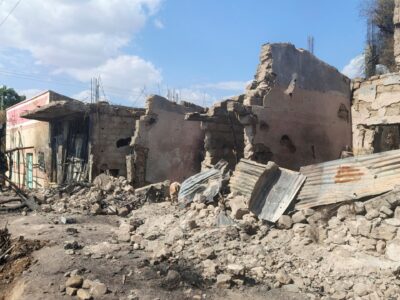
The humanitarian impact of such military operations, including forced displacement, brings additional layers of complexity. Nabatieh’s civilian population faces significant risks, including displacement, damage to infrastructure, and disruption of daily life. International organizations and humanitarian groups usually express concern over such situations, urging restraint and protection of civilians.
In summary, Israel’s focus on Nabatieh stems from its strategic importance as a Hezbollah stronghold located near the Israeli border, its historical role in previous conflicts, and the ongoing security concerns posed by Hezbollah’s activities. The forced displacement order appears to be part of a broader military strategy aimed at weakening Hezbollah’s operational capabilities while attempting to manage the risks to civilian lives amid the conflict.