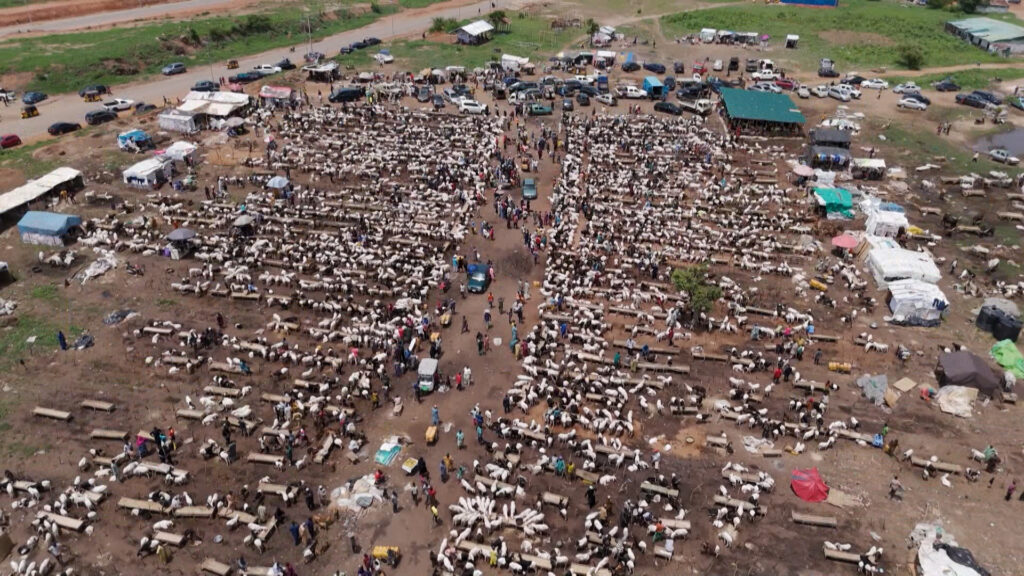
In the bustling sheep markets of Nigeria, the vibrant spirit of Eid is being overshadowed by an economic challenge that is weighing heavily on many families. Human rights advocate Sadaatu Madaki highlights a growing crisis: the soaring prices of rams, an essential part of Eid celebrations, have turned what should be a joyful tradition into a financial strain for many.
Eid al-Adha, one of the most important Islamic festivals, commemorates the willingness of Ibrahim to sacrifice his son as an act of obedience to God. Central to the celebration is the ritual sacrifice of an animal, commonly a ram. This act symbolizes devotion, charity, and the sharing of blessings with family and the less fortunate. However, in Nigeria, the rising cost of rams is challenging this practice’s accessibility.
Prices for rams have surged dramatically due to various factors including inflation, drought conditions affecting feed availability, and increased demand as the population grows. Where a ram once could be purchased at a reasonable price, families now face exorbitant costs, with some animals selling for several times their usual market value.
Sadaatu Madaki, who frequently visits these markets, reports seeing families hesitant to purchase a ram or forced to settle for less desirable options. For many Nigerians, the choice has become a painful one: either stretch their limited budgets or forgo the tradition altogether.
The situation is particularly difficult for low-income households and those living in rural areas where alternatives are scarce. The cultural significance of Eid demands they maintain the tradition, yet economic realities are forcing a reevaluation of how Eid is celebrated.
Experts warn that this trend could deepen societal inequalities. Wealthier families continue to afford traditional sacrifices, while poorer ones may have to find alternative, less expensive ways to observe the holiday or miss out, exacerbating social divides.
Amidst this crisis, local NGOs and community leaders are seeking solutions. Some initiatives focus on cooperative buying schemes, allowing families to share the cost and the meat from a single sacrifice, ensuring that more people can participate in the tradition. Others are advocating for government intervention to stabilize the market and support livestock farmers to increase supply.
Sadaatu Madaki stresses the need for broader support systems to ensure that the religious and cultural practices of Eid remain accessible to all Nigerians, regardless of economic status. The festival’s underlying values of compassion, sacrifice, and community sharing should not be compromised by financial obstacles.
As Eid approaches this year, the striking scene at Nigerian sheep markets serves as a powerful reminder: the escalating cost of rams is more than an economic issue; it’s a social dilemma touching the core of cultural identity and religious expression. The hope remains that through collective effort and understanding, Nigerians can uphold the spirit of Eid in the face of economic adversity.