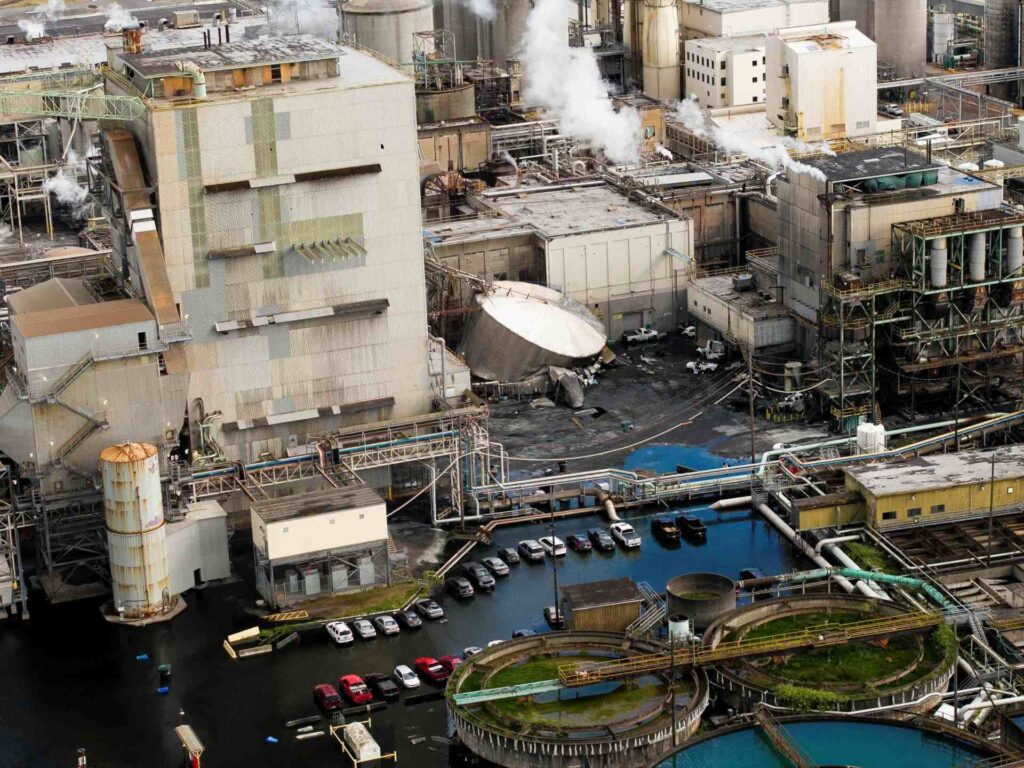
A dramatic aerial video has captured the critical moment when a chemical tank ruptured in Washington, raising immediate concerns about public safety and environmental impact. The footage, taken by a drone, shows the extent of the damage to the cylindrical tank, which is part of an industrial facility located in the region. Officials responded swiftly to the incident, deploying hazardous materials teams to contain the leak and prevent further contamination.
The ruptured tank reportedly contained industrial chemicals, although authorities have not yet disclosed the specific substances involved. Emergency response units established a perimeter around the site to evacuate nearby residents as a precautionary measure, fearing potential exposure to harmful fumes.
Environmental experts are currently assessing the situation to determine the potential impact on local water sources and soil quality. Descending chemicals from such a breach can lead to serious contamination, affecting wildlife and human health alike. Initial reports suggest that air quality monitoring stations around the vicinity have detected elevated levels of chemical particulates.
The cause of the rupture is under investigation, with early hypotheses pointing toward either structural failure due to aging infrastructure or a possible external impact. The industrial facility has temporarily suspended operations to facilitate thorough inspections and cleanup efforts.
Local authorities have urged the community to stay informed through official channels and to avoid unnecessary travel near the affected area. Public health advisories warn individuals, especially those with respiratory conditions, to remain indoors until further notice.
This incident highlights the ongoing challenges of maintaining safety in industrial operations that store hazardous materials. It serves as a critical reminder of the importance of rigorous safety inspections and emergency preparedness.
Cleanup crews are working around the clock to mitigate the damage caused by the chemical leak. Specialists equipped with protective gear are employed to neutralize hazardous substances and prevent them from spreading into the environment.
Residents in the surrounding areas expressed concern and anxiety over the incident, calling for increased regulatory oversight and transparency from industrial operators. Community leaders have organized informational sessions and briefings to update the public about ongoing response efforts.
The Washington State Department of Ecology has pledged full cooperation in the investigation and remediation process, promising to keep the public informed. They emphasize that protecting public health and the environment is their top priority.
While there have been no reported injuries so far, officials remain cautious and continue to monitor the situation closely. The recovery timeline is uncertain and depends largely on the complexity of the cleanup and repairs needed.
This air video and subsequent reporting serve as a critical piece of information feeding into the broader narrative about industrial safety and environmental protection. Stakeholders are reminded of the need to balance industrial growth with stringent environmental safeguards.
As this story develops, further updates will be provided to keep the community and interested parties informed about safety measures, environmental impact, and remediation progress. Continued vigilance and cooperation among community members, industrial operators, and government agencies are vital.
The incident has raised discussions on improving infrastructure resilience and enhancing emergency response protocols to minimize risks from chemical storage facilities. This event will likely influence future policies aimed at preventing similar occurrences.
In conclusion, the ruptured chemical tank in Washington as seen from the aerial footage is a stark visual representation of the potential dangers that industrial chemical storage facilities pose. The collaborative efforts underway demonstrate the combined resolve to handle such crises effectively, prioritizing safety and environmental stewardship.