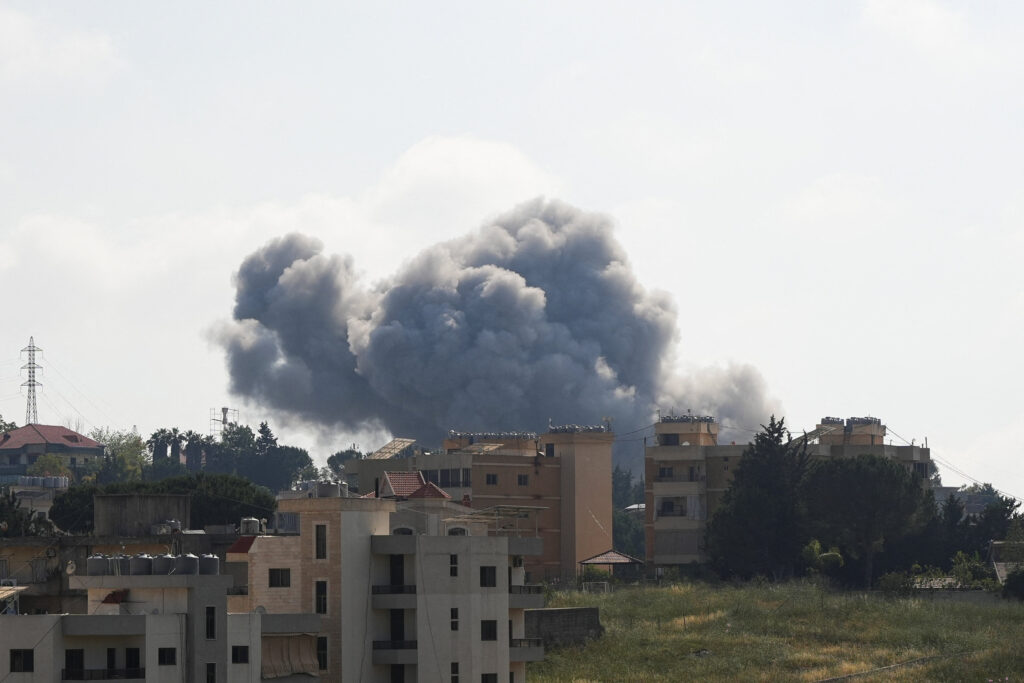
Smoke billows following an Israeli strike in Kfar Joz, Lebanon May 26, 2026. REUTERS/Stringer
In a significant escalation of violence, Israel has intensified its military operations in southern Lebanon, leading to the deaths of at least 31 people. The attacks mark a sharp increase in hostilities in the region, raising concerns of a wider conflict.
The strikes targeted various locations across southern Lebanon, causing extensive damage and casualties. Local sources report that both civilians and combatants have been affected, highlighting the severe impact on the civilian population. Emergency services and medical teams have been struggling to cope with the aftermath, attempting to provide aid and evacuate the injured from the affected areas.
Israel has stated that the increased military actions are in response to ongoing threats and attacks originating from Lebanon, aiming to neutralize militant capabilities. However, the severity and scale of the operations have drawn international attention and condemnation from various quarters, calling for restraint and protection of civilians.
The conflict underscores longstanding tensions between Israel and militant groups based in Lebanon, particularly Hezbollah, a powerful political and armed faction in the country. These developments come amidst a fragile peace and ongoing diplomatic efforts to stabilize the region.
Analysts warn that the recent surge in violence could further destabilize the region, potentially leading to broader confrontations involving multiple parties. The international community continues to call for dialogue and a peaceful resolution to avoid a humanitarian crisis.
As the situation remains fluid, residents in southern Lebanon are facing heightened insecurity, displacement, and disruption of daily life. Humanitarian organizations are calling for immediate access to the affected areas to deliver essential aid.
The coming days will be critical in determining whether the escalation can be contained or if it will spiral into a more extensive conflict with far-reaching consequences for Lebanon and the wider Middle East region.