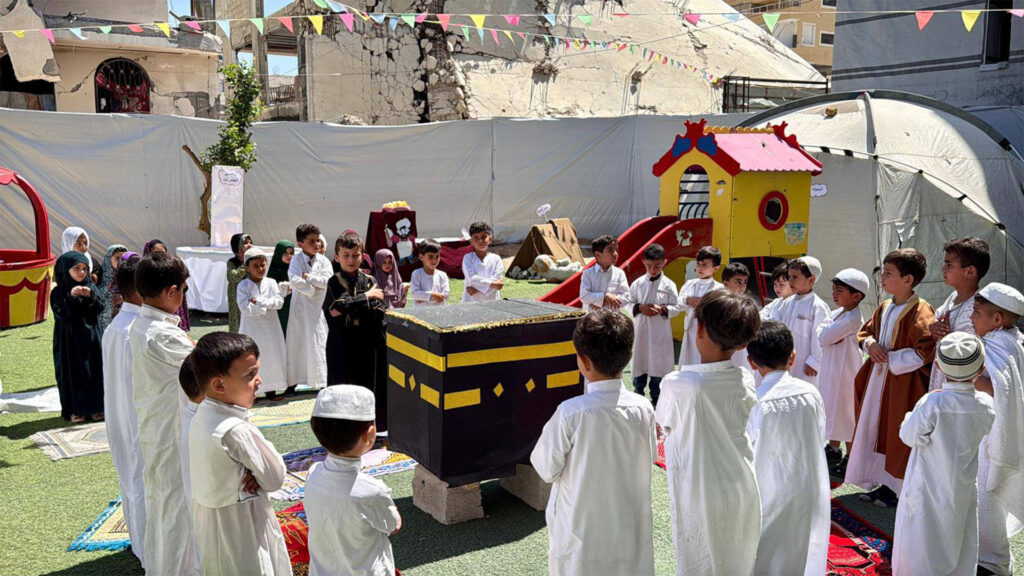
In Gaza City, a unique educational initiative occurred as a school taught children to perform the entire Hajj pilgrimage in a symbolic gesture amid the ongoing blockade by Israel. For the third consecutive year, Palestinians have been unable to undertake the actual Hajj pilgrimage due to travel restrictions, and this ‘mini Hajj’ has provided a meaningful alternative for young students.
The Hajj pilgrimage, one of the Five Pillars of Islam, holds profound religious significance for Muslims worldwide. Every year, millions strive to visit Mecca to fulfill this spiritual duty. However, political tensions and security measures have severely restricted Palestinian access to Saudi Arabia, particularly from Gaza.
Against this backdrop, a school in Gaza City replicated the various rites of Hajj within its premises. Children were guided through the steps of the pilgrimage, including the Tawaf (circling the Kaaba), Sa’i (walking between the hills of Safa and Marwah), and the symbolic stoning of the devil. This educational exercise aimed to keep the spirit and awareness of the pilgrimage alive among the younger generation despite the physical barriers.
The initiative has received emotional responses from families. Many expressed sorrow over the inability to participate in the pilgrimage for three years running but found solace in their children’s participation in this ceremonial learning.
Activists and community leaders have voiced concerns over the prolonged restrictions, emphasizing the Hajj’s importance not only as a religious obligation but also as a cultural and social experience that fosters unity and spiritual renewal for Palestinians.
The school’s program also serves as a reminder of the broader hardships facing Gaza’s population. The blockade has affected many aspects of daily life, limiting movement, economic opportunities, and access to religious sites and events.
Despite the challenges, the ‘mini Hajj’ project showcases resilience and adaptability. Educators hope that such initiatives instill a strong connection to faith and tradition in the youth, encouraging them to maintain hope for future opportunities to undertake the actual pilgrimage.
This creative approach highlights the lengths to which communities go to preserve their cultural and religious practices under difficult circumstances. As the geopolitical situation remains complex, the symbolic performance of the Hajj in Gaza stands as a testament to faith, perseverance, and the importance of sustaining identity amid adversity.