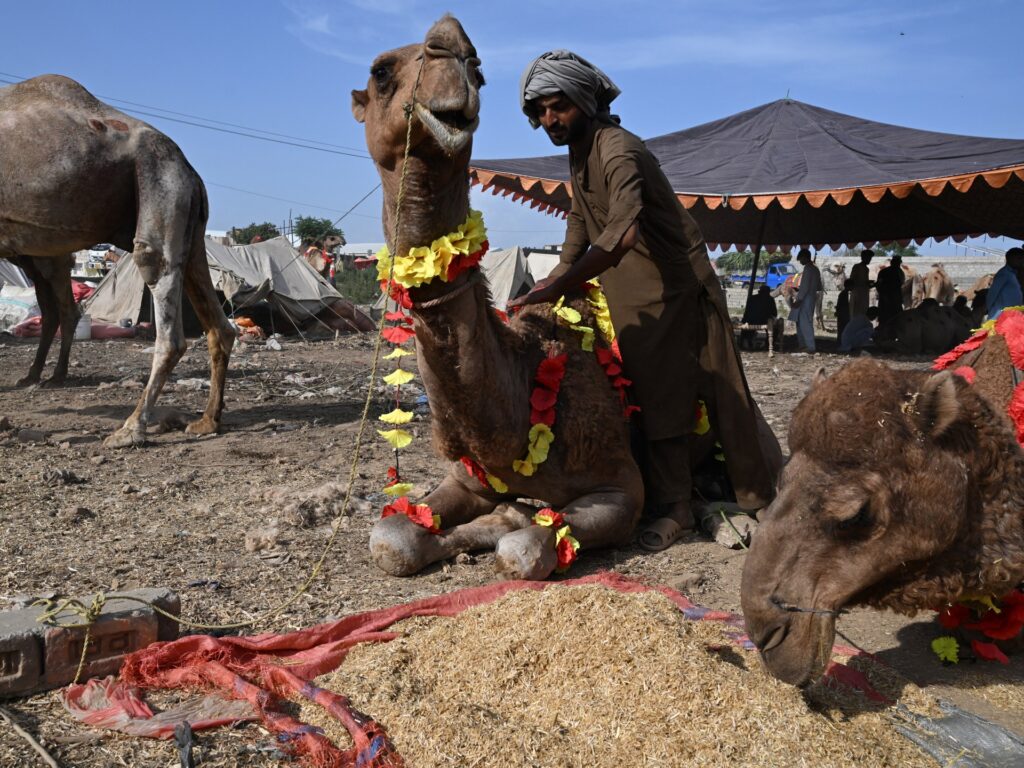
Livestock traders in Pakistan are facing significant challenges ahead of Eid al-Adha due to the ongoing conflict involving Iran, which has caused a sharp increase in prices. The war on Iran has disrupted supply chains and trade routes, leading to higher costs for animals and feed, which in turn affects the affordability for buyers.
Eid al-Adha, also known as the Festival of Sacrifice, is one of the most important Islamic festivals, marked by the sacrifice of livestock such as sheep, goats, and cows. The demand for animals typically surges in the weeks leading up to the festival, making it a critical period for traders.
However, this year, traders report lower sales volumes despite higher prices, as consumers are reluctant to pay the increased costs. This price hike is attributed to multiple factors linked to the Iran conflict, including fuel shortages, increased transport costs, and interrupted supply chains.
Many traders rely on livestock imports from Iran or on routes passing through the country to source animals and feed. With tensions high and trade disruptions prevalent, sourcing has become more expensive and difficult, pushing prices upward.
The Pakistan Livestock Traders Association has urged the government to intervene by ensuring stable trade routes and providing subsidies to cushion the impact on both traders and consumers. They emphasize the importance of the livestock sector to the rural economy, where many depend on the industry for their livelihoods.
Consumers, particularly in lower-income brackets, are feeling the pinch as the higher prices reduce their ability to purchase livestock for the festival, which is central to their religious and cultural practices.
Economists warn that if the conflict continues to destabilize supply chains, the livestock market could see prolonged price volatility, affecting not only Eid sales but also the broader agricultural economy.
Efforts are underway by some traders to find alternative supply routes and sources, including domestic breeding programs, to mitigate the impact of the Iran war. However, these solutions will take time to scale and may not fully resolve the immediate crisis.
In addition to economic concerns, the situation also raises questions about food security and market stability in a region already vulnerable to geopolitical tensions.
Overall, the war on Iran is not only a regional conflict but also has far-reaching effects on neighboring economies and communities, exemplified by the struggles of Pakistan’s Eid livestock traders this year.