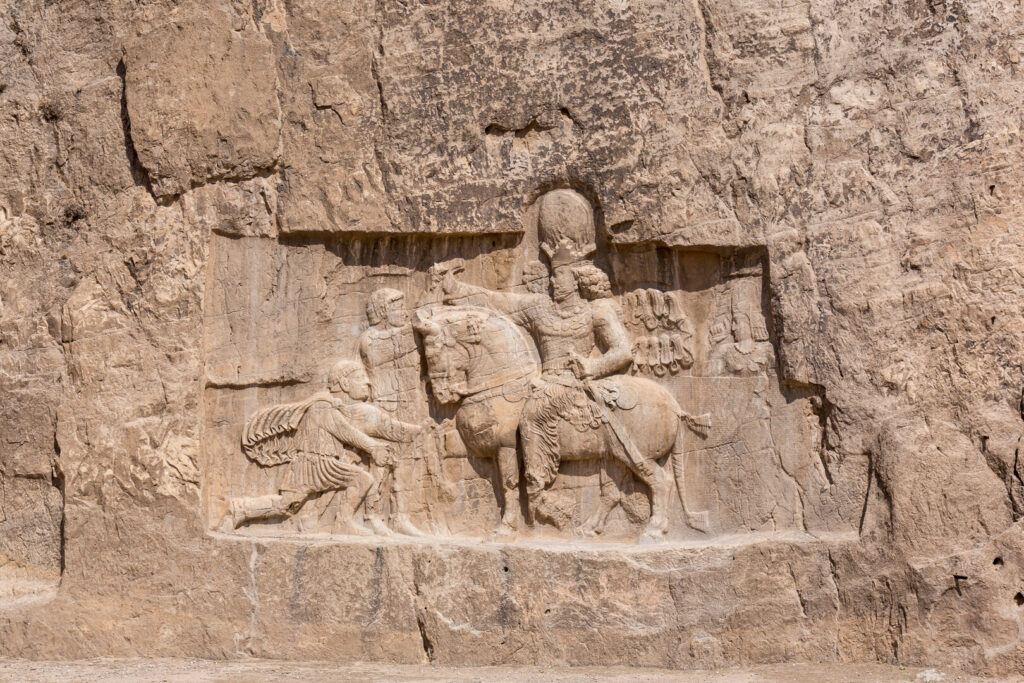
In a bold and symbolic statement, Iran’s foreign ministry spokesman has hinted that the United States may face a resolution to ongoing tensions framed by what he called ‘Persian-style’ peace, implying that any end to conflict would be on Tehran’s terms. This declaration draws on historical pride, referencing the ancient Persian Empire’s triumph over Rome, and frames contemporary diplomatic talks within this powerful narrative.
The spokesman’s remarks came amidst increasing dialogue between Iran and the US, amidst years of strained relations marked by sanctions, proxy conflicts, and diplomatic stand-offs. By invoking Persia’s historic victory over the Roman Empire, the statement emphasizes Tehran’s perception of strength and resilience in the face of foreign powers, suggesting that Iran views itself as holding the upper hand in any negotiations.
Ancient Persia’s successes against Rome are well-recorded hallmarks of strategic and military acumen. The Persian Empire, especially under rulers like Cyrus the Great and Darius, managed to not only resist but at times dominate Roman advances. By recalling this heritage, Iran aligns its modern geopolitical posture with the notion of enduring sovereignty and influence in the region.
In practical terms, the idea of ‘Persian-style’ peace in the spokesman’s language appears to suggest a settlement where Iran steers the terms, rather than capitulating to US demands. This could translate into negotiated agreements that address sanctions relief, nuclear programs, and regional influence in a manner favorable to Tehran.
The context of these statements is important. US-Iran relations have been fraught since the 1979 Islamic Revolution, with numerous flashpoints including the US withdrawal from the Iran nuclear deal in 2018, subsequent reimposition of heavy sanctions, and tensions in the Persian Gulf. Recent diplomatic efforts have sought to ease these tensions, but a final resolution remains elusive.
The spokesman’s comments also serve as a domestic message within Iran, projecting confidence to the public and regional allies that Tehran is not weakened by Western pressure but stands ready to shape outcomes. This rhetoric is emblematic of Iran’s strategic communication, which often blends historical symbolism with modern political ambitions.
Experts note that referencing historical victories is a common diplomatic tool but one that signals the non-negotiable attitudes of a state. Iran’s messaging may be intended to strengthen its negotiating position by portraying peace as a status where Iran’s interests are paramount.
While the US has indicated a willingness to engage in talks, Tehran’s insistence on a ‘persian-style’ peace could complicate negotiations, as it implies a reluctance to make concessions seen as diminishing Iran’s regional power or sovereignty. Analysts suggest that aligning modern diplomacy with historic triumphs underscores Iran’s desire to avoid perceived humiliation.
Furthermore, the phrase encapsulates not only the geopolitical struggle but also cultural pride. Iran’s rich history offers a narrative that resonates deeply with citizens and leadership alike, fostering unity around a shared identity tied to ancient accomplishments.
The challenge facing diplomats is to bridge this gap in expectations to find common ground that addresses US concerns about nuclear proliferation and Iran’s strategic behavior, while respecting Tehran’s demand for dignity and security guarantees.
If the latest talks lead to tangible agreements, they could mark a milestone in the US-Iran relationship, moving beyond decades of hostility. However, the Iranian spokesman’s evocation of a ‘Persian-style’ peace makes clear that from Tehran’s perspective, this would not be peace on American terms.
In conclusion, Iran’s foreign ministry spokesman’s recent comments highlight the enduring complex dynamics between the two nations, framed by historical context and modern political realities. As negotiations continue, the international community watches to see if this ancient metaphor of victory will lead to a new chapter of peace or prolong the standoff in a delicate geopolitical arena.