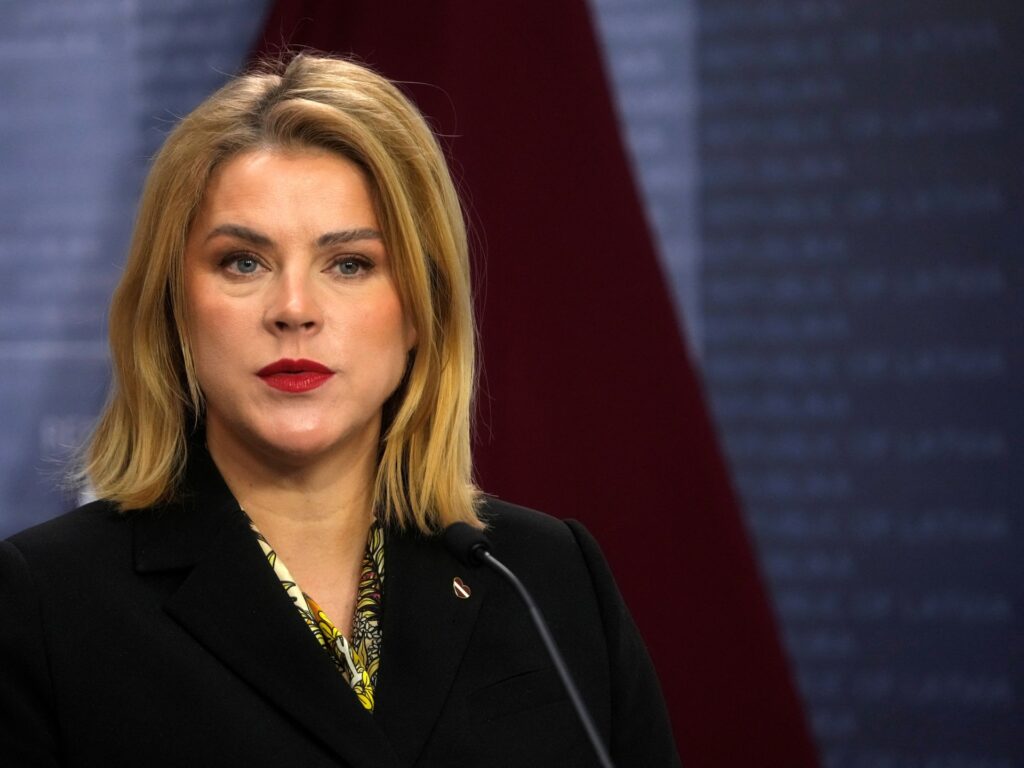
In a significant political development, Latvian Prime Minister Evika Silina has announced her resignation following a series of escalating incidents involving stray drones, which Latvian authorities suspect to have originated from the ongoing conflict in Ukraine. The unexpected move has sent ripples through both the national and international political arenas, highlighting the complex security challenges faced by Latvia amidst the broader regional tensions.
The incident began when several drones, reportedly stray and unmarked, were detected flying over sensitive areas within Latvian airspace. These drones sparked immediate concern due to their origin and potential threat, given the ongoing conflict between Ukraine and its adversaries. While the drones were suspected to be linked to Ukraine, the exact nature and purpose of these incursions remain unclear, stirring considerable controversy and debate within Latvia’s political circles.
Prime Minister Silina, who took office with a promise to strengthen Latvia’s security and international relations, faced intense scrutiny as the drone crises unfolded. Critics argue that the government’s response was sluggish and inadequate, potentially exposing national vulnerabilities and undermining public trust in the administration’s capability to manage external threats.
In her resignation statement, Silina expressed regret over the incidents and acknowledged the escalating political pressures. She emphasized that her stepping down was a move to allow a fresh leadership approach to address the ongoing security concerns effectively and restore confidence among Latvian citizens and international partners.
The resignation has prompted swift reactions from political parties within Latvia, many of whom have called for unity and focused efforts to reinforce the nation’s defense mechanisms. The Latvian parliament is now tasked with appointing a new prime minister who can navigate the country through this turbulent period.
Analysts observe that the drone incidents and subsequent political upheaval underscore the increasingly blurred lines of modern warfare, where civilian territories face unexpected incursions that trigger profound political consequences. Latvia’s strategic position in the Baltic region and its membership in NATO make it a critical player in the regional security dynamics, thereby amplifying the implications of these drone-related events.
Internationally, the situation is being closely monitored, especially by NATO allies and neighboring countries, as there is heightened sensitivity to any escalation in the Baltic states. Latvia’s government transition will likely influence diplomatic engagements and regional security policies aimed at deterring further aerial incursions and maintaining stability.
Further investigations into the drone incidents are ongoing, with Latvia pledging to enhance airspace surveillance and defense capabilities. The government is also seeking stronger collaboration with NATO and EU partners to address the technological and tactical challenges posed by unmanned aerial systems in the modern geopolitical context.
Evika Silina’s resignation marks a pivotal moment in Latvia’s political landscape, reflecting the intricate interplay between national security, political accountability, and regional geopolitical tensions. As the country navigates this transition, the focus remains sharply on safeguarding its sovereignty and contributing to the collective security of the Baltic region amidst a backdrop of evolving security threats.