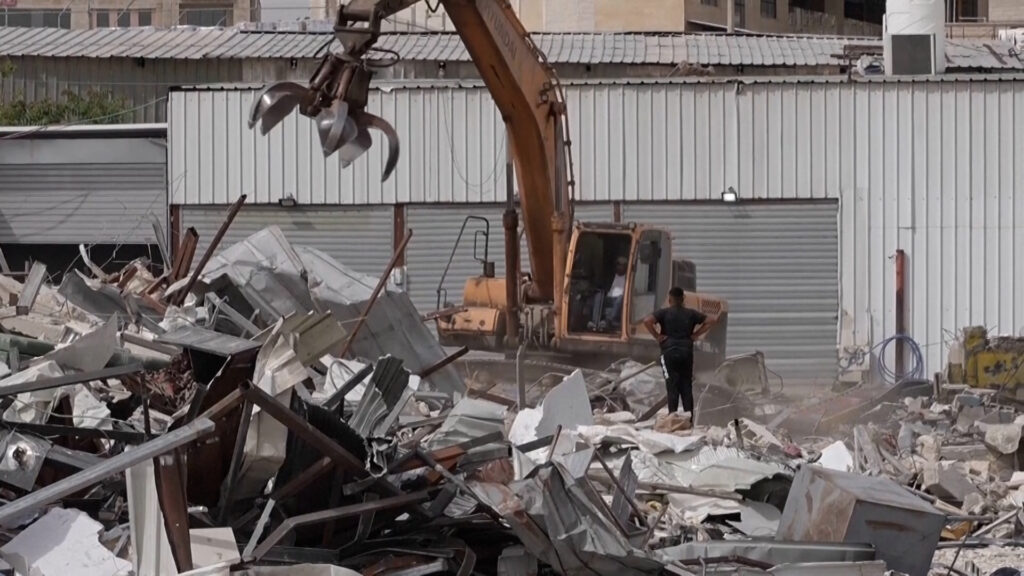
In a recent development that has sparked significant controversy and international concern, Israeli forces have bulldozed several Palestinian shops to pave the way for a road connected to Israeli settlements. This action is seen by many as part of a broader strategy to solidify Israeli presence in contested areas, often at the expense of Palestinian residents.
The demolition occurred in a Palestinian neighborhood where the shops have served the local community for years. Israeli authorities justified the bulldozing by stating that the road is vital for improving transportation and connectivity for nearby Israeli settlements. However, Palestinians and human rights organizations argue that the move is a deliberate tactic to undermine Palestinian businesses and displace residents.
This road project is linked directly to nearby settlements considered illegal under international law, though Israel disputes this characterization. The new road will enhance mobility for settlers, potentially increasing settlement expansion and further isolating Palestinian communities.
The destruction of the shops not only affects the economic livelihood of the Palestinian shop owners but also exacerbates tensions in an already volatile region. Locals have reported feeling helpless as their sources of income and daily conveniences vanish due to the bulldozing.
International bodies, including the United Nations and various human rights groups, have condemned the demolition actions. They emphasize the importance of protecting civilian infrastructure and call for all parties to adhere to international legal standards.
This incident highlights ongoing challenges in Israeli-Palestinian relations, particularly concerning land rights, settlements, and the impact on Palestinian civilians. The road construction project reflects broader geopolitical disputes over sovereignty and territory in the region.
As the situation evolves, global observers are closely monitoring the responses from both Israeli authorities and Palestinian communities. The bulldozing of the shops serves as a stark reminder of the complexities and human cost inherent in the Israeli-Palestinian conflict, with development projects often intertwined with thorny political implications.
Analysts suggest that unless there is renewed diplomatic engagement and respect for international law, such incidents might continue, exacerbating instability and impeding prospects for peace. Meanwhile, affected Palestinians face the immediate challenge of rebuilding their livelihoods amid ongoing disputes about the future of the territories they inhabit.