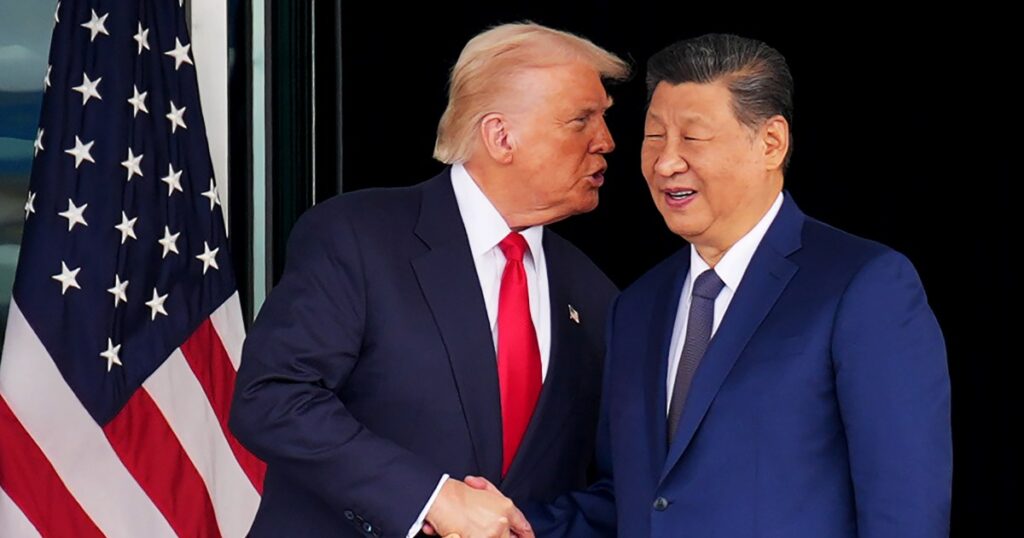
The upcoming meeting between US President Donald Trump and Chinese President Xi Jinping in Beijing has once again brought to the forefront discussions about the possible formation of a “Group of Two” or “G2” – an informal alliance between the two global superpowers. This idea envisions the United States and China jointly steering international affairs and addressing global challenges together, potentially reshaping the world order.
The concept of a ‘G2’ emerged in the late 2000s as China rapidly expanded its economic and geopolitical influence, rivaling US dominance. Advocates suggest that closer cooperation could reduce geopolitical tensions, foster economic development, and better manage global issues such as climate change, trade disputes, and security threats.
However, the notion also raises significant debate. Critics argue that the power asymmetry and divergent interests of the two nations could hinder effective collaboration. Furthermore, other global players might feel marginalized or view such a two-nation bloc as threatening, potentially destabilizing established multilateral frameworks like the United Nations and G20.
The Trump-Xi meeting is particularly significant amid ongoing trade tensions and technological rivalry. Both countries have engaged in tariff battles, market restrictions, and concerns over intellectual property rights and technology transfers. Observers hope the meeting will lead to a détente and frameworks for mutual respect and cooperation.
Experts highlight that a successful ‘G2′ would require trust, transparency, and willingness to compromise on both sides. It could lead to coordinated policies on economic stability, cybersecurity, and regional conflicts, including North Korea’s nuclear ambitions.
Yet, challenges remain profound. Nationalistic sentiments, strategic competition in the Indo-Pacific region, and disagreements over Hong Kong, Taiwan, and human rights issues complicate matters.
Despite obstacles, the potential benefits of a US-China partnership in global governance are substantial. Joint leadership could propel advancements in sustainable development, global health, and trade reforms.
The leaders’ dialogue in Beijing will be closely watched worldwide as an indicator of whether the vision of a ‘Group of Two’ can evolve from concept to practical reality, shaping the geopolitical landscape for years to come.