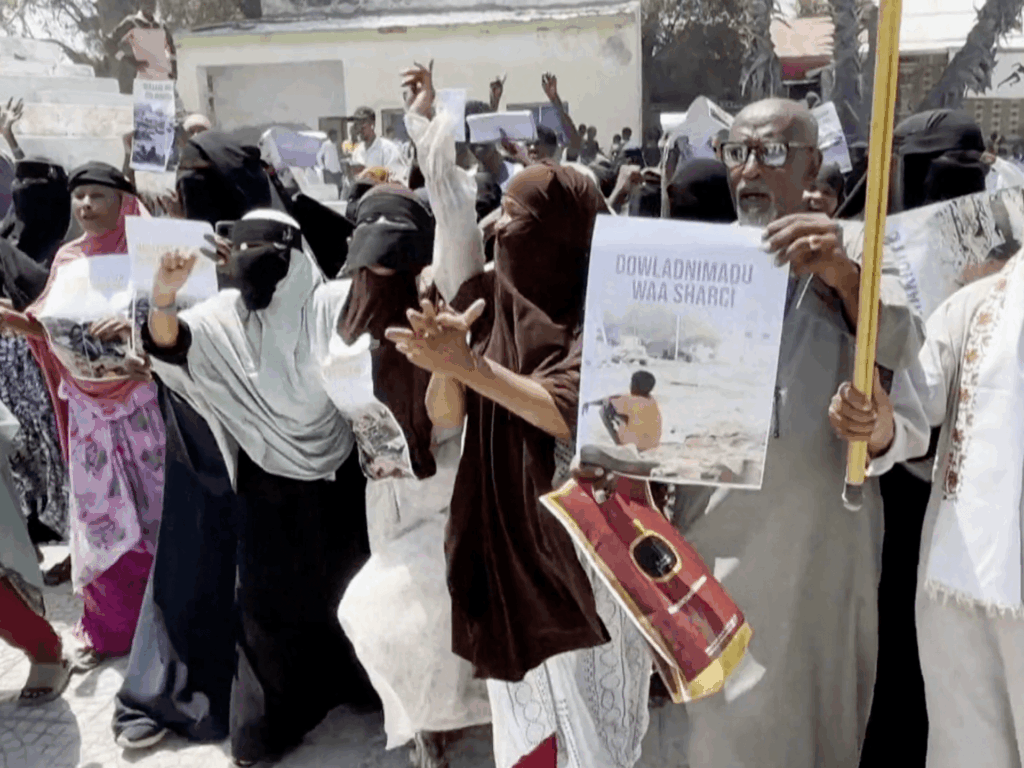
Across Mogadishu, the Somali capital, a significant wave of demonstrations unfolded as citizens rallied in support of families recently displaced by government-ordered evictions. These evictions, part of a series of actions undertaken by local authorities, have sparked widespread outrage among residents and human rights advocates alike.
The displaced families, many of whom have lived in their homes for years, found themselves forced to leave due to directives from the government aiming to clear certain areas. Officials have stated the intent is to develop infrastructure and improve urban living conditions; however, critics argue that the eviction process has lacked transparency and adequate support for those affected.
Protesters gathered in multiple neighborhoods, carrying signs and chanting slogans that called for the government to halt the evictions and provide immediate assistance to displaced families. The rallies drew participation from a diverse group of Somalis, including community leaders, activists, and ordinary citizens united by concerns over housing rights and social justice.
Human rights organizations attending the rallies highlighted the urgency of protecting vulnerable populations from sudden displacement without proper rehabilitation plans. They urge the Somali government to engage in dialogue and develop fair policies that prioritize the welfare of residents over urban development ambitions alone.
The Somali government has yet to release a formal response to the demonstrations. However, observers note that the escalating public pressure could prompt officials to reconsider eviction measures and explore alternative solutions for urban planning.
Historically, Mogadishu has experienced complex challenges related to housing and displacement due to ongoing conflicts and instability. The recent evictions have only amplified these longstanding issues, bringing them to the forefront of national discourse.
Community groups are now calling for an inclusive approach that involves affected families in decision-making processes to ensure their needs and rights are protected. Social media has played a crucial role in amplifying the voices of the displaced, with many sharing personal stories and mobilizing support.
As the city grapples with balancing development and human rights, the rallies underscore a growing demand for accountability and compassion in governance. Observers warn that failure to address the crisis could lead to heightened tensions and further social unrest.
In conclusion, the demonstrations in Mogadishu against government-ordered evictions represent a critical moment for Somalia’s urban policy and human rights landscape. The international community and Somali leadership now face pressing calls to find equitable solutions that respect the dignity and stability of all residents while navigating the complexities of rebuilding the capital city.