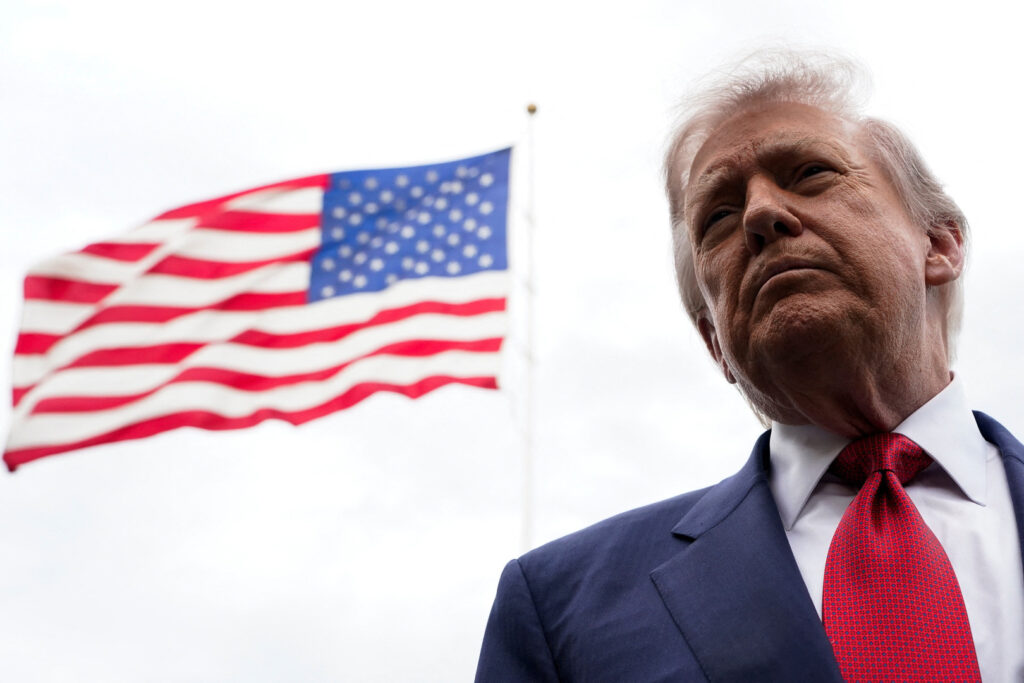
U.S. President Donald Trump looks on at the White House in Washington, D.C., U.S., May 8, 2026. REUTERS/Elizabeth Frantz
In recent developments on the international stage, US President Donald Trump has publicly rejected Iran’s response to a peace proposal put forth by the United States, describing it as “totally unacceptable.” This statement underscores the ongoing tensions between the two countries and highlights the challenges in diplomatic negotiations.
The peace proposal, designed to address key issues surrounding Iran’s nuclear program and regional activities, was met with disapproval from the Iranian government, which issued a response that the US administration found unsatisfactory. Trump’s strong reaction signals a hardening stance amid efforts to stabilize relations.
Experts note that this impasse comes at a critical juncture where diplomatic efforts have seen fluctuating progress. Iran’s response reportedly failed to meet the core demands of the US, leading to this terse dismissal by President Trump.
The US administration has emphasized the necessity for Iran to make substantial concessions if any meaningful dialogue is to continue. Meanwhile, global leaders watch closely as tensions could influence broader geopolitical dynamics.
Trump’s declaration reflects a broader strategy by the US to maintain pressure on Iran through diplomatic and economic means, aiming to curb activities perceived as destabilizing by the US and its allies.
This development adds complexity to the ongoing negotiations and raises questions about the next steps for diplomatic engagement between Washington and Tehran. The international community remains hopeful for a peaceful resolution, but the current deadlock poses significant challenges.
As events unfold, the focus will remain on whether Iran will reconsider its position or if the US will alter its approach in pursuit of a viable agreement.