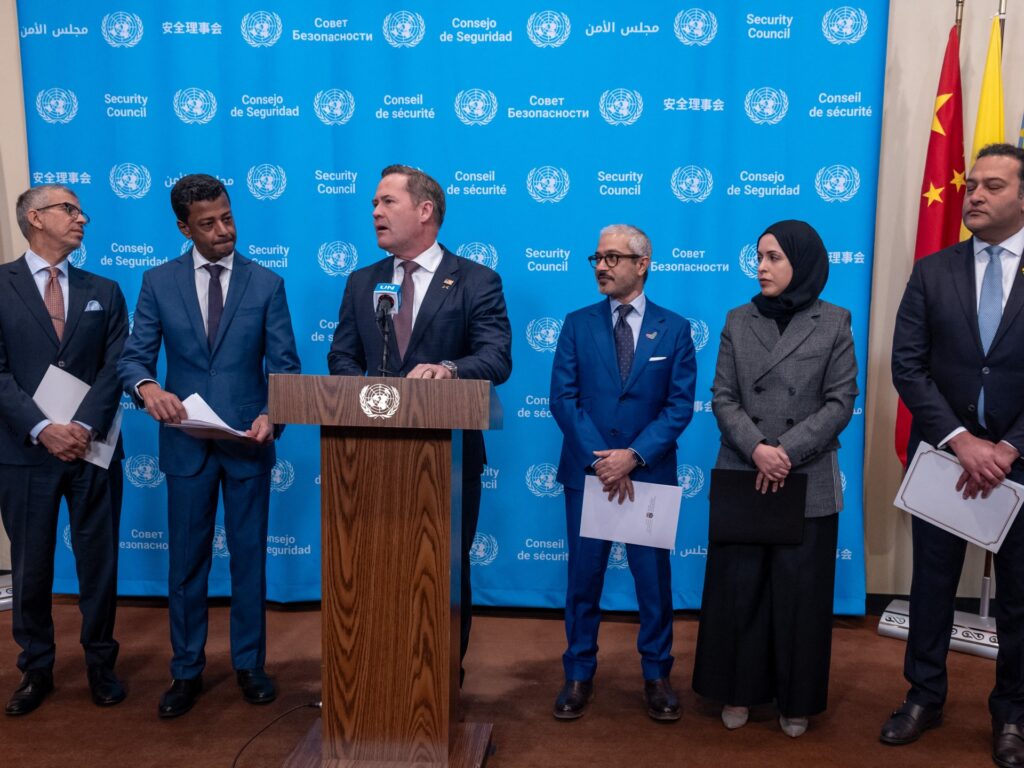
Gulf states have collectively called upon the United Nations to take decisive action to guarantee the safety and security of the Strait of Hormuz, a vital waterway for global oil shipments. This strategic passage has witnessed escalating tensions, with recent incidents involving attacks and the deployment of naval mines, severely threatening maritime navigation and regional stability.
In a draft resolution submitted at the UN, member states insist that Iran must immediately cease all hostile actions in and around the Strait of Hormuz. The resolution explicitly demands Iran to identify the precise locations of naval mines planted in the strait, which have created hazardous conditions for commercial and military vessels alike.
Moreover, the draft underscores the importance of safe and unimpeded passage for humanitarian aid through the strait, emphasizing the need for sustained access to populations reliant on aid shipments. The resolution urges the United Nations Security Council to take robust measures to enforce compliance and ensure the protection of international maritime routes.
This collective appeal from the Gulf states reflects growing concern over the impact of regional conflicts on global energy security and international trade. The Strait of Hormuz is a critical chokepoint through which approximately one-fifth of the world’s petroleum passes, making its safety paramount to the global economy.
The draft resolution also calls for enhanced monitoring and verification mechanisms, recommending that international observers be deployed to oversee navigation safety and to report any violations promptly. It encourages diplomatic engagement and dialogue to resolve disputes peacefully and prevent further escalation.
Iran’s recent activities, including reported attacks on commercial ships and the placement of sea mines, have led to heightened tensions with neighboring countries and the international community. The Gulf states’ petition to the UN signifies their collective determination to restore stability and secure maritime lanes essential for their economic wellbeing.
This situation highlights the delicate balance between regional sovereignty and international security concerns, where the safe passage of goods and people must be preserved amidst geopolitical rivalries.
As the resolution awaits consideration by the UN Security Council, the international community watches closely, recognizing that the security of the Strait of Hormuz is intrinsically linked to global peace and prosperity. The calls for cooperation and adherence to international maritime laws are clear, reflecting a unified stance against threats that disrupt safe navigation and endanger lives.
Ensuring the Strait of Hormuz remains open and secure is not only a matter of regional interest but a global imperative, necessitating concerted diplomatic efforts, transparent communication, and unwavering commitment to peace and security on the high seas.