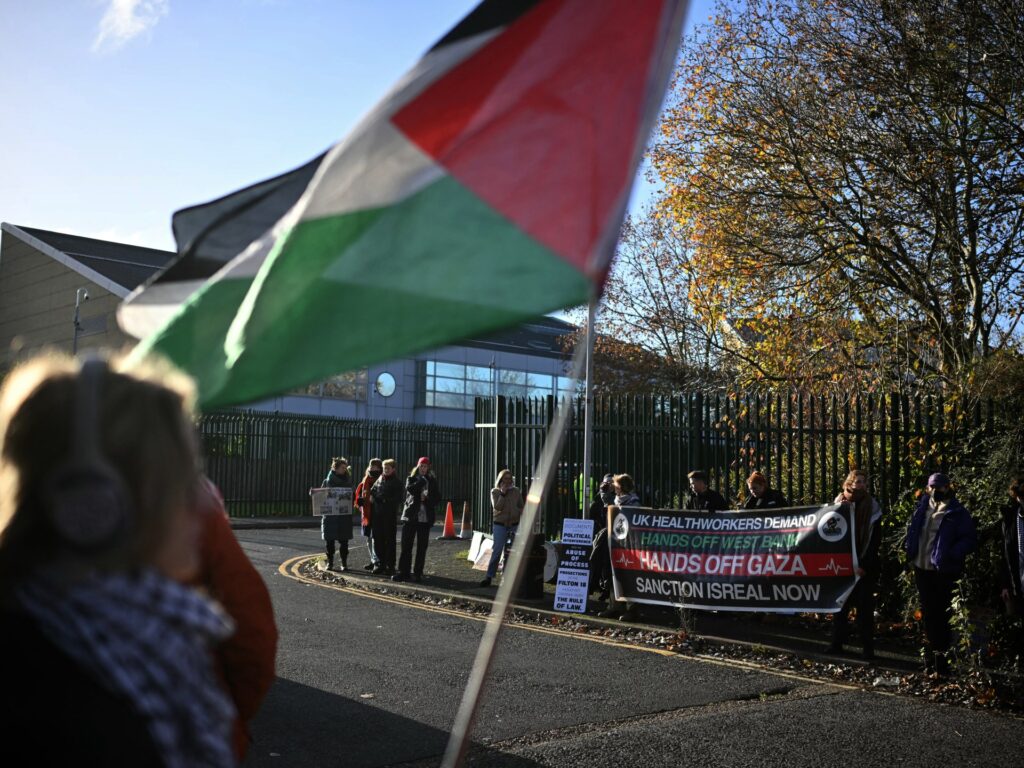
In a significant legal development in the United Kingdom, four activists from the now-banned group Palestine Action have been convicted for breaking into a facility owned by the Israeli defense company Elbit Systems in Bristol. This incident occurred amid heightened tensions and conflict, months into Israel’s war on Gaza.
Palestine Action, an activist collective known for its direct actions against companies they accuse of facilitating Israeli military operations, targeted the Bristol facility as part of their campaign. The group has been banned by UK authorities, who justify the move by citing concerns over public order and security.
The break-in at Elbit’s site was condemned by local law enforcement and legal authorities who emphasized that unlawful entry and property damage would not be tolerated, regardless of the political motivations behind such protests. Prosecutors argued that the activists’ actions went beyond peaceful demonstration and amounted to criminal trespass and vandalism.
The court’s decision to convict the four activists was met with mixed reactions. Supporters of Palestine Action decried the ruling as an attempt to silence legitimate protest and to shield companies involved in controversial arms manufacturing. Critics, meanwhile, highlighted the necessity of upholding the rule of law and protecting corporate facilities from illegal incursions.
Elbit Systems, an Israeli multinational involved in defense technology and systems, has faced repeated protests and actions by Palestine Action and other groups linking its equipment to military activities in occupied territories. The Bristol facility has been a focal point for activist actions due to its reputed role in manufacturing components used in drones and surveillance technology.
The conviction raises questions about the balance between activism and legality in contentious geopolitical conflicts. It also highlights the challenges governments face when addressing politically charged protests that intersect with international conflicts.
As this case unfolds, it underscores the wider global debate surrounding Palestine, Israel, and the role of international companies and their facilities abroad. It also brings attention to the tactics employed by activist groups and the limits of lawful protest in democratic societies.
The UK courts have sent a clear message that while the right to protest is fundamental, it does not extend to breaking the law or causing damage to property. The Palestine Action activists’ conviction serves as a precedent for how similar cases might be handled in the future, particularly those involving international conflict issues.
This legal episode is likely to further energize both sides of the debate over Palestine and Israel in the UK and beyond, with activists vowing to continue their campaigns and supporters of the convicted activists calling for political and legal reforms to protect activist rights.