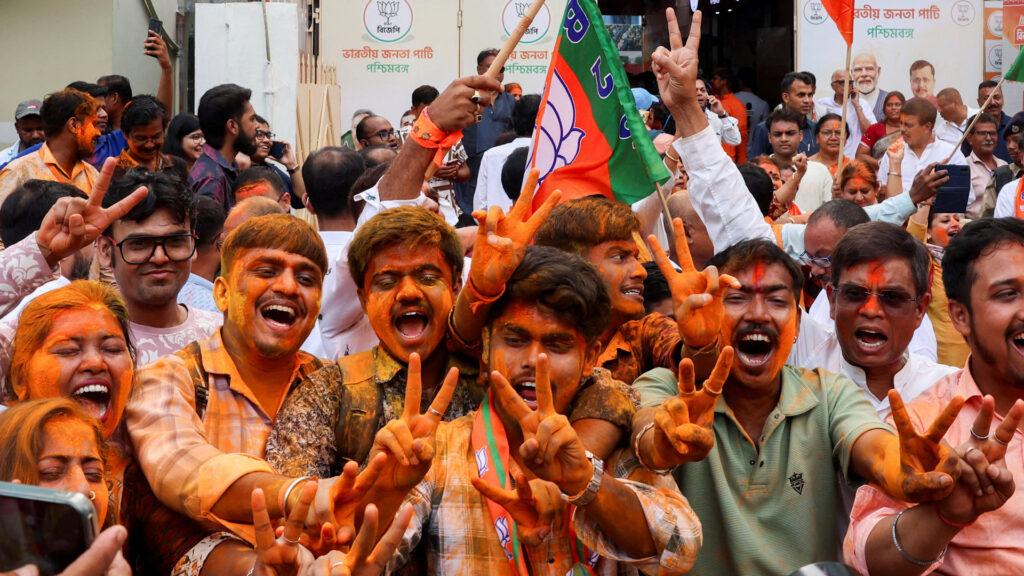
In a significant political development in India, Prime Minister Narendra Modi’s Bharatiya Janata Party (BJP) is poised to wrest control of the eastern state of West Bengal. This anticipated shift marks a critical turning point in the region’s political landscape, which has traditionally been dominated by the All India Trinamool Congress (TMC). The BJP’s potential victory in West Bengal reflects broader national trends of political realignment and the growing influence of Modi’s party across the country.
West Bengal has long been a stronghold of regional parties, with TMC under Mamata Banerjee maintaining power for several terms. However, recent elections have demonstrated a surge in support for the BJP, which has been actively campaigning on platforms centered around development, nationalism, and economic reforms. The party’s strategy included mobilizing a diverse coalition of voters, emphasizing both rural and urban issues.
The BJP’s ascendance in West Bengal is not only a testament to its growing organizational strength but also highlights changing voter sentiments. Many in the state have expressed desires for new leadership that can address economic challenges, create jobs, and improve infrastructure. Modi’s government at the national level has garnered support for various initiatives aimed at boosting the economy, enhancing connectivity, and fostering social welfare programs.
Political analysts note that the BJP’s success in West Bengal could have far-reaching implications for Indian politics. It may lead to the consolidation of power for the central government and reinforce Modi’s vision of a unified India under the BJP’s ideological framework. Additionally, the outcomes may influence policies related to federalism, regional autonomy, and resource distribution.
This development also underscores the dynamic nature of Indian democracy, where electoral outcomes can shift dramatically based on changing demographics, campaign strategies, and public sentiment. The BJP’s ability to extend its influence into a culturally rich and politically complex state like West Bengal demonstrates its expanding reach and adaptability.
As the BJP gears up to take control, challenges remain, including managing regional aspirations, addressing local governance issues, and fostering inclusive development. The party’s approach in the coming months will be closely watched by political observers, citizens, and stakeholders across India.
In conclusion, Modi’s BJP poised to take control in West Bengal symbolizes a major political transformation and reflects broader patterns of change within India’s democratic framework. The coming period will be crucial in shaping the future trajectory of both the state and the nation.