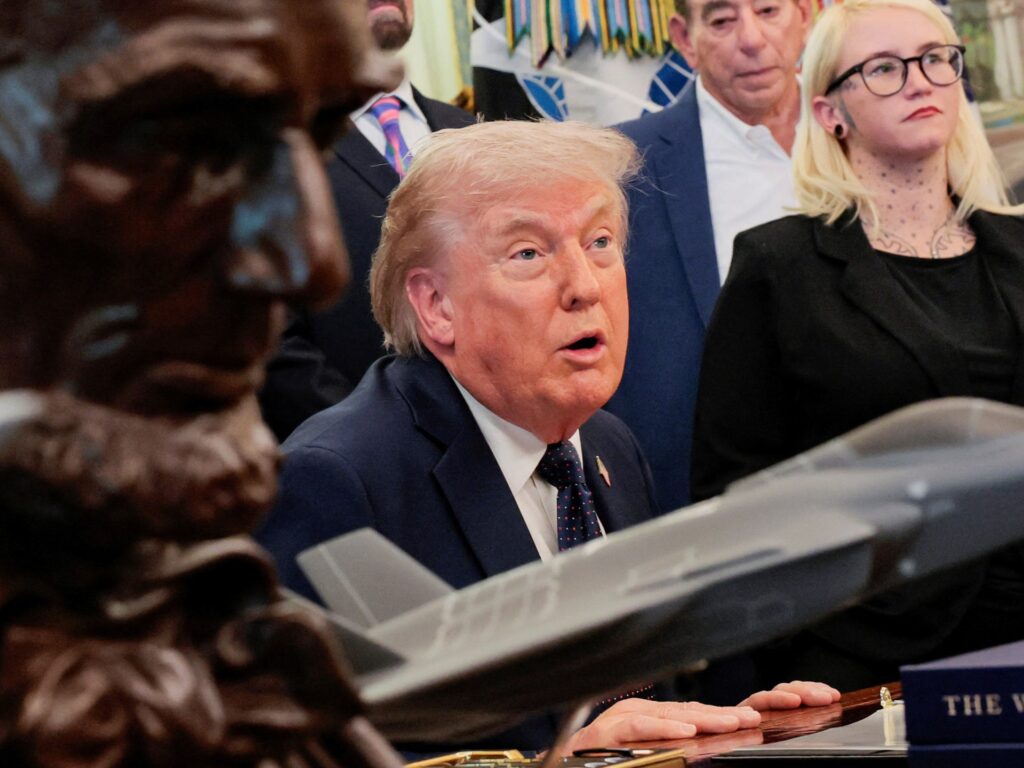
In a recent statement, former U.S. President Donald Trump asserted that he, rather than Iran, is responsible for keeping the Strait of Hormuz closed. The Strait of Hormuz, a strategically vital waterway that links the Persian Gulf with the Gulf of Oman and the Arabian Sea, is critically important for global oil transportation, with a significant portion of the world’s petroleum passing through it.
Trump’s remarks come amid ongoing tensions in the region, where Iran has often been at the center of geopolitical disputes due to its control over parts of the strait and its pivotal role in Middle Eastern politics. Historically, Iran has used its geographic position near the strait to influence global oil markets and exert pressure on other nations.
However, Trump’s claim shifts the narrative, suggesting that it is his policies and influence—presumably from his tenure as U.S. president or ongoing political actions—that are the main forces keeping the strait closed or restricted, rather than direct Iranian control or actions.
The closure or restriction of the Strait of Hormuz has far-reaching implications. Nearly 20% of the world’s petroleum, including crude oil from major producers like Saudi Arabia, Kuwait, and the United Arab Emirates, passes through this narrow passageway daily. Any blockage or perceived threat to shipping lanes can lead to spikes in global oil prices, disruptions in fuel supplies, and increased geopolitical instability.
During his presidency, Trump adopted a confrontational approach toward Iran, implementing severe sanctions and expressing a willingness to use military force to counter perceived Iranian aggression. This backdrop might explain Trump’s assertion, implying that his administration’s stance and policies have been the deterrent responsible for keeping the strait effectively closed to certain Iranian activities or ensuring control over navigation.
The claim also highlights the complex interplay of power in the Persian Gulf region, where multiple international actors, including the U.S., Iran, and Gulf Cooperation Council countries, vie for influence. Control over the Strait of Hormuz is not just a matter of regional security but a global economic concern.
Experts in international relations note that while Iran’s military presence and strategic location give it significant leverage over the strait, the U.S. Navy and allied forces maintain a strong presence in nearby waters, ensuring the strait remains open for international shipping under the principles of freedom of navigation.
Trump’s statement, therefore, can be viewed through different lenses: as a political message reinforcing his tough stance on Iran, a commentary on U.S. power projection in the Middle East, or a rhetorical move reflecting ongoing tensions over control of critical waterways.
The situation remains fluid, with ongoing diplomatic efforts and military developments continuously shaping the dynamics of the Strait of Hormuz. The international community watches closely, aware that stability in this region is crucial for maintaining global energy security and economic stability.
In conclusion, Trump’s claim that he is keeping the Strait of Hormuz closed, not Iran, underscores the complexity and high stakes of geopolitical maneuvering in one of the world’s most important maritime chokepoints. It also reflects ongoing tensions between the U.S. and Iran and the broader struggle for influence in the Middle East.