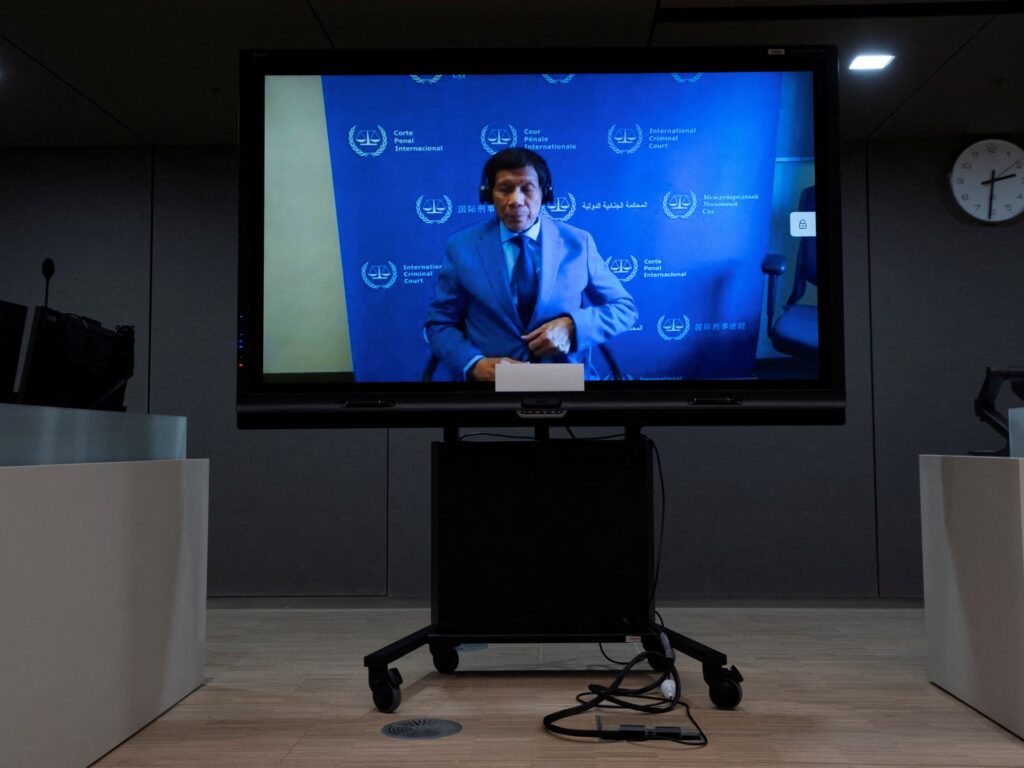
The International Criminal Court (ICC) has officially confirmed the trial against former Philippine President Rodrigo Duterte on charges of crimes against humanity. This groundbreaking decision comes after a thorough investigation into Duterte’s controversial ‘war on drugs,’ which began during his presidency and sparked international outrage.
Rodrigo Duterte, who served as president of the Philippines from 2016 to 2022, launched a widespread anti-drug campaign that authorities and human rights groups have criticized for its alleged record of extra-judicial killings and mass human rights violations. The ICC’s confirmation of the charges marks a critical step forward in accountability efforts for these alleged abuses.
The court’s ruling clears the way for Mr. Duterte to face a full trial regarding accusations that his policies led to thousands of unlawful deaths, violations that the ICC classifies as crimes against humanity. This designation underscores the international gravity of the alleged offenses, involving systematic attacks on civilian populations.
Legal experts have highlighted the significance of this decision as ICC judges concluded that there was sufficient evidence to proceed with trial despite the complex legal and diplomatic challenges involved in prosecuting a former head of state. This trial poses challenging questions about sovereignty, accountability, and justice on the global stage.
Human rights advocates have welcomed the ICC’s move, emphasizing the importance of justice for the victims of the Philippine drug war. Various reports estimate that thousands of individuals were killed during the campaign, with many incidents allegedly involving police and vigilante groups operating with impunity.
The ICC prosecutors initially opened their investigation in 2018, prompted by petitions from human rights organizations and families of victims. They documented patterns of deliberate violence purportedly orchestrated by high-level officials, leading to the current charges against Duterte.
Duterte’s administration consistently rejected international criticism, maintaining that their campaign was aimed at combating drug-related crime and protecting public safety. However, international legal bodies and the United Nations repeatedly urged the Philippine government to uphold human rights standards and investigate unlawful deaths.
This trial is notable as one of the few instances where a former leader is being held accountable internationally for his domestic policies. It may set a precedent for how global judicial institutions address state-led human rights abuses in the future.
The proceedings are expected to be closely monitored by the international community, with governments, NGOs, and human rights defenders awaiting justice outcomes and potential implications for international law enforcement.
Former President Duterte’s defense team has argued that the ICC lacks jurisdiction over the Philippines since the country withdrew from the court in 2019. Nonetheless, ICC prosecutors maintain jurisdiction as the investigations and alleged crimes occurred while the Philippines was still a member.
As the trial moves forward, there remains considerable debate surrounding international law, the balance between national sovereignty and global justice, and the broader impact on human rights protections worldwide.
Ultimately, the ICC’s confirmation accelerates accountability efforts and sends a clear message that alleged crimes against humanity, regardless of who commits them, will face judicial scrutiny.
This historic move may encourage other countries and international bodies to pursue legal action against leaders accused of serious human rights violations, contributing to the global fight against impunity and injustice.
The former president’s trial underscores the ongoing tensions between national policies and international human rights standards in the 21st century.
This important legal development signifies progress in the global quest for justice and demonstrates the expanding role of international courts in addressing severe allegations beyond national jurisdictions.
Observers and legal analysts anticipate a lengthy and complex legal battle ahead, one that could reshape international criminal law and enhance protections for vulnerable populations against state-sponsored violence and abuses.