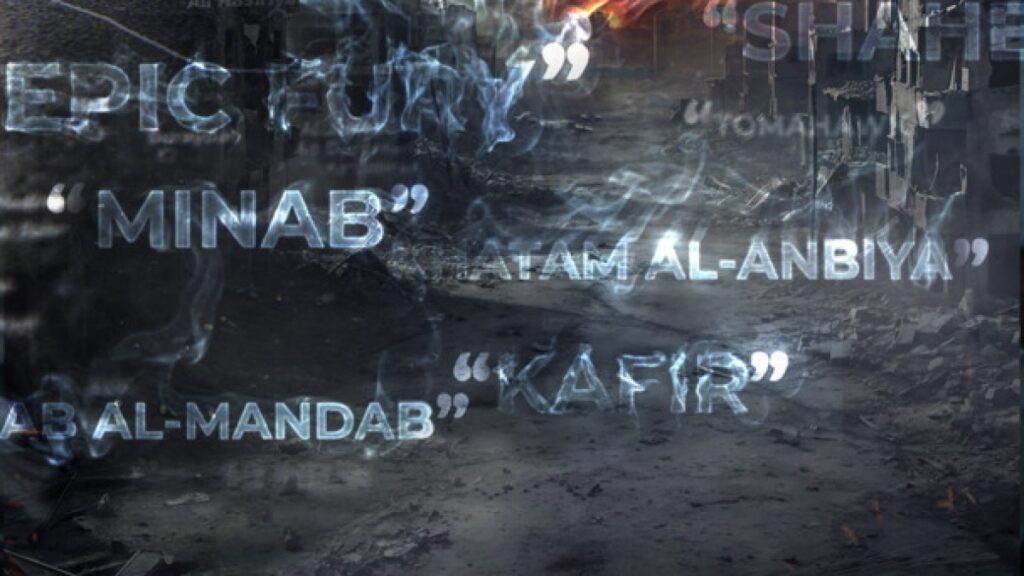
As tensions escalate in the ongoing US-Israel conflict with Iran, the terminology used in media coverage and political discourse is often a complex blend drawn from various linguistic origins. Understanding these terms is essential to grasp the nuances of this multifaceted war.
The phrase “war on Iran” itself conjures images of conflict, but the language surrounding it is layered. Words such as “sanctions,” “proxy warfare,” “asymmetric warfare,” and “diplomatic isolation” are frequently used by officials and journalists alike.
“Sanctions” derive from Latin roots, essentially meaning penalties imposed to enforce compliance. In this context, the US and its allies have imposed economic sanctions meant to restrict Iran’s financial capabilities and curb its nuclear ambitions.
“Proxy warfare” refers to conflicts where opposing countries support third-party groups to advance their agendas without direct confrontation. The word “proxy” stems from Middle English but carries the notion of authorized representation. In this scenario, Iran’s support for groups like Hezbollah in Lebanon or militias in Iraq represents indirect involvement in the broader conflict.
“Asymmetric warfare” comes from the Greek word “asymmetria,” meaning inequality. It describes a situation where one side uses unconventional tactics to compensate for disparities in military strength. Iran’s use of guerrilla tactics and cyber warfare exemplifies this.
“Diplomatic isolation” is a term indicating a state’s reduction in international relationships, often through withdrawal of diplomatic recognition or the exclusion from international forums. “Diplomatic” has Latin origins, relating to official correspondence or negotiations between countries.
Understanding the origins and meanings of these terms helps decode the unfolding crisis. They reveal the strategic and nuanced approaches taken by involved parties beyond mere headlines.
Moreover, phrases like “nuclear deal,” “inspections,” and “tensions” also play pivotal roles in shaping perceptions. “Nuclear” originates from Latin “nucleus,” meaning kernel or core, highlighting the centrality of nuclear technology in the dispute.
“Inspections” involve verification and compliance processes by international agencies like the International Atomic Energy Agency (IAEA), aiming to ensure Iran’s adherence to nuclear agreements.
Lastly, “tensions” signify escalating political and military strains between nations, a word from Old English “tensian” meaning to stretch or strain.
In sum, the language of the war on Iran reflects a rich tapestry of history and diplomacy, requiring listeners to pay close attention to the words as much as the events themselves. Understanding these terms provides clarity and context, enabling a more informed perspective on one of today’s most critical geopolitical conflicts.