The European Union (EU) is poised to advance key foreign policy initiatives following a significant political shift in Hungary. The recent election marked the ousting of Viktor Orban, often described as the EU’s ‘spoiler-in-chief,’ whose leadership had long influenced the bloc’s approach to external affairs. This political change in Hungary, a member state with a substantial vote within the 27-member EU, opens the door to new collaborations and policy decisions that had previously faced opposition.
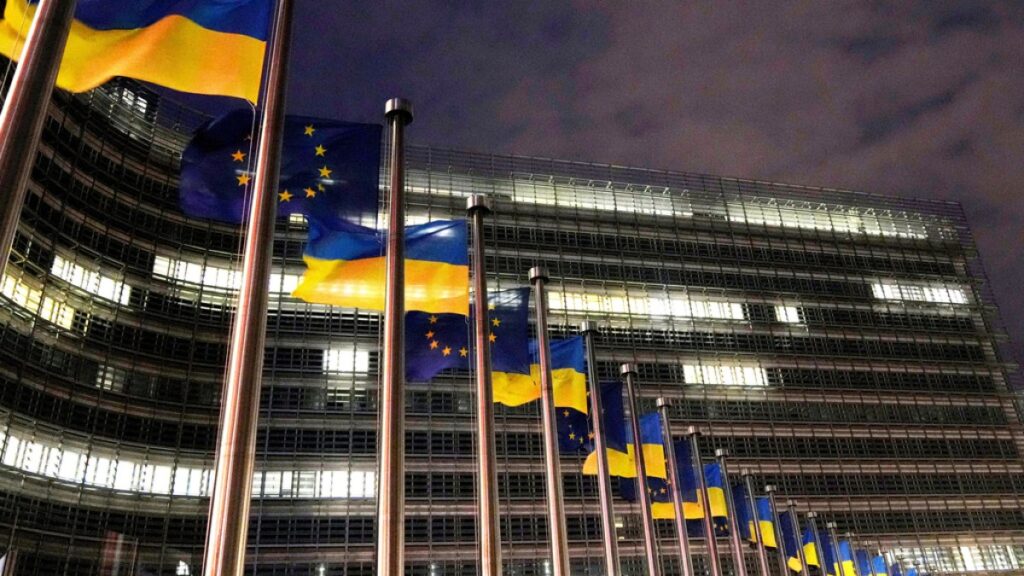
One of the primary moves under consideration by the EU is extending a substantial loan to Ukraine. The financial support is aimed at bolstering Ukraine’s economy amid ongoing challenges, reflecting the bloc’s commitment to supporting Ukrainian sovereignty and stability in the face of geopolitical tensions. The loan package is expected to catalyze further economic reforms and facilitate infrastructure development within Ukraine, positioning it closer to EU integration.
In addition to financial assistance to Ukraine, the EU is also deliberating sanctions targeting Israeli settlers. These sanctions would exemplify the bloc’s stance on the Israeli-Palestinian conflict, underscoring concerns about settlement activities that are widely viewed as obstacles to peace. The imposition of sanctions would represent a firm policy line and potentially influence Israel’s future actions in the occupied territories.
The removal of Viktor Orban from power is significant because his government had often been at odds with broader EU foreign policy agendas. Orban’s stance had previously complicated consensus-building, especially on issues related to Eastern Europe and Middle Eastern geopolitics. His departure signals a potential realignment within the Union, suggesting more cohesive and decisive action on foreign policy matters.
Brussels has welcomed the election results, indicating a renewed optimism for cooperative governance within the EU framework. The forthcoming decisions on Ukraine’s support and Israeli settler sanctions are seen as pivotal tests of the bloc’s unity and resolve in addressing complex international issues.
This evolution in EU foreign policy reflects a broader trend of increased engagement and responsibility in global affairs. The EU continues to strive for a balance between its internal political dynamics and its role as a major global actor. The new political landscape within Hungary could thus pave the way for more vigorous and unified EU actions on the international stage, shaping the trajectory of relations with key partners and contested regions alike.
As the EU prepares to finalize these decisions, member states are expected to engage in extensive consultations to ensure alignment and effective implementation. The outcome of this process will likely influence not only EU’s internal cohesion but also its external influence in critical geopolitical arenas.
In summary, the EU’s pursuit of a Ukraine loan and sanctions against Israeli settlers, enabled by political changes in Hungary, marks a critical juncture in the bloc’s foreign policy. It underscores the importance of political shifts within member states in shaping EU-wide strategies and highlights the bloc’s ongoing commitment to respond proactively to international challenges.