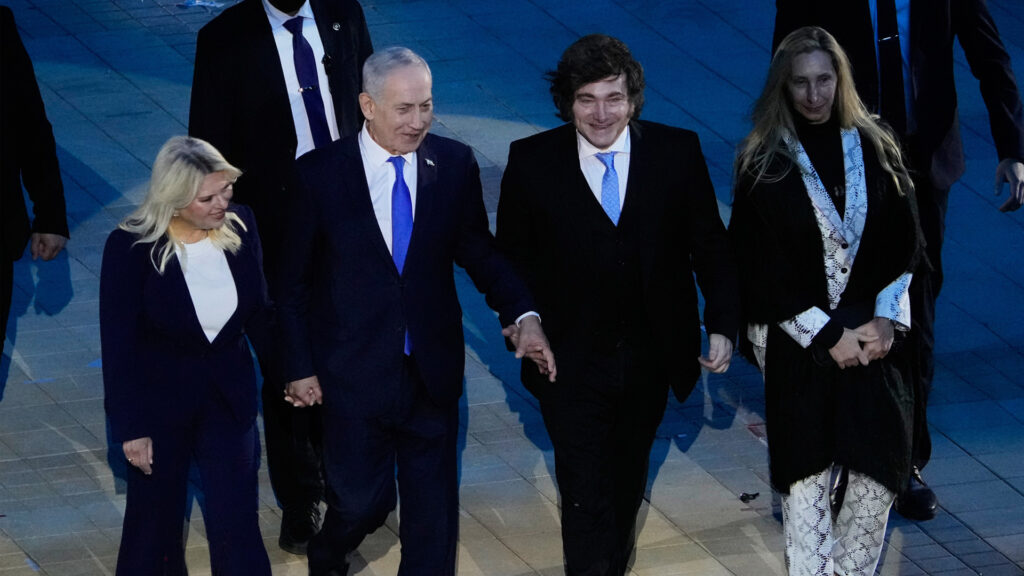
During a significant diplomatic visit to Jerusalem, Argentina’s President Javier Milei openly reaffirmed his country’s alignment with the strategic interests of the United States and Israel. This visit underscored Argentina’s evolving foreign policy posture, particularly its support for the US and Israel’s ongoing conflict with Iran.
President Milei’s statement came amid heightened tensions in the Middle East, where the US and Israel have intensified their rhetoric and actions concerning Iran’s nuclear ambitions and regional influence. Milei expressed strong backing for the military and political measures adopted by both nations as part of their strategy to counter Iran.
The Argentine leader, in meetings with top Israeli officials, emphasized the importance of a united front in combating what he described as threats to regional and global stability presented by Iran. His visit highlighted the growing cooperation between Argentina, traditionally distant from Middle Eastern conflicts, and Israel, marking a shift in Argentina’s international alliances under Milei’s administration.
This alignment could have profound implications for Argentina’s diplomatic relations, potentially drawing it closer to Western powers while distancing it from countries supportive of Iran. The president’s endorsement of the US-Israel war approach signals a decisive move away from previous administrations’ more neutral or varied stances on Middle East issues.
Observers note that Milei’s support might strengthen Argentina’s ties with Israel and the United States, securing economic and military collaborations. However, it also risks entangling Argentina in complex geopolitical conflicts and may lead to friction with other Latin American nations sympathetic to Iran or advocating for non-interventionist policies.
The visit to Jerusalem was marked by official ceremonies and statements reinforcing the mutual commitment to security and shared democratic values. Milei praised Israel’s resilience and strategic acumen in the face of regional threats and reiterated Argentina’s solidarity with Israeli efforts to ensure its national security.
This move aligns with Milei’s broader foreign policy agenda, which favors stronger ties with Western powers and a proactive role in international security affairs. Argentina’s position on the Iran conflict, as expressed by its president in Jerusalem, marks a notable pivot in its foreign relations, signaling a new era of assertive diplomacy.
As the situation in the Middle East remains volatile, Argentina’s explicit support for the US and Israel’s war stance on Iran positions it prominently on the global geopolitical map. It also reflects Milei’s intent to engage Argentina in significant international security dynamics, diverging from its traditionally cautious approach.
In conclusion, President Milei’s visit to Jerusalem and his endorsement of the US-Israel war on Iran underscore a strategic realignment of Argentina’s foreign policy, reinforcing its partnerships with key Western allies and shaping its role in ongoing international conflicts.