The relationship between Iran and Israel has undergone a dramatic transformation over the past century, evolving from a period of cordial relations to one of intense hostility and conflict. This article explores the historical context, key turning points, and current state of affairs between the two nations.
### Historical Background
In the early 20th century, before the establishment of the State of Israel in 1948, Iran and the Jewish community had largely peaceful relations. Iranian Jews lived in relative harmony within the country, and Iran under the Pahlavi dynasty maintained friendly ties with Israel. Both nations saw mutual benefits in cooperation, especially in fields like trade, culture, and security.
### Alliance under the Pahlavi Dynasty
During the reign of Mohammad Reza Shah Pahlavi, who ruled from 1941 until 1979, Iran maintained a discreet but meaningful alliance with Israel. This period saw increased collaboration, including intelligence sharing and military coordination. Israel viewed Iran as a strategic ally in a region hostile to its existence, and Iran saw Israel as a technological and military partner.
### The Islamic Revolution and Its Aftermath
The turning point came with the 1979 Islamic Revolution in Iran, which overthrew the Shah and established the Islamic Republic under Ayatollah Khomeini. The new regime adopted a vehemently anti-Israel stance, labeling it an illegitimate state and a threat to Islam and regional stability.
Iran cut all official diplomatic ties with Israel and began openly supporting Palestinian groups opposed to Israel. This marked the start of a profound animosity that has only deepened over the decades.
### The Rise of Hostility
Over the years, Iran’s support for militant groups such as Hezbollah in Lebanon and Hamas in Gaza has significantly impacted Israel’s security environment. Iran’s strategic objective has been to counter Israeli influence and challenge its dominance in the Middle East.
Israel, on the other hand, has consistently viewed Iran’s nuclear ambitions and regional proxy activities as existential threats. This has led to a cycle of covert operations, cyber warfare, and occasional direct confrontations.
### Recent Escalations
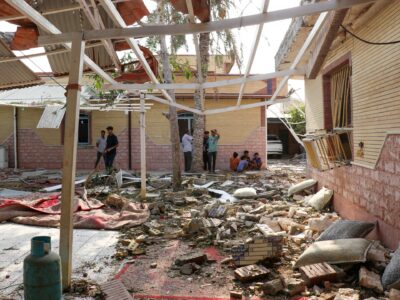
Tensions escalated dramatically on February 28th, when Israel and the United States engaged in direct military action against Iranian targets. This conflict, part of a broader regional power struggle, has resulted in casualties and significant geopolitical fallout.
Both countries have suffered losses, and the conflict has intensified the distrust and hostility that define their current relationship.
### Diplomatic Impasse and the Future
Efforts at diplomacy have been hampered by deep-rooted ideological differences and mutual suspicions. Various international attempts to mediate peace have yet to produce lasting results.
The broader Middle East remains a volatile arena, with Iran and Israel at the center of competing interests.
### Conclusion
The transformation of Iran and Israel from cautious friends to locked adversaries illustrates the profound impact of political upheavals and ideological shifts. While the potential for peace remains a distant hope, understanding this complex history is essential for any future dialogue aimed at stability in the region.