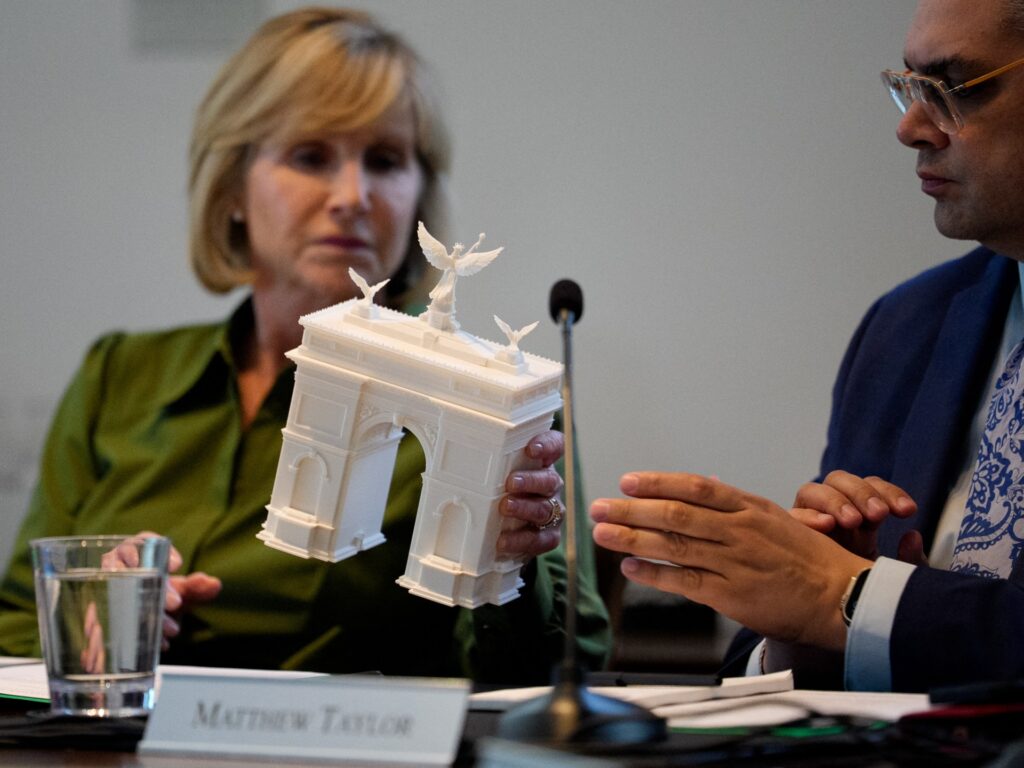
A US panel has recently approved the design of a massive arch proposed by former President Donald Trump to be erected in Washington, DC. The ambitious project envisions a towering structure standing at 76 meters, which would dramatically dominate the skyline, overshadowing several renowned landmarks in the nation’s capital. This approval marks a significant step forward for the project, signaling governmental endorsement despite controversies.
The arch’s design is both grand and bold, reflecting Trump’s distinctive style. However, the project has sparked widespread debate and scrutiny from various quarters, ranging from architects and urban planners to politicians and the general public. Critics argue that the immense scale of the arch could disrupt the architectural harmony of Washington, DC, a city known for its historic monuments and classical aesthetic.
Supporters of the project contend that the arch would become a new symbol of national pride, commemorating Trump’s legacy in a monumental and permanent way. They believe it will attract tourists and generate economic activity, similar to how the Washington Monument and other iconic structures contribute to the city’s identity and economy.
The approval by the US panel suggests that the design has met certain regulatory standards and aligns with local zoning and construction guidelines. Specific details about the panel’s composition or the evaluation criteria have not been widely publicized.
Despite the green light, several hurdles remain before construction can begin. These include securing funding, addressing environmental concerns, and obtaining various permits. Public opinion remains divided, with some residents voicing concerns about increased traffic, aesthetic impact, and the allocation of public resources.
The arch’s proposed location is key to the debate. Situated in a prominent area of Washington, DC, its presence will inevitably alter the view corridors of existing landmarks. Urban planners emphasize the importance of preserving sightlines and maintaining the city’s historic character. Balancing modernization with preservation is a central challenge in this context.
Architectural experts have weighed in, noting that while monumental arches are rare in the United States, there are precedents globally, such as the Arc de Triomphe in Paris. However, the scale and political implications of this particular arch make it unique.
Cost estimates for the project have not been fully disclosed, but it is expected to require significant investment. Discussions are ongoing about how to finance the construction, with possibilities ranging from private donations to public-private partnerships.
Moreover, the arch is expected to incorporate modern design elements and possibly technological features such as lighting displays. These aspects aim to make the monument not only a static structure but also an interactive public space.
The announcement of the panel’s approval has reignited debates about how Washington, DC, should evolve architecturally. It raises questions about the role of monuments in national memory, the intersection of politics and urban design, and the balancing acts required in a city that is both a seat of government and a historic treasury.
As the project moves forward, it will likely continue to provoke conversations around heritage, identity, and the future of urban environments. Stakeholders from various sectors will need to collaborate to address the complexities involved in bringing this monumental vision to life.
In summary, the approval of Trump’s massive arch design by a US panel is a landmark decision that sets the stage for what could become one of the most controversial and significant architectural additions to Washington, DC. Its impact will be felt not only in the skyline but also in the ongoing dialogue about the city’s direction and the symbols it chooses to embrace.