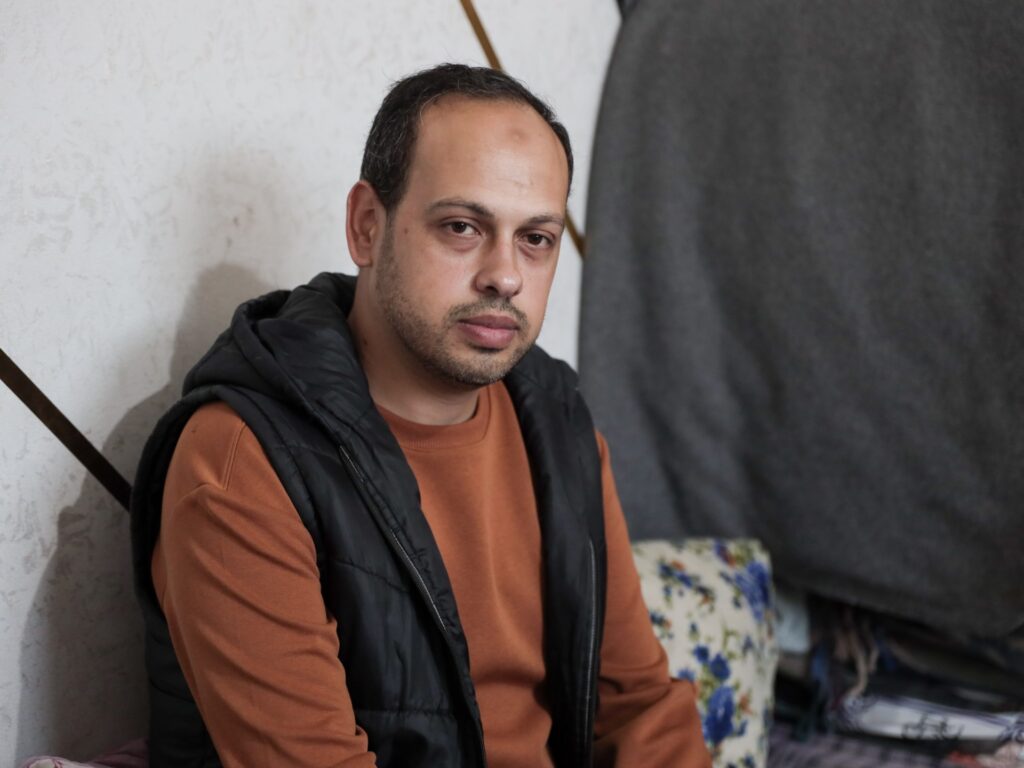
In the war-torn region of Gaza, amidst the relentless air strikes and suffering, a poignant and heart-wrenching story has emerged that encapsulates the personal tragedies hidden beneath the broader conflict. Mohammed Lubbad, a grieving father, finds himself caught in an agonizing dilemma that transcends the immediate horrors of war. His wife, Amal, was pregnant and tragically killed during Israeli air strikes. Despite her death, Mohammed was recently informed that Amal had given birth to a child, a miracle amid devastation, but one shadowed by uncertainty — the child might not be his.
Mohammed’s story begins with a simple but profound bond between husband and wife, like countless others in Gaza. Amal carried their unborn child as the conflict escalated around them. Then came the fatal air strike, which took Amal’s life but left behind a medical mystery — the newborn infant.
According to reports, after Amal’s death, hospital staff told Mohammed that Amal had given birth to a boy before she died. This revelation was supposed to offer a glimmer of hope, providing a connection to Amal’s memory and a continuation of their family line. However, the situation quickly became complicated. Questions arose regarding the child’s paternity, casting a shadow over Mohammed’s acceptance of the baby. He now faces the ordeal of determining whether the child is genetically his, adding emotional strain to an already unbearable loss.
This dilemma is not merely a private issue but also a reflection of the complex social and cultural realities in Gaza. Paternity, family honor, and lineage hold significant weight in Palestinian society. Mohammed’s challenge reveals the profound impact of the war on family structures and the delicate balance of personal identity amid tragedy.
Medical authorities in Gaza, strained by the continuous conflict, are limited in their resources, making paternity verification an arduous process. For Mohammed, this is not only about biological connection but also about securing the child’s future, determining his guardianship and rights.
Legal experts emphasize the importance of proper documentation and tests to resolve such issues humanely and fairly. However, amid the chaos of war, such processes are fraught with obstacles. Mohammed’s situation highlights the broader humanitarian issues faced by families in conflict zones, where birth, death, and survival converge in heartbreaking ways.
Furthermore, this story underscores the resilience and deep emotional struggles of Gaza’s civilians. Despite losing his wife, Mohammed’s willingness to fight for the child reflects a universal desire for family continuity and hope beyond the devastation.
Humanitarian organizations have also taken notice. They advocate for better support systems for children born in conflict zones, ensuring their rights and wellbeing regardless of the circumstances of their birth. Mohammed’s fight has sparked conversations about the need for protective measures and aid focused on children like this infant, born amidst war’s chaos.
In conclusion, Mohammed Lubbad’s story is a testament to the enduring human spirit amid unimaginable tragedy. His question, ‘Whose is he?’ reverberates far beyond Gaza, reminding the world of the personal and often invisible battles waged by families torn apart by conflict. As the struggle to clarify the child’s identity continues, it also serves as a poignant reminder of the fragility of life and the strength found in hope and love, even in the darkest times.