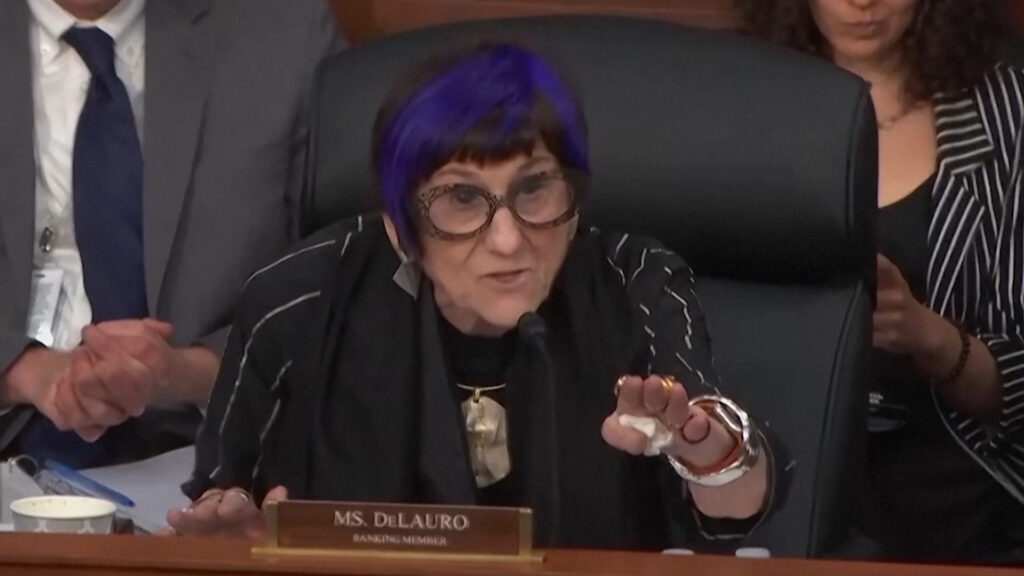
In a heated exchange, Democratic congress members confronted US Energy Secretary Jennifer Granholm over her stance on the Iran war and rising gas prices in the United States. The confrontation reached a peak when a Democratic congresswoman accused Granholm of ‘living in a different world,’ highlighting the growing frustration among Democrats regarding the administration’s energy policies and foreign relations.
The clash occurred during a congressional hearing, where lawmakers questioned Secretary Granholm about the impact of ongoing tensions with Iran on global oil markets and domestic fuel costs. Democrats argued that the administration has not done enough to control gas prices, which have been climbing steadily and causing distress among everyday Americans.
Secretary Granholm defended her policies, emphasizing the complex international landscape and the challenges involved in balancing energy security with geopolitical strategy. She reiterated the administration’s commitment to transitioning to cleaner energy sources, which she said would reduce dependence on volatile foreign oil markets.
However, several Democrats expressed skepticism about the effectiveness of these policies in the short term. They stressed the immediate need to address the affordability of fuel for ordinary citizens, pointing to the economic strain high gas prices impose on working families.
The congresswoman’s remark that Secretary Granholm is ‘living in a different world’ encapsulated the disconnect some lawmakers feel between the administration’s approach and the lived experiences of constituents grappling with high energy costs. This tension reflects broader debates within the Democratic Party about how best to manage energy policy amid competing priorities of combating climate change, maintaining economic stability, and navigating foreign conflicts.
The Iran issue also added another layer of complexity. Democrats questioned how the administration’s policies might affect relations with Iran and whether escalating conflicts could further disrupt global oil supplies. Secretary Granholm assured lawmakers of the government’s efforts to engage diplomatically while maintaining energy market stability.
As the hearing concluded, it was clear that the disagreement highlighted significant divisions among Democrats regarding energy policy. While there is consensus on the importance of moving toward sustainable energy, debate persists on immediate measures to mitigate the impact of current geopolitical tensions and rising fuel costs.
This confrontation underscores the challenges the Biden administration faces in reconciling environmental goals with economic realities and geopolitical tensions. With energy prices remaining a critical issue for voters, the administration’s handling of these matters will likely continue to provoke robust discussion and scrutiny in Congress.