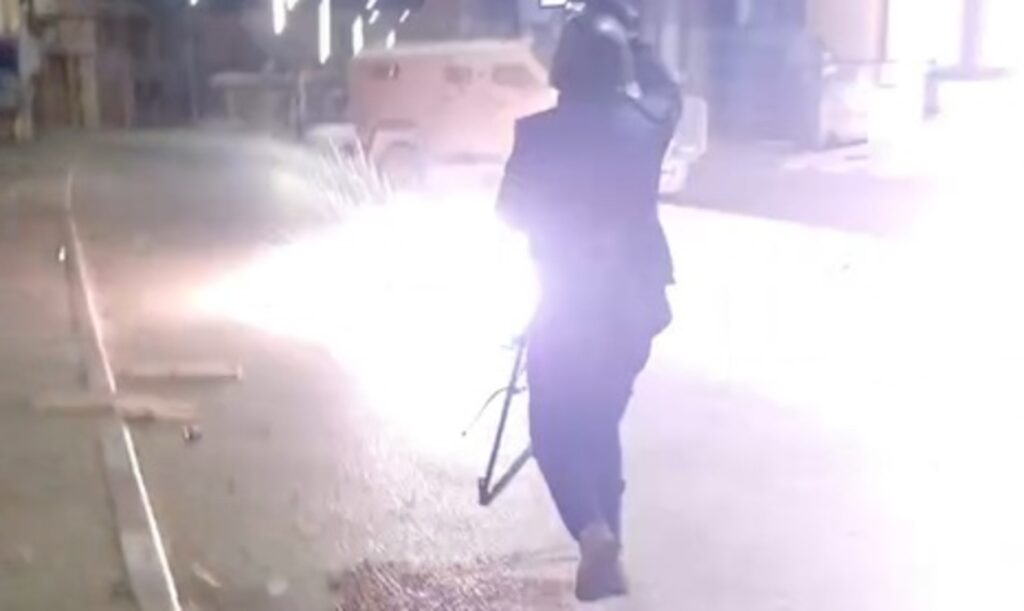
In a troubling incident during the ongoing conflict in occupied territories, Israeli forces fired stun grenades at journalists covering a military raid in the city of Nablus. Video footage captured at the scene shows Israeli troops launching stun grenades towards members of the press who were present to report on the army’s operations.
Nablus, a Palestinian city in the West Bank, has witnessed numerous military raids and clashes over the years, becoming a focal point of tension between Israeli forces and Palestinian residents. Journalists covering such conflicts often find themselves in precarious positions, balancing the duty to report news while navigating the dangers posed by active conflict zones.
The stun grenades, typically used for riot control and to temporarily disorient individuals without causing permanent injury, were seen being deployed directly in the vicinity of reporters. This action has raised serious concerns about press freedom and the protection of journalists, who are critical in conveying the realities of conflict to the international community.
International human rights organizations emphasize that journalists have the right to operate safely and without intimidation in conflict areas. The targeting or endangerment of media personnel not only violates press freedoms but also undermines transparency during military operations.
The Israeli military has stated that operations in Nablus are aimed at maintaining security and preventing terrorist activities. However, the use of force in the context of press presence is drawing international scrutiny and condemnation.
This incident in Nablus highlights the broader risks journalists face in conflict zones worldwide, where the lines between combatants and non-combatants can become blurred. Ensuring the safety of reporters is essential for the flow of unbiased information and for holding all parties accountable.
Observers urge all parties involved in such conflicts to respect the rights and safety of journalists to promote a responsible and informed discourse on the ongoing situation in the occupied territories. As the situation remains volatile, the international community continues to call for restraint and adherence to international laws protecting media workers.
The footage from Nablus will likely spur further debate about military conduct and the protection of journalists, underscoring the necessity of safeguarding those who risk their lives to bring untold stories from conflict zones to the world’s attention.