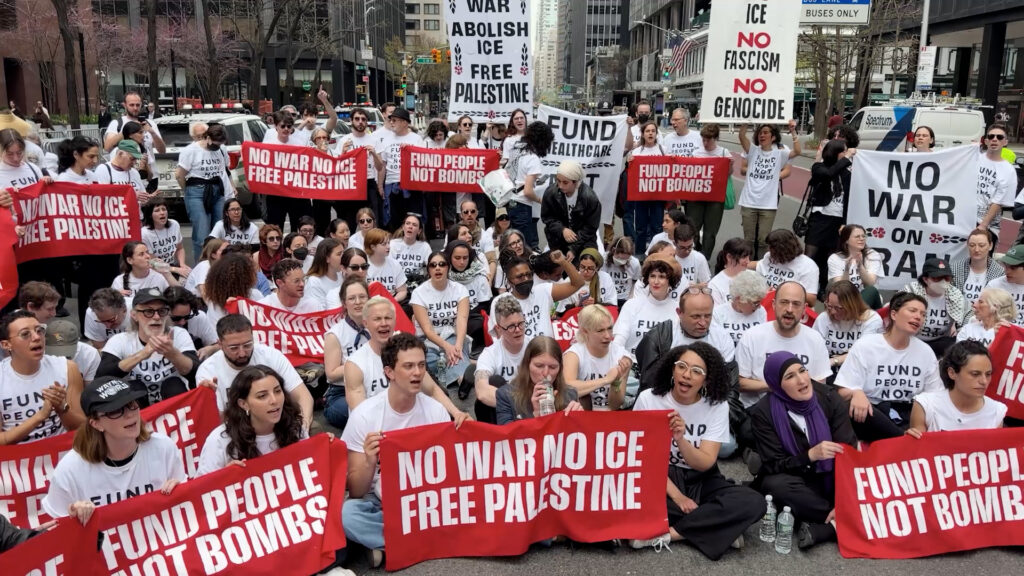
In a significant demonstration that captured public attention, around 100 anti-war protesters were arrested in New York during a sit-in protest aimed at urging the United States government to cease arms sales to Israel. The protesters gathered to express their opposition to US military support for Israel, calling for a halt to the supply of weapons that they believe exacerbate conflict in the region.
The protest took place in a prominent location in New York, bringing together activists from various organizations united in their plea for peace and an end to violence. The protesters staged a sit-in, a form of civil disobedience designed to draw attention to their cause and demand a policy change from lawmakers. Their message emphasized the need to prioritize diplomacy over military intervention.
Police responded to the protest by enforcing the law and making arrests, following what they described as attempts to block traffic and disrupt public order. The decision to arrest roughly 100 individuals highlighted the seriousness with which the authorities treated the demonstration, and amplified media coverage of the event.
Supporters of the protest argued that US arms sales to Israel contribute to ongoing conflict and suffering in the region, urging the government to reconsider its foreign policy. The protest underscored a growing global debate about the role of the US in international conflicts and the ethical implications of arms sales.
Critics of the protest maintained that Israel has a right to defend itself and that the US supports a vital strategic ally in a volatile region. The debate between these perspectives continues to influence US foreign policy discussions.
This event reflects the ongoing struggle between activists pushing for peace and governments addressing complex international relationships. It serves as a reminder of the active civic engagement that shapes discourse on military and foreign policy. The arrests at the New York protest have sparked a wider conversation about the balance between security, diplomacy, and human rights.