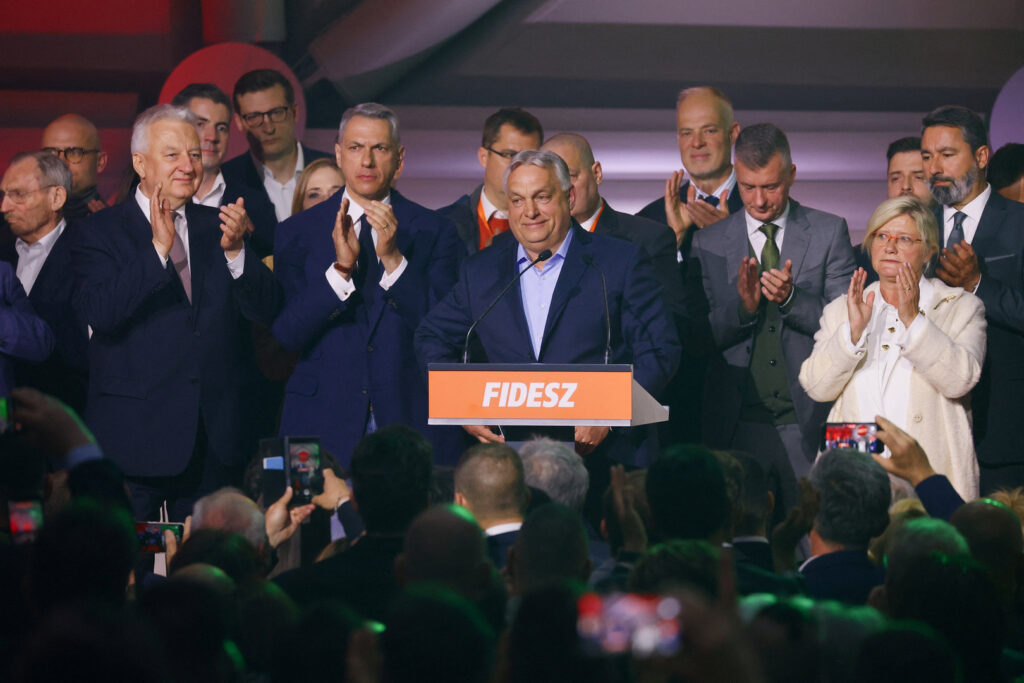
Hungarian Prime Minister Viktor Orban reacts as he addresses supporters after the announcement of the partial results of parliamentary election in Budapest, Hungary, April 12, 2026. REUTERS/Bernadett Szabo
After 16 years at the helm of Hungarian politics, Viktor Orban has officially conceded defeat to opposition leader Peter Magyar in the recent parliamentary elections. This marks a significant political shift in Hungary, ending Orban’s long-standing tenure as prime minister.
Viktor Orban has been a dominant figure in Hungarian and European politics, known for his strong nationalist policies and efforts to reshape Hungary’s political landscape. His administration has been marked by controversial reforms and a firm stance on issues such as immigration, media freedom, and democratic governance.
The election results came as a surprise to many observers who expected Orban’s party to maintain its grip on power. However, the opposition coalition, led by Peter Magyar, successfully united various parties to present a formidable challenge.
Peter Magyar, a relatively new figure in Hungarian politics, campaigned on themes of democratic renewal, anti-corruption, and restoring Hungary’s ties with the European Union and the broader international community.
This defeat could signal a turning point for Hungary, potentially leading to changes in domestic policy and foreign relations. Analysts suggest that the opposition’s victory might bring a more moderate approach to governance and increased cooperation with European institutions.
Despite his concession, Orban’s impact on Hungary remains significant, with his policies and leadership style continuing to influence the country’s political discourse.
The peaceful transition of power underscores the strength of Hungary’s democratic processes amid a competitive and often polarized political environment. It also reflects the will of the Hungarian electorate seeking change after nearly two decades of Orban’s rule.
Moving forward, the new government under Peter Magyar faces the challenge of addressing the economic, social, and political issues that have defined Hungary’s recent history. These include tackling corruption, revitalizing the economy, and ensuring the protection of democratic institutions.
Internationally, Hungary’s new leadership might re-engage with European partners more constructively, potentially easing tensions that arose during Orban’s administration over rule of law concerns and migration policies.
Overall, Viktor Orban’s concession marks the end of an era while opening a new chapter for Hungary’s future direction. Observers will be closely watching how Peter Magyar and his coalition navigate the complex political landscape ahead.