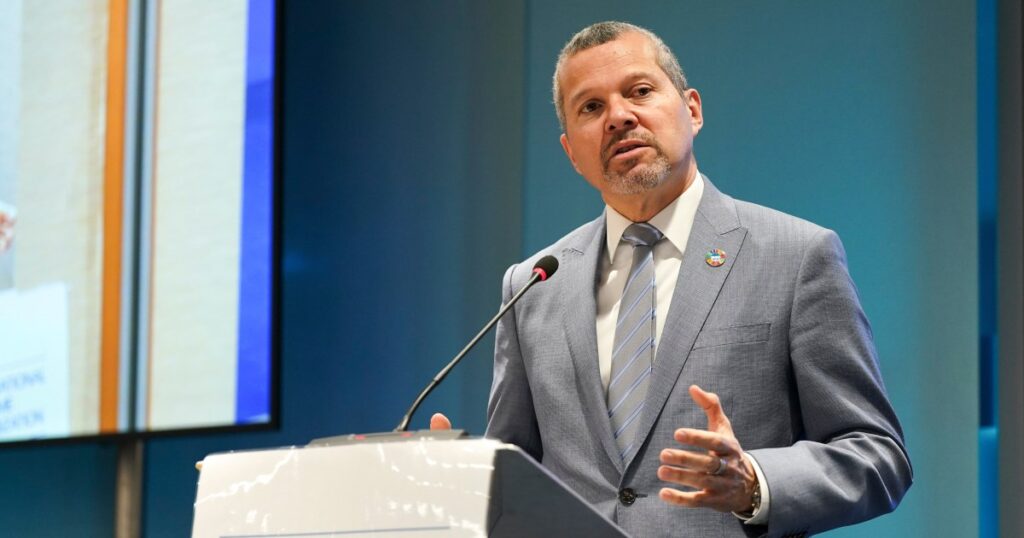
In a recent interview with Al Jazeera, the head of the International Maritime Organization (IMO), the United Nations’ main maritime regulatory body, strongly opposed Iran’s plans to impose tolls on vessels passing through the Strait of Hormuz. This crucial waterway, which links the Persian Gulf to the Gulf of Oman and the Arabian Sea, is one of the world’s most strategic maritime chokepoints, facilitating a significant portion of global oil shipments.
The IMO chief emphasized the importance of keeping the Strait of Hormuz open and free of restrictions such as tolls, citing international maritime law and long-established norms for freedom of navigation. Imposing charges on ships transiting this vital passage could heighten tensions among regional states and disrupt the global oil supply chain, potentially impacting energy markets worldwide.
Iran has historically asserted sovereignty over the Strait of Hormuz and has threatened to control shipping through the narrowing passage. However, the international community recognizes the Strait as an international waterway, where freedom of navigation must be preserved to ensure global trade stability.
The IMO leader warned that allowing unilateral tolls would establish a dangerous precedent, leading other nations to impose similar restrictions in crucial shipping lanes, which would escalate geopolitical conflicts and impede global commerce.
The international maritime community calls for dialogue and cooperation among Gulf states to maintain safety, security, and openness in the region. The United Nations, through the IMO and other agencies, continues to advocate for peaceful resolution of disputes and unhindered access in international waters.
This statement by the IMO chief aligns with wider concerns expressed by countries dependent on Strait of Hormuz transit for oil exports, including major powers and regional neighbors. They have repeatedly urged Iran to respect maritime conventions and international laws to guarantee free passage.
In conclusion, the international maritime watchdog’s stance sends a clear message that the world’s economic and security interests hinge on an open Strait of Hormuz, free from unilateral tolls or barriers imposed by any single nation.