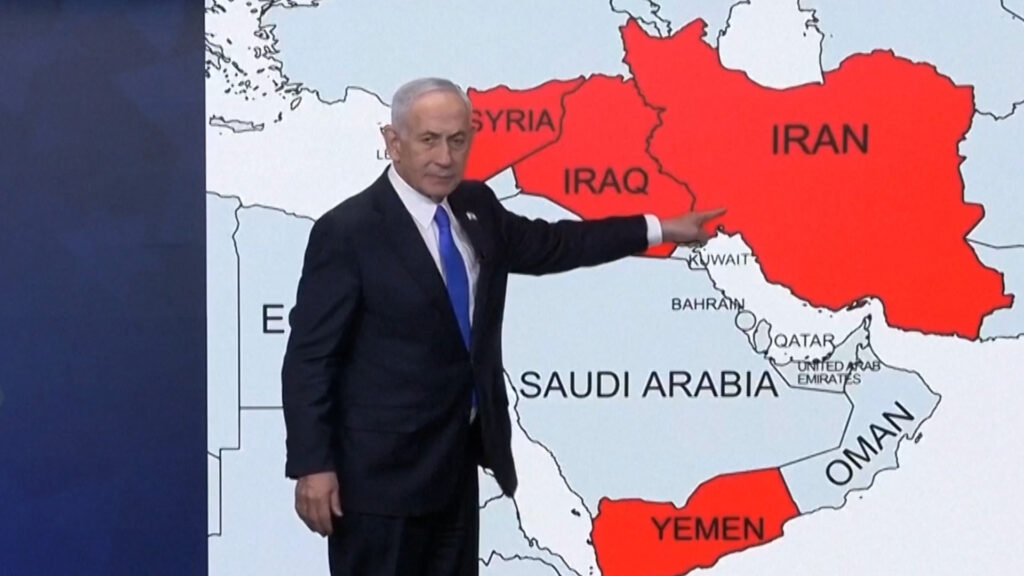
In a recent and highly charged statement, Israeli Prime Minister Benjamin Netanyahu stood next to a map of the Middle East and declared, “We strangled them and have more to do.” This comment was made in the context of explaining how six countries allegedly sought to strangle Israel, reflecting the deep-seated tensions that continue to simmer in this volatile region.
Netanyahu’s remarks highlight the ongoing conflicts and political struggles that Israel faces in the Middle East. The map beside him appeared to illustrate the geographical and strategic challenges posed by neighboring nations and other regional players. His strong language underscores Israel’s assertive stance on security and defense issues.
The six countries referenced by Netanyahu are assumed to be those which have historically been hostile or adversarial toward Israel, possibly including nations like Iran, Syria, Lebanon, and others with ties to militant groups. The prime minister’s statement served to reinforce his government’s position on countering what it perceives as existential threats.
This rhetoric is emblematic of the heightened tensions many Middle East countries experience, with enduring conflicts over borders, sovereignty, and influence. Netanyahu’s choice of words, “strangling,” implies a decisive and forceful approach to dealing with these challenges, signaling that Israel is prepared to continue its defensive and offensive actions.
Observers note that such statements often aim to consolidate internal support and send a clear message to both domestic and international audiences about Israel’s determination to protect its interests. Netanyahu’s strategic communication aligns with ongoing security policies and defense measures implemented by his administration.
The broader Middle East region remains a complex mosaic of alliances, oppositions, and conflicts. Netanyahu’s remarks remind the global community that the situation remains highly unstable, with potential for further escalation.
Experts believe that this assertion reflects both the military and diplomatic dimensions of Israel’s approach. Balancing hard power with strategic diplomacy continues to be a crucial component of Netanyahu’s leadership, as he navigates through a series of regional threats.
In light of these developments, international stakeholders closely monitor Israel’s actions and statements, given their potential implications for peace and stability in the Middle East. Netanyahu’s candid message about having “more to do” serves as a warning that the path toward resolution could be long and fraught with challenges.
As tensions persist, the international community remains vigilant, hoping that dialogue and negotiation might eventually pave the way for peaceful coexistence in this historically turbulent region. Netanyahu’s latest remarks contribute to the ongoing narrative of conflict and resilience that defines much of the Middle East’s recent history.