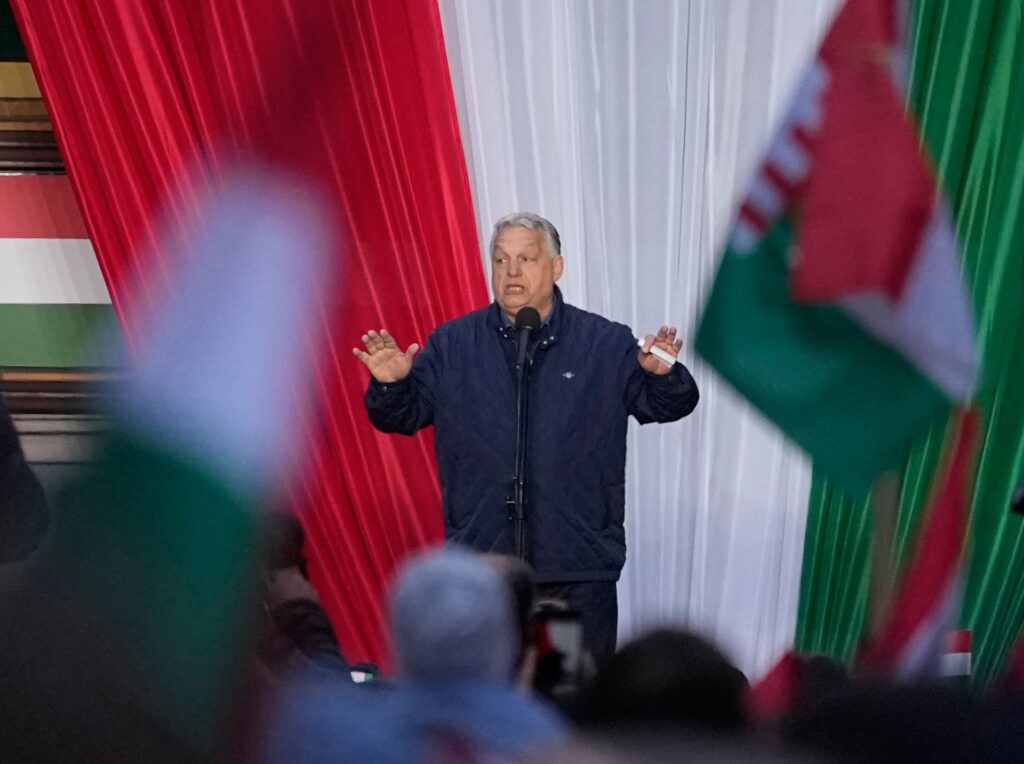
Hungary’s Prime Minister Viktor Orban and his Fidesz party are currently grappling with significant political challenges as they approach the upcoming parliamentary election scheduled for Sunday. This election marks the first time in years that Orban’s political dominance will be seriously tested, with the polls indicating a much tighter race than in previous elections.
Orban’s tenure has been characterized by a strong grip on Hungarian politics, implementing broad reforms and policies that have often sparked controversy both domestically and internationally. Despite his prolonged influence, recent years have seen growing discontent among segments of the population and opposition parties gaining momentum.
The Fidesz party, led by Orban, has historically capitalized on nationalistic and conservative rhetoric, appealing to voters with promises of stability and prosperity. However, with escalating economic challenges and criticism over governance, skepticism about Orban’s leadership has been increasingly vocal.
Opposition alliances have capitalized on this discontent by uniting a diverse array of political groups ranging from liberals to conservatives, aiming to unseat Orban by presenting a viable alternative government. This coalition has energized younger voters and urban populations who seek change from the status quo.
The political landscape in Hungary has shifted considerably. Orban’s approach, often described as illiberal democracy, emphasizes centralized control and restrictive policies against dissent and media freedoms. These strategies have drawn both fervent support and harsh criticism.
Internationally, Hungary’s relationship with the European Union has been strained under Orban’s rule, with disputes over rule of law and democratic principles. Such tensions have added an external dimension to the political struggle unfolding within the country.
As election day approaches, both sides are intensifying their campaigns. Fidesz is leveraging its established network and resources to rally its base, while opposition parties focus on voter mobilization and highlighting the need for democratic reforms.
The outcome of the upcoming election is pivotal not only for Hungary’s domestic politics but also for its role within the European and global context. A victory for Orban would likely signal continuation of his current policies, while an opposition win could usher in significant change.
Political analysts emphasize the uncertainty and high stakes involved, noting that voter turnout and the ability of opposition parties to maintain unity will be critical factors.
In conclusion, Viktor Orban’s struggle for political survival symbolizes a broader contest over Hungary’s future direction amid changing social, economic, and political dynamics. The results of Sunday’s parliamentary election will provide a decisive answer to whether Orban remains the dominant figure or if Hungary embarks on a new political path.