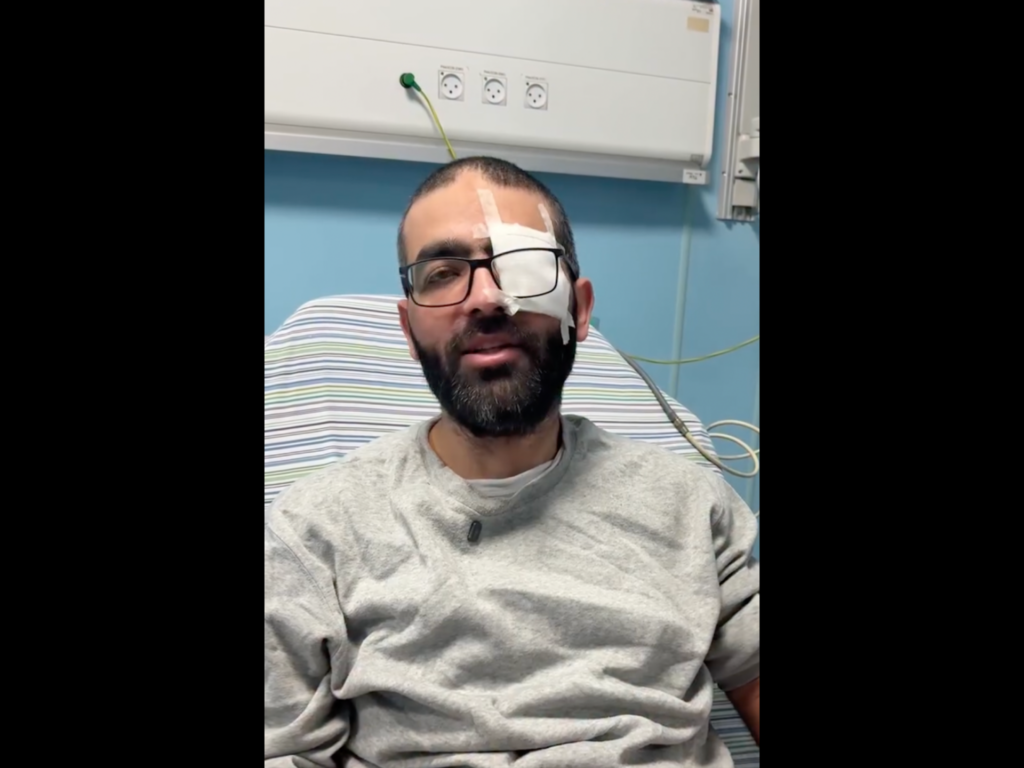
Palestinian journalist Muath Amarne has revealed a harrowing experience during his time in Israeli detention, where he lost his prosthetic eye due to an infection. Amarne, a known figure in Palestinian media circles, was detained under circumstances that have drawn concern over the treatment of prisoners and their access to adequate medical care.
According to Amarne’s account, while in detention, an infection developed which compromised the area around his prosthetic eye. Over time, this infection worsened, leading to the prosthetic eye falling out. The loss is not only physical but also symbolic of the challenges faced by detainees in maintaining their health and dignity under detention conditions.
Amarne’s case highlights broader concerns about the conditions within Israeli prisons, particularly regarding the medical treatment of Palestinian prisoners. Human rights organizations frequently report on the inadequate healthcare many detainees receive, raising alarms about potential violations of human rights and international law.
The incident has sparked discussions among activists, legal experts, and international observers about the responsibility of detaining authorities to provide necessary medical care. The failure to address such medical issues adequately can lead to severe repercussions, as seen in Amarne’s experience.
Palestinian communities and supporters around the world have expressed solidarity with Amarne, calling for better treatment of all detainees and urging authorities to respect the basic human rights of prisoners. The loss of his prosthetic eye is a poignant reminder of the physical and psychological toll that detention can impose.
Amarne’s story has been shared widely via social media and news outlets, drawing attention to the personal cost of political and military conflicts. His experience underscores the importance of accountability and transparency in the handling of prisoners, particularly those held under contentious or politically sensitive circumstances.
This incident reiterates the need for international monitoring and intervention where necessary to ensure that detainees receive humane treatment in line with international standards. Organizations dedicated to human rights and prisoner welfare have called for urgent investigations and the implementation of safeguards to prevent similar occurrences.
As the story unfolds, it serves as a call for greater awareness and advocacy to protect the rights and dignity of prisoners globally. Muath Amarne’s testimony provides a powerful narrative that brings to light the often unseen struggles behind the headlines of conflict and detention.