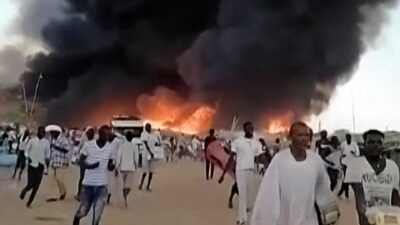
On Thursday night, Kuwait experienced a drone attack that it has attributed to Iran and its affiliated proxy groups. The Kuwaiti government officially blamed Tehran for orchestrating the assault, heightening tensions between the two nations in an already sensitive regional environment.
Kuwait’s accusations stem from concerns over increasing hostile acts in the Gulf region, where drone strikes and proxy conflicts have become more frequent. Kuwaiti officials stated that the attack targeted critical infrastructure within their territory, raising alarms about national security and stability.
In response, Iranian authorities have firmly denied any involvement in the drone strike, labeling the allegations as baseless and politically motivated. Tehran asserted that it respects the sovereignty and security of its neighbors and condemned the use of such accusations to destabilize regional relations.
The drone incident has amplified existing geopolitical strains in the Gulf, where Iran’s relations with many neighboring countries are complicated by historic conflicts, sectarian divisions, and competition for influence.
Analysts note that such attacks and subsequent blame games exacerbate the security dilemma in the region, making diplomatic resolutions more challenging. The Gulf Cooperation Council, along with international stakeholders, continues to call for de-escalation and dialogue to prevent further escalation.
Kuwait’s strategic position as a key oil producer and gateway to the region underscores the potential consequences of sustained instability. Security experts warn that repeated assaults on its infrastructure could disrupt energy supplies and economic stability, affecting global markets.
Iran’s denial highlights the fragmented and opaque nature of proxy warfare in the Gulf. Both state and non-state actors operate with ambiguous accountability, making it difficult to attribute responsibility conclusively.
The incident follows a pattern of similar confrontations involving unmanned aerial vehicles in the Middle East, where drone technology is increasingly used for surveillance and attacks by various groups.
The international community watches closely as Kuwait seeks to rally support from allied nations to pressure Iran diplomatically and possibly through sanctions.
Meanwhile, Iran advocates for increased regional cooperation and dialogue as the sustainable path toward peace and mutual understanding.
This recent drone strike and the accompanying accusations reflect broader regional dynamics involving security, sovereignty, and the balance of power in the Gulf.
As investigations proceed, calls for transparency and restraint grow louder, with hopes that calm can be restored to prevent further harm to civilians and regional stability.
Both Kuwait and Iran stand at a crossroads, where choices made in the coming days could either lead to escalation or pave the way for renewed diplomatic engagement.
In summary, Kuwait’s attribution of the drone attack to Iran underscores ongoing tensions in the Gulf, while Iran’s denial points to the complex and contentious nature of regional security issues. The situation remains fluid, with significant implications for peace and stability across the Middle East.