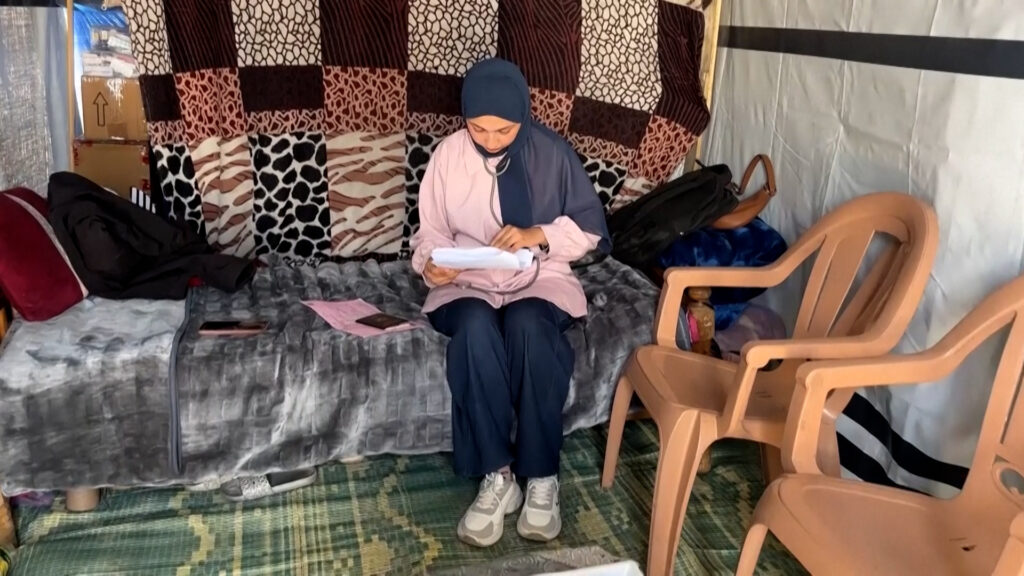
In the midst of the ongoing conflict in Gaza, a young Palestinian medical student finds her dreams of becoming a doctor slipping further away. The closure and stringent restrictions at the Rafah crossing have severely limited her ability to continue her education abroad, highlighting a broader crisis faced by many students in Gaza.
The Rafah crossing, a vital gateway between Gaza and Egypt, is the primary exit point for Palestinians seeking to travel for medical treatment, education, or other essential needs. Due to the war in Gaza and the resulting security concerns, the crossing has been frequently closed or operated under severe limitations, causing devastating effects on many lives.
This particular student, who aspired to complete her medical studies at a university outside Gaza, has been caught in this web of restrictions. Despite excelling in her studies and receiving acceptance to a reputable institution, she has been unable to leave Gaza as planned. The indefinite delay not only halts her academic progress but puts her future career and potential contributions to healthcare at risk.
Her story is emblematic of the larger struggle faced by thousands of Palestinian students who encounter barriers imposed by political instability and border closures. Access to higher education is a fundamental right that continues to be compromised amidst ongoing conflicts.
Educational institutions abroad have expressed concerns over the loss of talented students from Gaza, whose potential remains unfulfilled. Meanwhile, local universities in Gaza face challenges of their own, including limited resources and overcrowded classrooms.
Human rights organizations and education advocates have called on international bodies and authorities controlling the crossing to prioritize humanitarian considerations. They emphasize the importance of ensuring that students can safely continue their studies without political interference.
Families of affected students voice their heartbreak and urgency, as dreams pivot from medical achievements to merely gaining passage through a restrictive checkpoint.
The student’s predicament is also a stark reminder of how conflict disrupts individual aspirations and the collective advancement of any society. The loss of a single future doctor signifies a gap in healthcare services, which are already strained in areas affected by war.
Despite the challenges, some students continue to persevere, engaging in online education or seeking local alternatives, but these solutions cannot fully replace the opportunities provided by international study and specialized training.
The international community faces a call to act – to ensure education remains accessible and protected, even in zones of conflict. The Rafah crossing’s operational status is not merely a matter of security but one deeply intertwined with hopes, futures, and human rights.
As the Gaza war continues, it remains essential to recognize and address the cascading effects on education and the dreams of young Palestinians. Without intervention, the academic dreams of thousands, like this medical student, risk remaining unfulfilled, prolonging the cycle of hardship and lost potential.