Djibouti, a small East African nation on the Red Sea coast, has earned the unique distinction of being home to multiple foreign military bases. This tiny country, barely larger than the city of Washington D.C., sits at a strategically vital point near the Bab-el-Mandeb Strait, a crucial maritime chokepoint that links the Red Sea to the Gulf of Aden and the Arabian Sea. It is this unparalleled geographic significance that has turned Djibouti into a coveted location for global military powers.
The phrase, “Our geography is our oil,” often echoes among Djibouti’s leaders, emphasizing how the country’s location serves as its most valuable resource. This resource has attracted the military presence of superficial rivals such as the United States, China, France, Japan, and Italy, among others, all seeking a foothold to safeguard their strategic interests and shipping lanes.
Why does Djibouti matter so much on the military map? First, it controls the gateway to one of the world’s busiest shipping lanes, through which approximately 10% of global maritime trade passes, including critical oil shipments from the Middle East to Europe and North America. Without control over or access to this narrow strait, global commerce could face significant disruption.
Moreover, with persistent insecurity through the surrounding regions — including piracy in the Gulf of Aden, political instability in Yemen, and conflicts in the Horn of Africa — the Djibouti bases offer a crucial launchpad for military operations, humanitarian aid, and anti-piracy patrols.
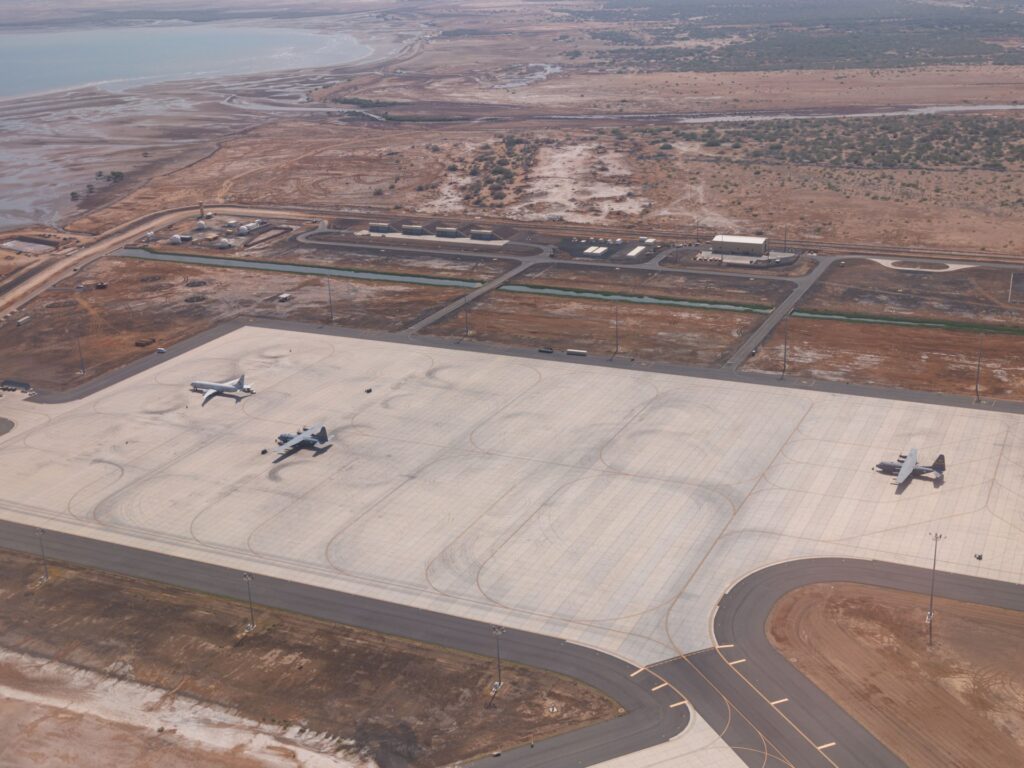
The United States was the first to establish a permanent military base in Djibouti, Camp Lemonnier, which has become a hub for counterterrorism operations across the Horn of Africa and the Arabian Peninsula. China later followed, inaugurating its first overseas military base in Djibouti in 2017, signaling its expanding global reach and desire to protect its commercial shipping interests.
France, a former colonial ruler, maintains its longest-standing presence in Djibouti, while countries like Japan and Italy have also set up smaller logistics or refueling posts.
Despite the peaceful surface, the proximity of rival powers such as the US and China has introduced a new layer of geopolitical competition to the region. Each military base represents a piece on a global chessboard where influence, security, and economic interests collide.
However, Djibouti benefits financially and politically from hosting these foreign bases. The rental fees and associated economic activities generate a significant portion of the country’s national revenue, allowing it to punch above its weight on the global stage.
In diplomatic terms, hosting a diverse group of global powers compels Djibouti to adopt careful balancing acts, managing relations with competing interests to maintain its sovereignty and economic advantages.
As the global landscape evolves, so too will Djibouti’s role as a strategic military crossroads. Its geography remains an invaluable asset—one that it leverages to secure security, economic gains, and international prominence, proving that sometimes, location really is everything in geopolitics.