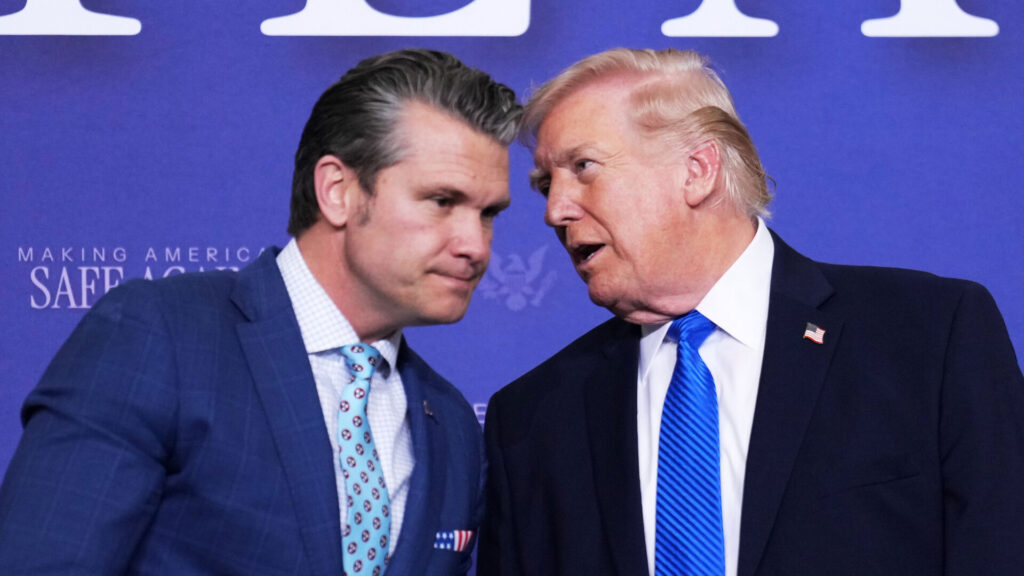
In a recent press conference addressing the escalating tensions with Iran, former President Donald Trump and commentator Pete Hegseth invoked religious themes to frame the United States’ stance and actions. Trump expressed his belief that God supports the U.S. in the conflict, implying divine approval for American military and political strategies. During the same event, Hegseth drew a dramatic parallel between the rescue of a downed airman and the resurrection of Jesus Christ, emphasizing themes of hope, survival, and redemption.
Trump’s remarks highlighted his conviction that the U.S. is on a righteous path in the face of the crisis, suggesting that divine favor shields and guides the country through complex international challenges. This spiritual framing was intended to bolster public morale and reinforce a narrative of moral authority against a backdrop of geopolitical tension.
Pete Hegseth, a former military officer and conservative commentator, amplified these religious overtones by likening the airman’s rescue to a biblical event known for its miraculous nature. He described the airman’s safe return as akin to a resurrection, symbolizing not only a personal triumph but also a metaphor for the resilience and strength of American forces.
The invocation of God and religious imagery at the press conference signals the enduring role that faith and spirituality can play in shaping public discourse during times of conflict. Such statements carry significant weight in American political communication, often aiming to unify supporters and frame military engagements as battles between good and evil.
Critics of this approach argue that mixing religion with military and political matters can complicate diplomatic efforts and alienate those who advocate for a more secular view of governance. Nonetheless, the use of religious language remains a potent tool in rallying public opinion and encouraging national solidarity.
The context of these statements comes amid heightened tensions in the Middle East, where the U.S. has been involved in a series of confrontations with Iranian forces. The framing of these events in spiritual terms may influence both domestic and international perceptions of the conflict.
Overall, the press conference underscored the intertwined nature of religion, politics, and military affairs in shaping narratives around national security and foreign policy. Trump’s and Hegseth’s comments are set to fuel discussions about the role of religion in public life and its impact on America’s approach to international crises.