NASA achieved a historic milestone on Wednesday evening by successfully launching four astronauts into space aboard the Artemis II mission, marking the agency’s first crewed journey around the moon in over half a century. The 10-day flight aims to demonstrate critical systems and operations that will pave the way for future lunar exploration, including the much-anticipated Artemis III mission which plans to land astronauts on the moon.
The Artemis II mission marks a pivotal moment in NASA’s Artemis program, a long-term plan to establish a sustainable human presence on the lunar surface as a stepping stone for future missions to Mars. The crew, composed of highly trained astronauts, is set to orbit the moon and perform vital tests to ensure the safety and functionality of the spacecraft, specifically the Orion capsule, and associated systems.
Launch Details:
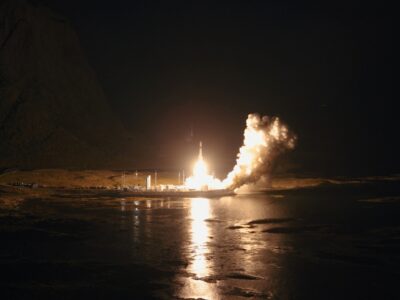
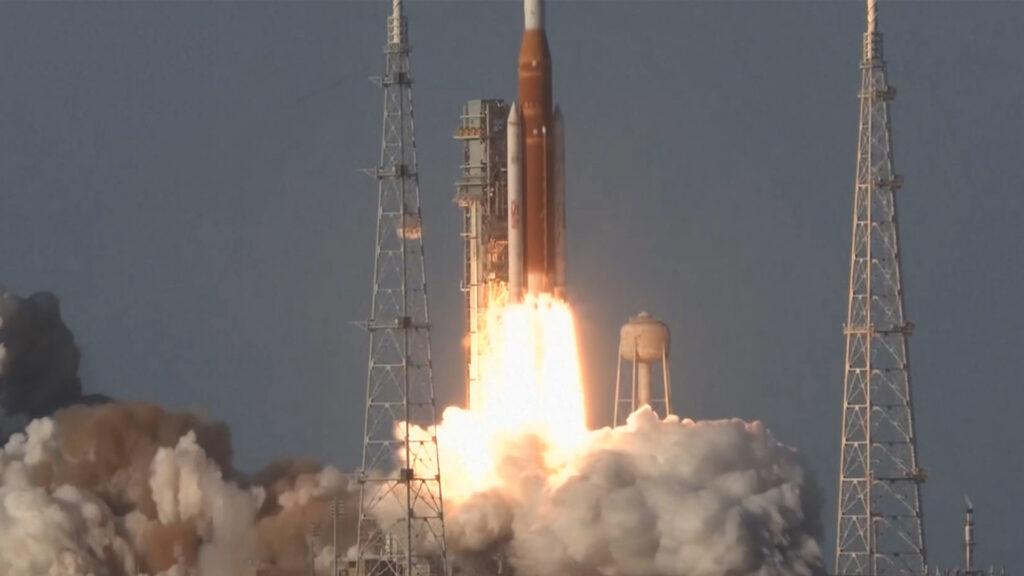
The launch took place from NASA’s Kennedy Space Center in Florida aboard the Space Launch System (SLS) rocket, demonstrating the capabilities of America’s most powerful rocket. The evening launch was a spectacle watched worldwide by millions, inspiring a new generation of space enthusiasts and scientists.
Mission Objectives:
During the 10-day mission, the astronauts will orbit the moon approximately once every six hours, conducting experiments and system checks. Data gathered during this mission will be vital for designing future missions that include lunar landings and deeper space exploration.
Safety and Technology Advances:
Artemis II showcases leading-edge technology developments in spacecraft design, life-support, and navigation systems. It highlights NASA’s commitment to safety, with extensive pre-launch testing and real-time monitoring during the mission to ensure astronaut well-being.
Historical and Scientific Significance:
This mission represents NASA’s commitment to international leadership in space exploration following decades of robotic and unmanned missions. By successfully executing Artemis II, NASA is reaffirming its role at the forefront of human spaceflight and lunar exploration.
Looking Forward:
The Artemis II success sets the stage for Artemis III, planned to land astronauts on the lunar surface. This future mission will involve more complex operations including moonwalks and the deployment of scientific instruments aimed at understanding the moon’s geology and environment.
Public Engagement:
NASA’s Artemis II mission has captured imaginations worldwide, offering educational opportunities through live broadcasts, social media updates, and collaborative programs with schools and universities.
In conclusion, the triumphant launch and operation of Artemis II not only demonstrate technological and operational excellence but also rekindle a global enthusiasm for human space exploration. This mission solidifies Artemis as a cornerstone of NASA’s vision for the next phase of space discovery, bringing humanity one step closer to the moon and beyond.