Israel’s recent decision to apply the death penalty law specifically targeting Palestinians has ignited a storm of controversy and condemnation, with many labeling it a potential war crime. The controversial law, which allows for capital punishment in cases involving Palestinians accused of security offenses, has been met with fierce protests across the West Bank and widespread alarm from international observers.
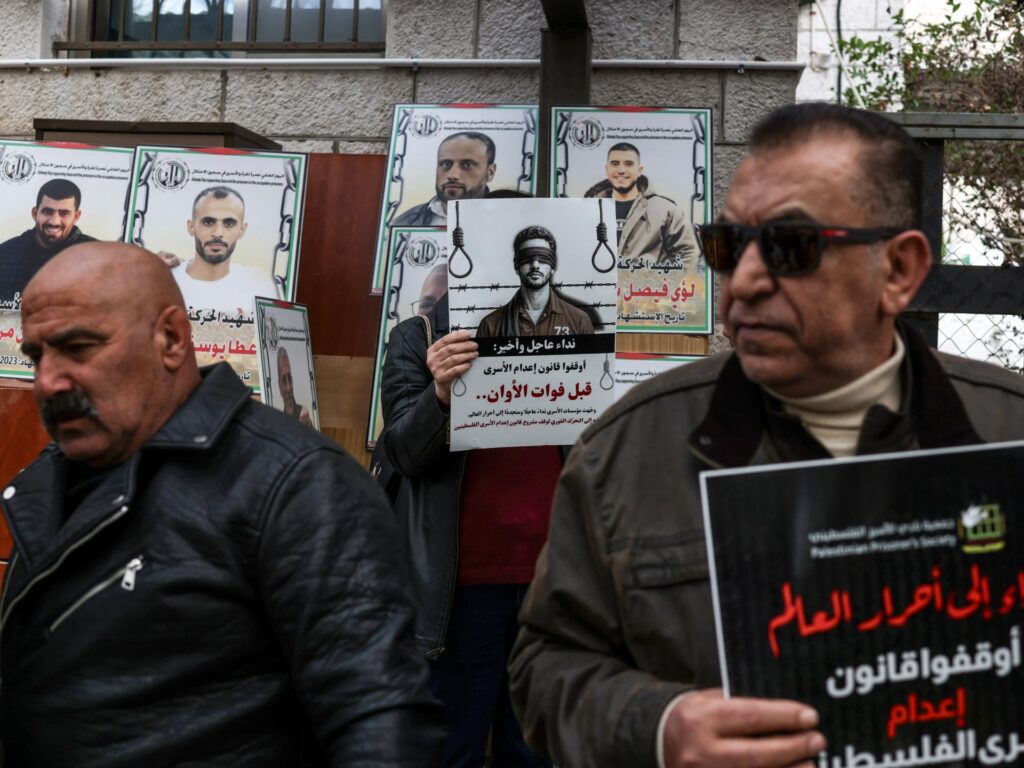
Civil society groups in the West Bank have been at the forefront of the protests, voicing fierce opposition to what they describe as an unjust and discriminatory policy. Demonstrations have erupted in various cities and towns, with activists accusing the Israeli government of using the death penalty law as a tool of oppression and collective punishment against the Palestinian population.
The European Union has expressed ‘great concern’ about the enactment and enforcement of this law. EU officials emphasize that the use of the death penalty, especially in the context of the ongoing Israeli-Palestinian conflict, risks violating international human rights standards and exacerbating tensions in the region. The EU’s statement called for restraint and adherence to international legal norms, urging Israel to reconsider the application of capital punishment against Palestinians.
Human rights organizations have also condemned the law, warning that it sets a dangerous precedent. According to these groups, applying the death penalty to Palestinians accused under security-related charges could amount to war crimes under international law, given the complex dynamics of occupation and conflict.
The Israeli government, however, defends the law as a necessary measure to combat terrorism and safeguard national security. Officials argue that the death penalty is reserved only for the most severe offenses and is consistent with measures taken by other countries facing similar security threats.
This move comes amid a backdrop of escalating violence in the region, with frequent clashes between Israeli forces and Palestinian residents. Critics argue that rather than fostering security, the use of the death penalty law may deepen the cycle of violence, leading to further instability and loss of life.
Legal experts note that the application of capital punishment within occupied territories raises complex questions about the jurisdiction and legality under international law. The Fourth Geneva Convention, which governs the treatment of civilians during conflict and occupation, generally prohibits harsh punitive measures against the occupied population.
Meanwhile, the protests in the West Bank reflect widespread frustration among Palestinians who view the law as part of a broader pattern of systemic injustice and enforced discrimination. Community leaders emphasize the urgent need for peaceful resolution and dialogue rather than punitive legislation.
The international community faces increasing pressure to respond to Israel’s legislation and its implications. Several countries have already called for talks to address the legal and moral challenges posed by the death penalty’s use in this contentious context.
In summary, Israel’s application of the death penalty law targeting Palestinians has drawn sharp international criticism, fanning protests and raising alarms about potential violations of international law. As calls for restraint and reconsideration grow louder, the unfolding situation remains a critical juncture in the Israeli-Palestinian conflict.