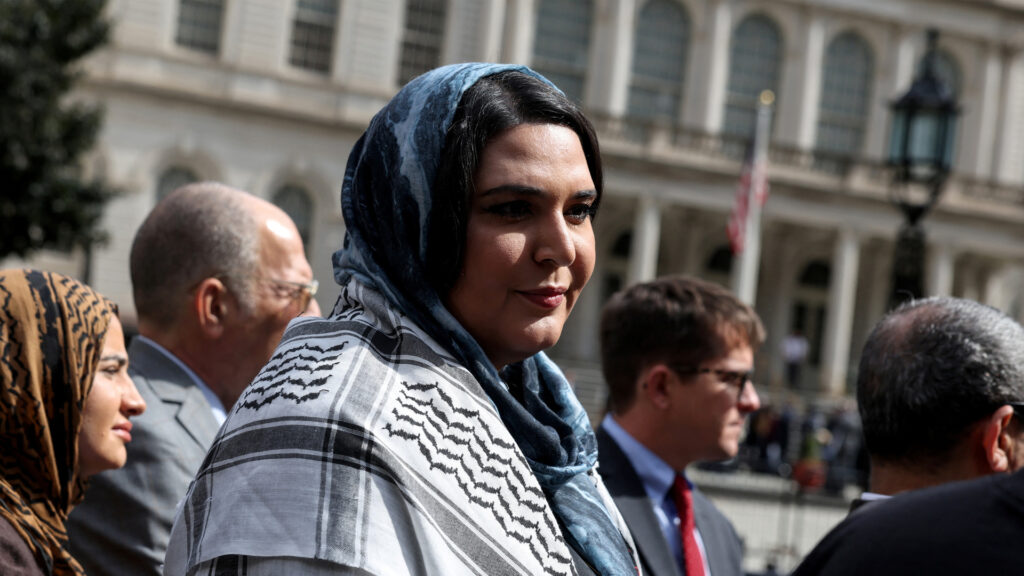
Nerdeen Kiswani, a prominent activist known for her passionate advocacy for Palestinian rights, has recently expressed a heightened sense of vulnerability amidst increasing threats to her safety. This statement came just days after authorities publicly announced that the FBI had foiled an assassination plot targeting her. Despite this alarming development, Kiswani remains steadfast in her commitment to her cause, emphasizing her determination to continue fighting for Palestine.
Kiswani, who has garnered both national and international attention for her activism, has long been a vocal critic of policies and actions that she views as oppressive towards Palestinians. Her advocacy work has included organizing rallies, speaking at events, and using social media platforms to raise awareness about human rights issues in Palestine.
The recent assassination plot has cast a spotlight on the dangers faced by activists like Kiswani, who often stand at the intersection of contentious political debates and grassroots movements. Sources within law enforcement revealed that the plan to harm Kiswani was intercepted in its early stages, leading to swift action and heightened security measures around her.
Despite the threats, Kiswani conveyed a sense of resilience during a recent interview. “I feel more threatened than ever before,” she admitted, “but that will not silence me. My voice is crucial for those who cannot speak, and I will continue advocating for justice and dignity.”
The incident has sparked a broader conversation about the safety of activists advocating for marginalized communities worldwide. Security experts note that individuals involved in high-profile political activism can become targets for violence, necessitating increased protective measures and awareness.
Human rights organizations have rallied in support of Kiswani, condemning the assassination plot and reaffirming the importance of protecting activists. “Threats against activists undermine democratic principles and the right to free speech,” said a spokesperson from a leading human rights group.
Kiswani’s experience also highlights the pervasive risks female activists often face, with gender-based threats and violence remaining a significant concern within activist circles. Advocacy for freedom and equality frequently puts women in vulnerable positions, demanding both courage and community support.
As Kiswani continues her work, she calls upon international allies and local supporters to stand united in the face of intimidation. Her message is clear: silence is not an option, and the struggle for Palestinian rights will persist, regardless of the dangers encountered.
The global community watches closely as Kiswani’s story unfolds, a stark reminder of the sacrifices made by activists worldwide. In an era where political activism can invoke serious personal risk, Kiswani’s unwavering dedication symbolizes the enduring spirit of resistance and hope in the quest for justice.