In the wake of recent events at Bondi Beach, Australia faces mounting criticism over a government crackdown that is alleged to disproportionately target pro-Palestinian voices. The crackdown, initiated after significant unrest during the 2023 Israel-Hamas conflict, has sparked fears about the future of peaceful protest in the country.
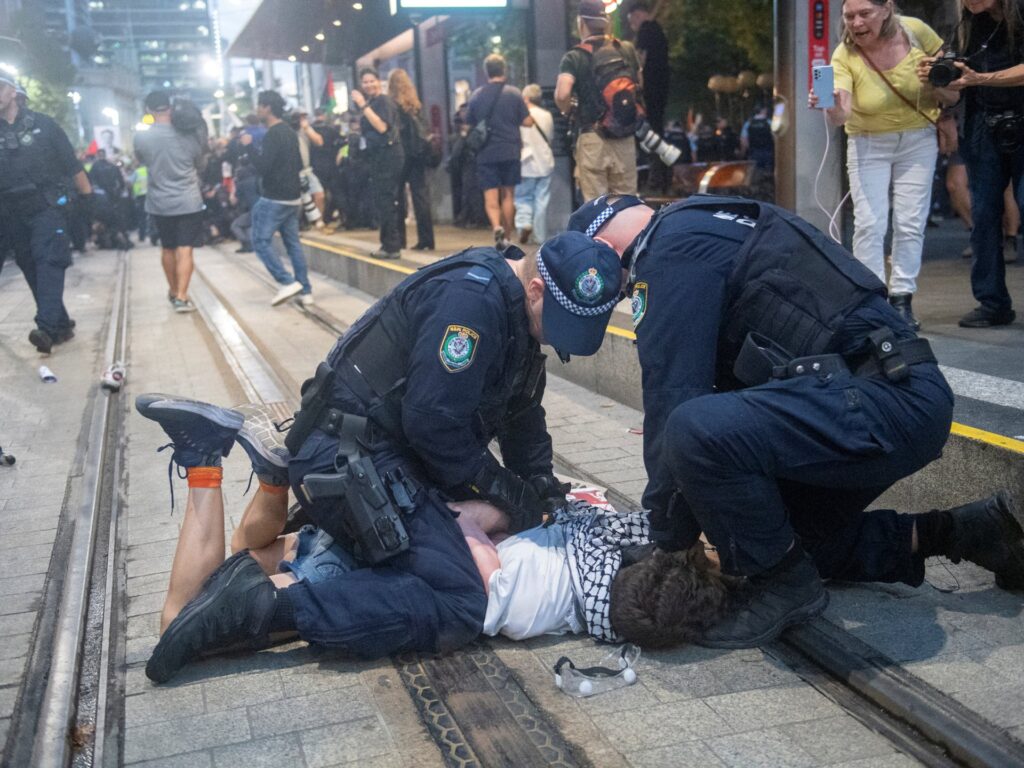
Authorities conducted extensive policing operations following demonstrations that saw tensions flare between pro-Palestinian protesters and supporters of Israel. While officials argue that the measures aim to maintain public order and safety, many activists condemn them as suppressive tactics that inhibit freedom of expression.
Community voices highlight concerns that the Jewish community’s security concerns might be receiving prioritization over those of other groups advocating for Palestinian rights. This perception has deepened divisions within the multicultural fabric of Australian society.
Legal experts and civil rights advocates warn that the crackdown could set a troubling precedent for how protests are managed in Australia, potentially curbing the right to peaceful assembly and the expression of dissenting political views.
The Australian government has defended its actions, citing the need to prevent violence and maintain communal harmony amidst highly charged international issues. It emphasizes that measures do not target any group based on ethnicity or political stance but are designed strictly to avoid public disorder.
Meanwhile, many pro-Palestinian activists argue that their voices have been marginalized, and face growing surveillance and police presence at their demonstrations. They worry that such policing tactics discourage legitimate political discourse.
The post-Bondi crackdown also raises broader questions about Australia’s commitment to multiculturalism and the principle of equal treatment under the law. Critics assert that selective enforcement could undermine social cohesion and fuel resentment among minority groups.
International observers and human rights organizations have called on Australian authorities to ensure that responses to protests respect fundamental civil liberties. They urge a balanced approach that protects all citizens’ rights without bias.
The developments have prompted debate within media and public forums about the role of government, police, and community groups in navigating complex international conflicts on Australian soil.
As Australia grapples with these challenges, the situation underscores the delicate balance between maintaining public order and upholding democratic values of free speech and peaceful protest.
Looking ahead, stakeholders advocate for open dialogue and inclusive policies that accommodate diverse perspectives while fostering mutual respect and understanding across communities.
The post-Bondi crackdown episode has thus become a focal point for broader discussions on civil rights, minority protections, and the future of activism in Australia amid international conflicts influencing domestic landscapes.