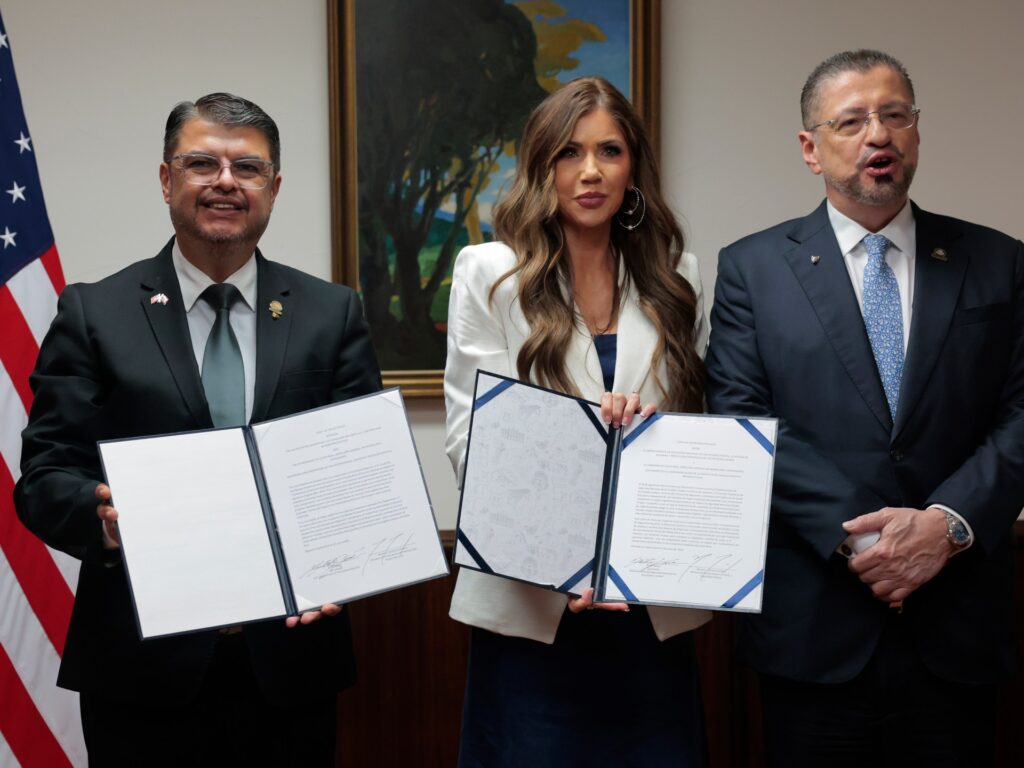
The Central American nation of Costa Rica has agreed to accept up to 25 deportees per week as part of a new deportation effort led by the Trump administration. This agreement positions Costa Rica as the latest country to sign a ‘third-country’ deportation deal with the U.S., aiming to increase the pace and efficiency of deportations from the United States.
Under the terms of the agreement, Costa Rica will receive individuals who do not have legal status in the U.S. or who have committed certain crimes, and who cannot be returned to their country of origin directly, usually for reasons of lacking proper travel documents or because their home country refuses or delays their acceptance.
The ‘third-country’ arrangement is designed to reduce the backlog and difficulties faced by the Department of Homeland Security in repatriating unauthorized immigrants, particularly those from Central America. By routing deportees through Costa Rica, the Trump administration anticipates faster processing times and a more streamlined deportation system.
Costa Rica’s Ministry of Foreign Affairs outlined that the agreement would involve strict protocols to ensure the humane treatment of deportees and that the country would provide necessary social services and assistance upon arrival. Officials also highlighted the importance of this cooperation in addressing regional migration challenges shared by Central American nations.
Critics of the agreement argue that it may lead to human rights concerns and potential risks for deportees, including limited access to legal aid and the possibility of being stranded in a foreign country without adequate resources.
Supporters, including U.S. officials, believe that the deal helps enforce immigration laws effectively while facilitating cooperation among neighboring nations to manage regional migration flows.
This agreement follows similar deals signed with other Central American countries such as Honduras and El Salvador, both of which have also agreed to accept deportees on a weekly basis. The U.S. government has been actively seeking to expand these arrangements as part of its broader immigration enforcement strategy.
According to immigration experts, while these agreements may help the U.S. reduce the number of undocumented immigrants within its borders, they also raise complex questions about the long-term effectiveness and humanitarian implications of third-country deportations.
Costa Rica, known for its relatively stable political climate and commitment to human rights, continues to play a pivotal role in Central American immigration dynamics. This new agreement reinforces its position as a key partner in U.S. immigration policy.
The weekly limit of 25 deportees reflects a careful negotiation to balance Costa Rica’s capacity to receive and assist deportees while supporting U.S. immigration enforcement goals.
This development marks a significant chapter in the evolving relationship between the U.S. and Central American nations concerning migration and border security policies under the current administration.